What’s new in street lights this year: higher lm/W, stronger surge protection, and faster lead times?
Your street light projects face rising energy costs and tighter deadlines. Outdated fixtures are inefficient, fail often, and can’t be delivered on time, putting your budget and reputation at risk.
In 2025, the new standard is clear: system efficacies over 170 lm/W1, mandatory 20 kV/10 kA surge protection, and lead times under two weeks from reliable suppliers. These upgrades cut operational costs, improve public safety, and ensure your project meets modern compliance requirements.
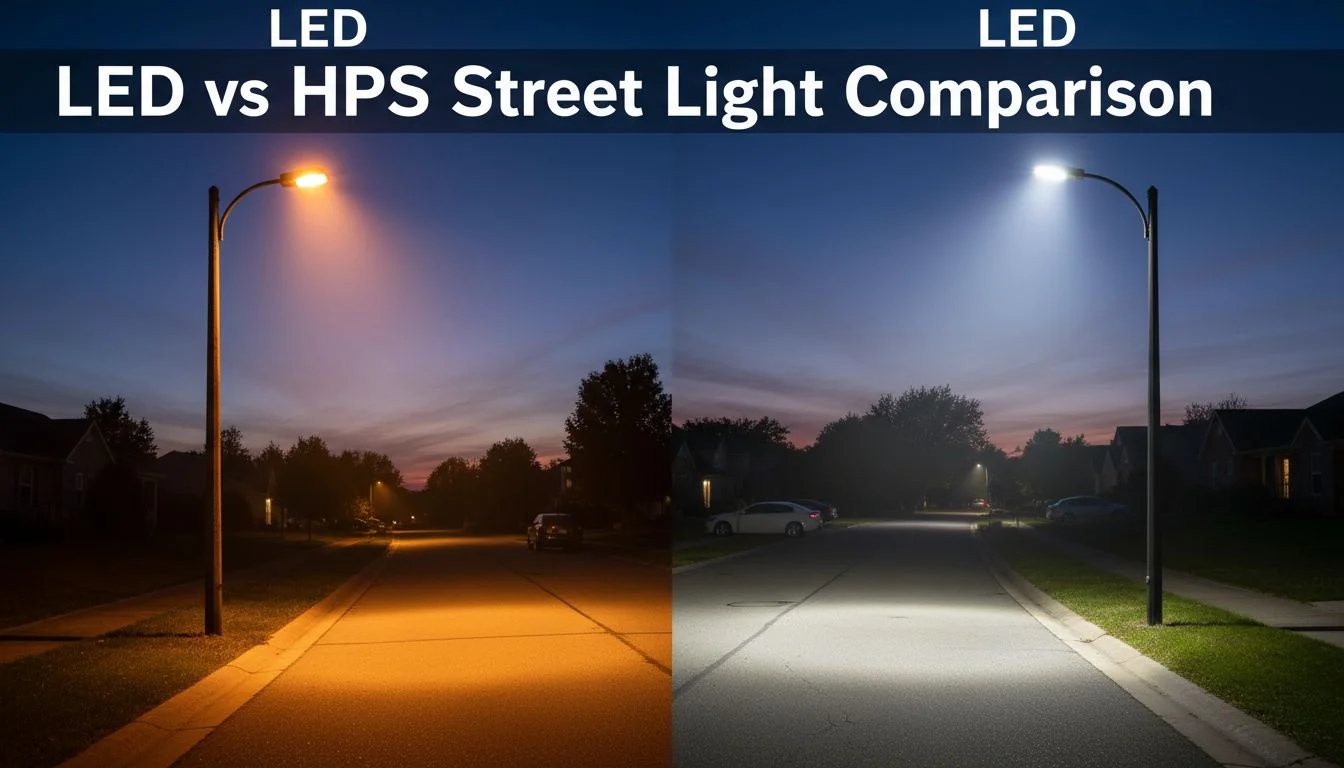
I've been in the LED lighting industry for over 13 years, and the pace of change right now is incredible. For project managers, developers, and procurement directors I work with, staying on top of these trends is crucial. It’s not just about getting the newest technology. It’s about making sure your projects are future-proof, compliant, and profitable from day one. The wrong choice can lead to budget overruns, maintenance headaches, and even safety liabilities. Let's break down exactly what you need to look for in 2025 to make the right decision and deliver a successful project.
The global outdoor LED lighting market is projected to grow from $17.06 billion in 2024 to $28.43 billion by 2030.True
Market data indicates a strong compound annual growth rate (CAGR) of 9.4%, driven by smart city initiatives and energy efficiency mandates.
All LED modules advertised with 250 lm/W will result in a 250 lm/W street light.False
This is a common misconception. The 250 lm/W figure often refers to the LED chip's efficacy in a lab. System efficacy, which includes losses from the driver, optics, and heat, is the real-world number and is typically much lower, around 140-170 lm/W for high-quality production luminaires.
How can you hit the 2025 lm/W baselines and win rebates?
Your project needs to meet new, higher efficacy targets to qualify for energy rebates2. But misleading spec sheets make it hard to know if a product truly performs. The solution is to understand the difference between chip, module, and system efficacy.
To hit 2025 baselines, you should look for production luminaires with a verified system efficacy between 140–170 lm/W. Always demand a full LM-79 report3 to confirm this performance. This report shows how the light performs in the real world, not just the theoretical chip-level data.
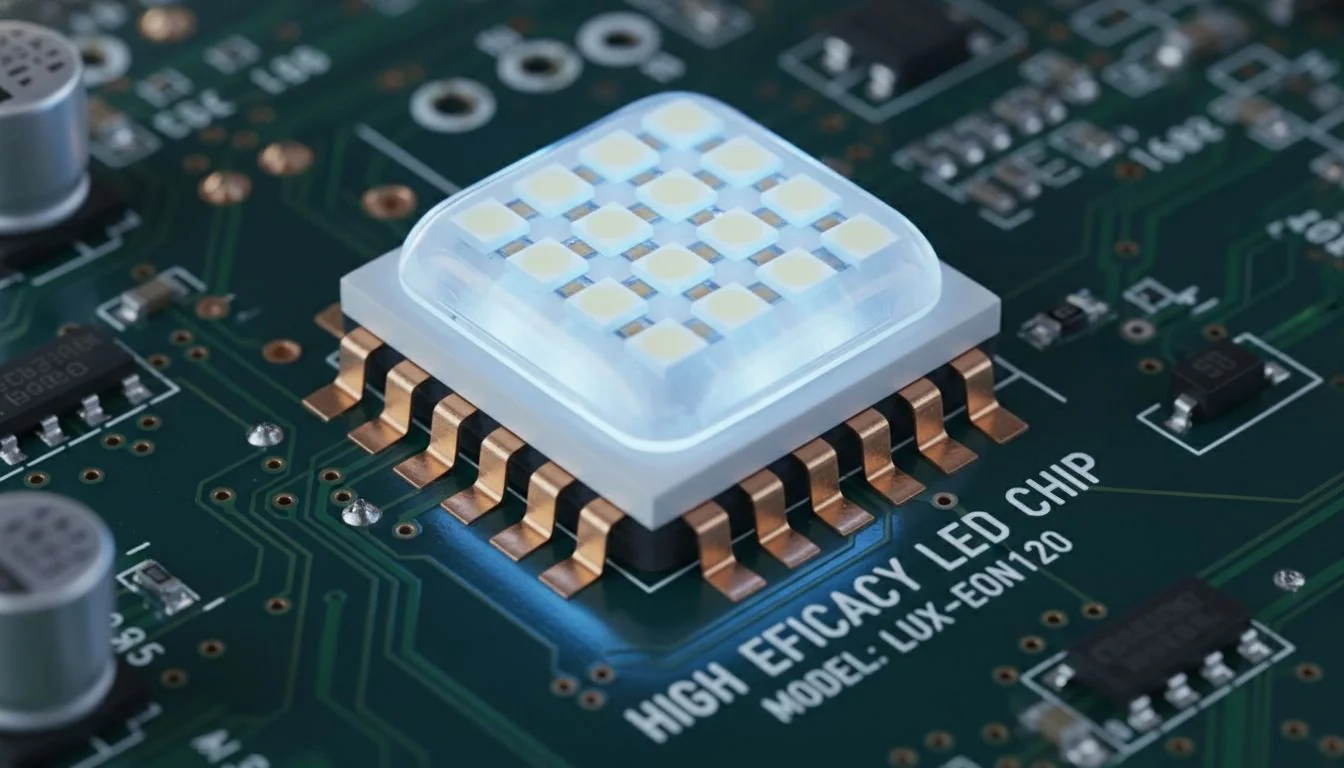
I’ve seen countless spec sheets that boast incredible numbers, sometimes as high as 250 lm/W. As a manufacturer, I can tell you that this number is almost always the efficacy of the LED chip itself, tested under perfect lab conditions. It doesn't account for the real-world factors that reduce efficiency. Once you put that chip into a luminaire with a driver, optics, and a housing that needs to manage heat, the actual light output per watt—the system efficacy—is what truly matters. This is the number that determines your energy savings and rebate eligibility.
Understanding the Three Levels of Efficacy
To make an informed choice, you need to ask suppliers for the right data. Here’s a simple breakdown:
| Efficacy Type | What It Measures | Typical 2025 Value | Why It Matters |
|---|---|---|---|
| Chip Efficacy | The raw light output of the LED chip in a lab. | 220-250 lm/W | Mostly a marketing figure. It's not what you'll get in practice. |
| Module Efficacy | The efficacy of the LED chips mounted on a board. | 180-210 lm/W | Better, but still doesn't include driver or optical losses. |
| System Efficacy | The total light output of the complete luminaire. | 140-170 lm/W | This is the only number that matters for your project's performance and energy bills. |
When I work with clients like Somchai, a developer in Thailand, we focus entirely on system efficacy. His goal is to lower the long-term operating costs for his retail centers. A luminaire with a high system efficacy directly translates to lower electricity bills and a faster return on investment.
A street light's system efficacy is the most important metric for calculating energy savings.True
System efficacy (or luminaire efficacy) accounts for all losses, including the driver, thermal effects, and optics. It is the true measure of how efficiently the fixture converts electricity into usable light.
Higher efficacy always means better quality light.False
Efficacy (lm/W) measures efficiency, not quality. A high-efficacy light could still have poor color rendering (CRI), bad glare control, or an inappropriate color temperature for the application. Quality depends on a balance of factors.
How do you design for surge immunity and meet new standards?
A single power surge or nearby lightning strike can destroy an entire circuit of street lights. This leaves you with expensive replacement costs, project delays, and dark, unsafe areas that create liability issues. The solution is a coordinated surge protection strategy4.
To meet the increasingly common ANSI C136.2 standard, your luminaires must have a built-in 20 kV/10 kA surge protection5 Device (SPD). For complete protection, you should also install a Type 1 or Type 2 SPD at the service entry to shield the entire circuit from major external surges.

A few years ago, a client managing infrastructure in a high-lightning region of South America learned this lesson the hard way. They lost over a dozen brand-new lights in a single storm. The fixtures had basic surge protection, but it wasn't enough to handle the powerful surges common in that area. We helped them implement a two-stage system. First, we supplied new luminaires with integrated 20 kV/10 kA SPDs. Second, we advised them to have an electrician install a heavy-duty Type 2 SPD at the main panel for each lighting circuit. The upfront cost was minimal compared to the cost of replacing the fixtures again.
A Two-Stage Protection Strategy
Think of surge protection in layers. No single device can block everything. A coordinated approach provides the highest level of reliability.
| Protection Stage | Device | Location | Standard | Purpose |
|---|---|---|---|---|
| Stage 1: System Level | Type 1 or Type 2 SPD | At the service entry / circuit breaker panel. | IEC/EN 61643-11 | Protects the entire circuit from large external surges (e.g., lightning). |
| Stage 2: Luminaire Level | Built-in SPD | Inside each street light luminaire. | ANSI C136.2 | Protects the individual luminaire's sensitive electronics from residual surges. |
Furthermore, for critical infrastructure, standards like NFPA 780 and IEC/EN 62305 should be considered for the poles themselves, especially if they are metal and in an exposed area. This ensures the entire asset is protected.
A 20 kV/10 kA SPD inside a luminaire makes it immune to all lightning strikes.False
While a 20 kV/10 kA SPD offers robust protection against most common surges and nearby lightning effects as per ANSI C136.2, it cannot protect against a direct lightning strike. A coordinated system with a Type 1 or 2 SPD at the service entry is needed for higher-level protection.
Poles themselves may require lightning protection according to standards like NFPA 780.True
NFPA 780 (Standard for the Installation of Lightning Protection Systems) provides guidance on protecting structures, which can include tall metal light poles, especially in high-risk areas.
How can you get faster lead times without compromising quality?
Your project is on a tight schedule, and every day counts. But long and unpredictable lead times from lighting suppliers can cause major delays, leading to financial penalties and unhappy clients. The solution is to partner with a manufacturer that controls its own supply chain.
You can secure fast, reliable lead times by choosing suppliers with direct OEM relationships and a full suite of certifications. A vertically integrated manufacturer like us can deliver standard products in 1-2 weeks internationally. We can do this because we aren't waiting on third-party component suppliers or external testing labs.

The global demand for LED lighting is growing fast, and this has put a lot of pressure on supply chains. I recently worked with a contractor for a large commercial development in North America. Their previous supplier quoted them a 10-week lead time for 300 pole lights, which would have delayed the entire project opening. Because we run our own five production lines and maintain a stock of certified components, we were able to manufacture, test, and ship their order in just under two weeks. This level of control is a huge advantage. It means we can give our clients a delivery date we know we can hit.
The Playbook for a Reliable Supply Chain
When you're vetting a supplier, look for these key indicators of a robust and reliable operation:
- In-House Production: Do they manufacture their own products or just assemble parts from others? A true manufacturer has more control over quality and speed.
- Comprehensive Certifications: Look for marks like UL, DLC, CE, CB, and SASO. These aren't just logos; they show that the supplier has a mature, organized process for quality assurance that prevents delays.
- Direct OEM Relationships: A supplier with strong, long-term relationships with component makers (like LED chip and driver companies) gets priority access and stable pricing.
- Proven Logistics: Ask for case studies or references for projects in your region. A supplier with experience shipping to your country will know how to handle customs and logistics efficiently.
The global industrial and commercial LED lighting market is expected to reach $148.9 billion by 2034.True
According to market reports, the market is growing at a CAGR of 10.3% from 2025 to 2034, increasing pressure on supply chains and making reliable suppliers more valuable.
All suppliers in China can offer 1-2 week lead times.False
This is not true. Many suppliers are traders or assemblers who are dependent on other factories, leading to lead times of 4-8 weeks or more. Only vertically integrated manufacturers with in-house production can consistently offer such fast turnarounds.
How should you match pole height, spacing, and wattage for perfect uniformity?
You've chosen a great, high-efficacy fixture. But if the poles are installed too far apart or are the wrong height, you'll end up with dark spots and dangerous glare. This creates safety hazards and wastes all the efficiency you paid for.
There is no simple formula for this. The perfect combination of pole height, spacing, and luminaire wattage depends entirely on your project's specific needs. These include the road width, required light levels (foot-candles or lux), and the fixture's optical distribution. A professional photometric layout6 is the only way to guarantee success.
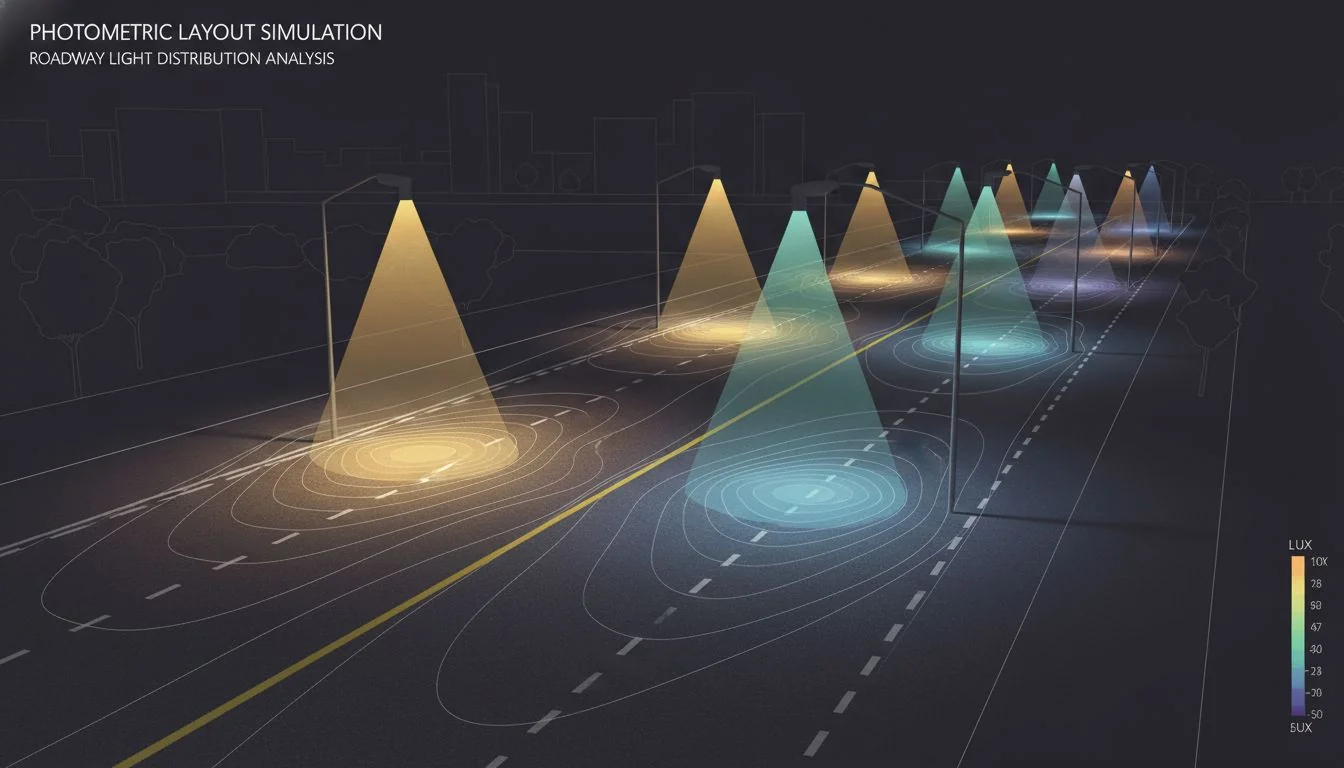
I can't count the number of times I've seen a project go wrong because this step was skipped. A contractor in the Middle East once tried to save money on a parking lot project by stretching the pole spacing an extra 10 meters beyond our recommendation. The result was a "zebra stripe" pattern of bright and dark areas across the lot. It failed the client's inspection, and they had to pay to install additional poles and fixtures, costing them far more than if they had followed the photometric plan from the start. Because of experiences like this, we now provide a complimentary photometric layout for all our project clients. It's a critical part of our end-to-end service.
The Relationship Between Height, Spacing, and Wattage
While a simulation is essential, it helps to understand the basic principles. This table gives a general idea, but remember it is not a substitute for a proper design.
| Pole Height | Typical Spacing | Luminaire Wattage | Best For |
|---|---|---|---|
| Low (4-6m) | 15-20m | 40W - 80W | Pedestrian paths, local roads, parking lots. |
| Medium (8-10m) | 25-35m | 100W - 180W | Collector roads, commercial areas, wider parking lots. |
| High (12-15m) | 40-50m | 200W - 300W | Major roads, highways, large area lighting. |
The key is the distribution type (e.g., Type II for long, narrow roads; Type V for large open areas). The right optic places light exactly where it's needed, allowing for maximum spacing without sacrificing uniformity. A photometric plan models all these variables to give you a precise, guaranteed-to-work blueprint before a single pole is ordered.
A photometric study is essential for any professional street lighting project.True
A photometric study simulates how light will be distributed from fixtures in a specific layout. It is the industry-standard method to ensure that lighting levels, uniformity, and glare control meet IES or local code requirements.
Conclusion
In 2025, specifying street lights means focusing on system efficacy, robust surge protection, and reliable supply chains. Partnering with a manufacturer who delivers on all three is key to your project's success.
References
-
Understanding this standard is crucial for energy efficiency and compliance in modern street lighting projects. ↩
-
Understanding rebate requirements can help maximize funding and reduce project costs. ↩
-
An LM-79 report provides real-world performance data, ensuring the lighting meets expected standards. ↩
-
A well-planned surge protection strategy can prevent costly damages and ensure safety in street lighting. ↩
-
Surge protection is vital for preventing damage to street lights from power surges, ensuring longevity and safety. ↩
-
A photometric layout is essential for ensuring uniform light distribution and safety in lighting projects. ↩