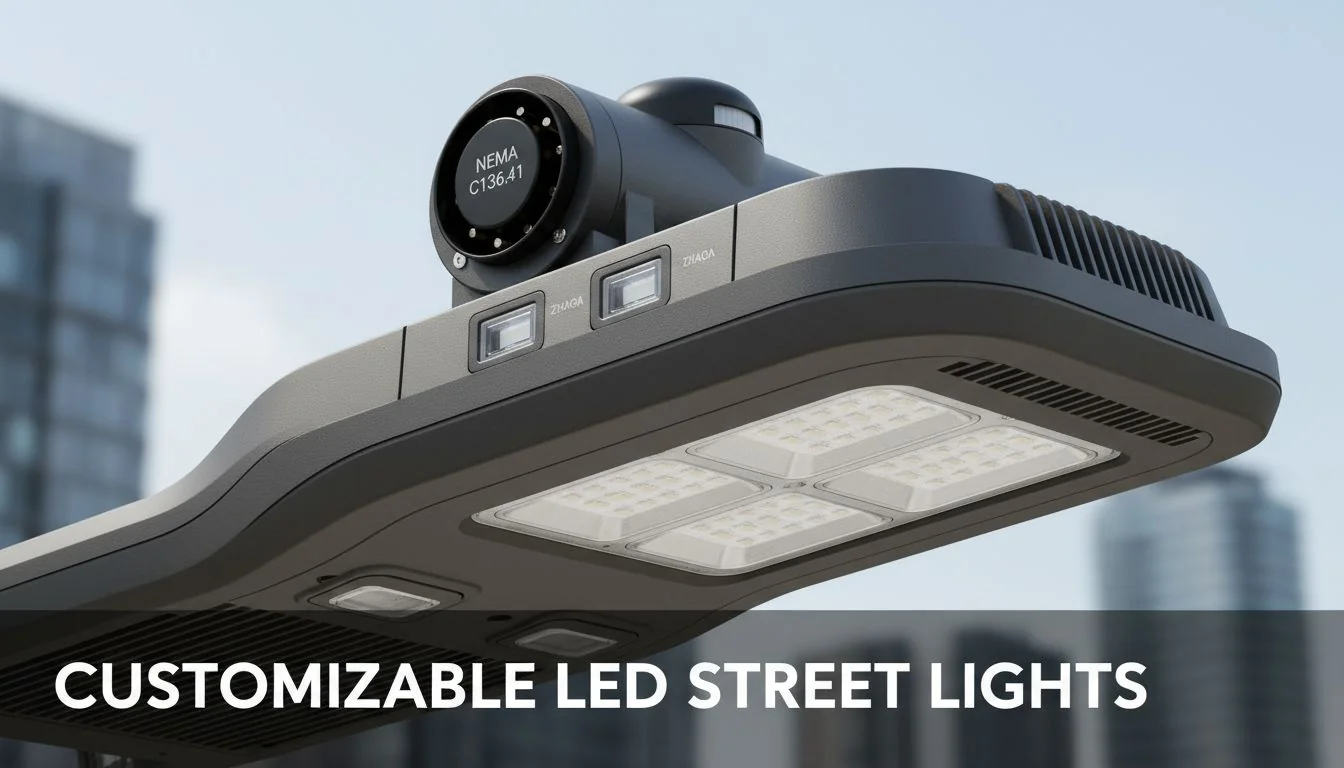
You need custom street lights1 fast, but you're worried about project delays and losing certifications. The promises of OEM/ODM sound great, but the reality can be a nightmare.
The fastest path to market is choosing a pre-certified ODM2 street light family. You can customize drivers, CCT, paint, and accessories without losing DLC/UL listings. This keeps your project on schedule, while a full OEM project with new tooling always takes many months.
I've been in the LED lighting business for over 13 years, and I've seen hundreds of customization projects. Some launch in weeks, while others get stuck in development hell for over a year. The difference always comes down to understanding the line between simple customization and a full-blown redesign. It's a reality check that can save you hundreds of thousands of dollars and months of frustration. Let's walk through the real-world rules of OEM/ODM so you can make the right decisions for your next big project.
Any customization on a street light, no matter how small, will void its DLC certification.False
Minor cosmetic changes like housing color, private labeling, or adding certified accessories like photocells do not affect the core performance and are permitted under DLC's policies for listed products.
A full OEM street light project, from initial design to certified mass production, typically takes 6-12 months.True
The process involves multiple long stages, including tooling (2-3 months), prototyping, internal testing, and official certification labs (2-4 months), making a quick turnaround impossible.
What specs can I change under ODM without losing DLC/UL?
You want to put your brand on an ODM street light, but you can't afford to lose its valuable DLC or UL listing. One wrong move could trigger months of re-testing.
You can safely change cosmetic and accessory-level specs. This includes housing color (paint), CCT, private labeling, and adding components like surge protectors or photocells. Changing the driver is sometimes possible, but modifying the LEDs or primary optics3 almost always requires re-certification.
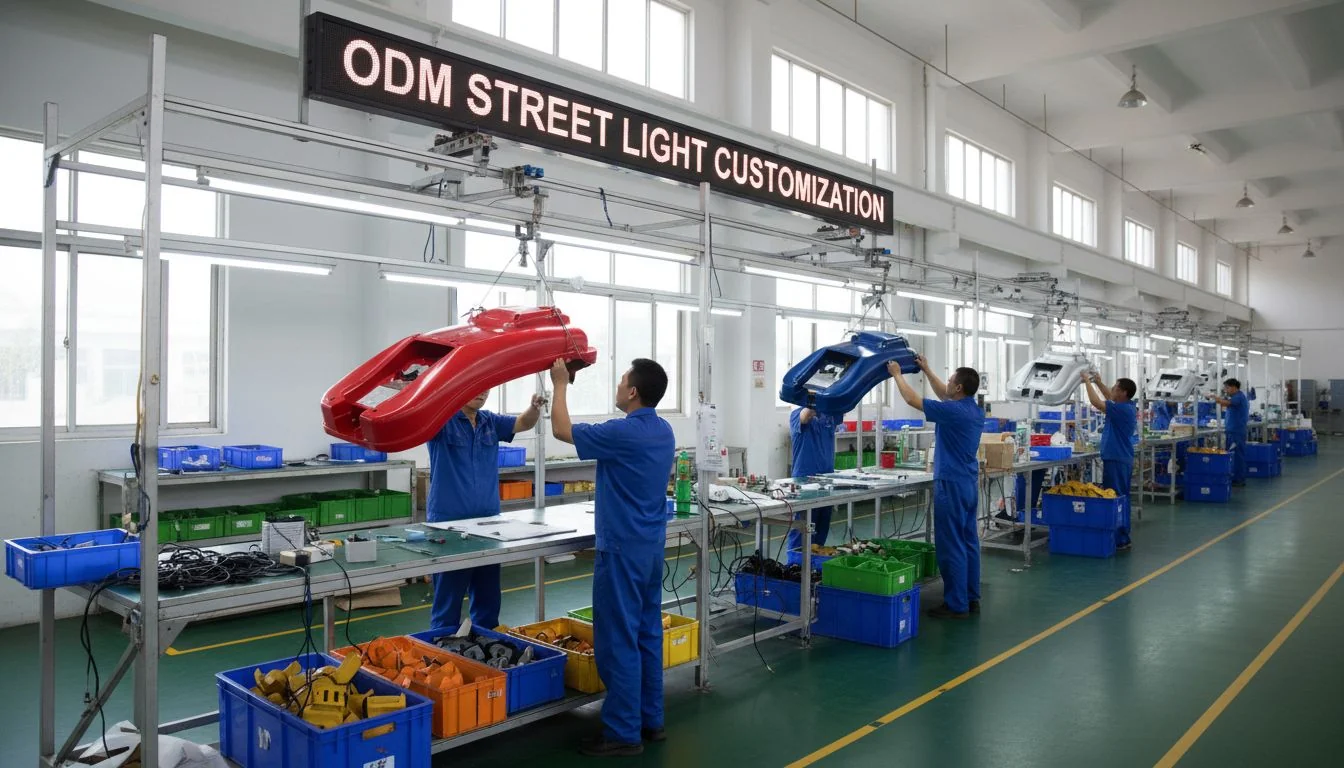
When we talk about ODM, we're talking about speed and efficiency. The whole point is to leverage a product that is already designed, tested, and certified. The key is to know which changes are "soft" and which are "hard." I guide my clients through this every day.
Safe Customizations (No Re-testing)
These are changes that don't alter the luminaire's core performance, safety, or photometric data. The certification bodies like DLC and UL generally consider these permissible changes.
| Customization | Impact on Certification | My Experience |
|---|---|---|
| Housing Color (Paint) | None | This is the most common request. It's purely cosmetic and has no effect on performance. We can match any RAL code. |
| Private Labeling | None | We can laser-etch or apply a durable label with your logo. This is a simple step at the end of our assembly line. |
| CCT (Correlated Color Temperature) | Usually None | DLC allows changes between CCTs (e.g., 3000K, 4000K, 5000K) if they use the same LED chip family. We list these as a family. |
| Accessories | None | Adding a certified photocell, motion sensor, or a 10kV/20kV Surge Protection Device (SPD) is fine. They are external additions. |
"Red Flag" Customizations (Re-testing Required)
These are changes that fundamentally alter the product. If you ask for these, you are moving from a fast ODM project to a slower, more expensive one.
- Primary Optics (Lens): This is the biggest red flag. The lens shapes the light distribution (the IES file). Change the lens, and you have a different product. It will absolutely require a new photometric test for DLC.
- LED Chips or PCB: Changing the brand or model of the LED chips, or the layout of the printed circuit board (PCB), alters the efficacy, thermal performance, and light output. This requires a full re-evaluation.
Changing the optics on a DLC Premium listed street light will automatically require a new photometric test to remain listed.True
The optical system is a core component of a luminaire's certified performance. Any change to the lens invalidates the original IES file and performance data, mandating re-testing.
You can change the LED driver in a UL-listed product to any other driver with the same voltage without affecting the certification.False
The replacement driver must also be UL-recognized for that application and its specifications must be compatible with the luminaire's design. An unapproved swap voids the UL mark.
How long does OEM tooling and testing actually take?
You have a brilliant, unique design for a new street light. But the OEM timeline is a black box, and you've heard horror stories of projects dragging on for over a year.
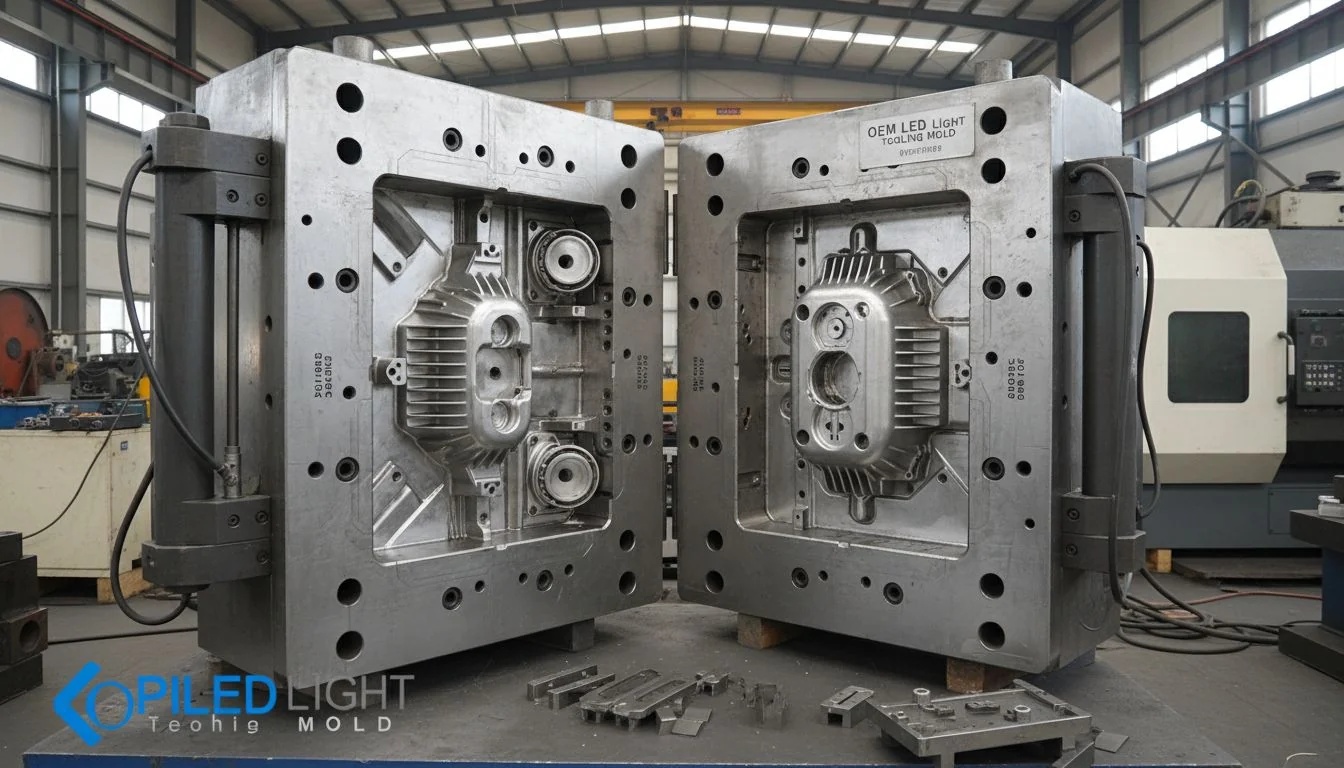
A complete OEM project, from your idea to a certified, mass-produced product, realistically takes 6 to 12 months. The timeline is driven by physical tooling (2-3 months) and third-party certification labs (2-4 months), which cannot be rushed.
I once had a client who needed a completely new housing for a large municipal project. We gave them an honest 8-month timeline. They thought it was too long and chose a cheaper supplier who promised it in 4 months. A year later, they came back to us. The other supplier had failed to get the product UL certified, and the project was dead in the water. We eventually got it done for them, but the delay cost them the contract. Don't let this happen to you. Here is the real-world timeline for a ground-up OEM project.
The OEM Project Lifecycle
| Phase | Key Activities | Realistic Timeline | My Notes |
|---|---|---|---|
| 1. Design & Engineering | 3D modeling, thermal simulation, optical design. | 4-6 Weeks | This phase depends on you. The clearer your requirements, the faster it goes. Every change request adds days. |
| 2. Tooling & Mold Making | Creating the steel molds for die-cast aluminum parts. | 8-12 Weeks | This is the longest, most expensive single step. A complex street light mold can cost over $20,000. It cannot be sped up. |
| 3. T1 Sample & Prototyping | Creating the first physical samples from the new molds. | 2-3 Weeks | The "T1" or first-shot sample almost always needs small adjustments. We plan for at least one revision. |
| 4. Internal Testing | In-house photometry (IES), IP (water), IK (impact), and thermal tests. | 2-4 Weeks | We do this at Besenled to find and fix problems before sending the product to expensive certification labs. |
| 5. Official Certification | Submitting samples to UL, ETL, and/or DLC labs. | 8-16 Weeks | This timeline is 100% controlled by the labs. They have their own queues, and delays are common. |
| 6. Pilot Run & Mass Production | A small initial run to verify assembly, then full production. | 4 Weeks | Once certification is granted, we can scale up production quickly. |
The total time adds up fast. And this doesn't even account for potential delays like design revisions, mold adjustments, or holidays like Chinese New Year. OEM is a serious commitment, not a quick solution.
The die-cast tooling for a new street light housing can be manufactured and delivered in 4 weeks.False
Creating a large, precise steel mold for die-casting is a complex process involving CNC machining, heat treatment, and polishing. It realistically takes 8-12 weeks.
UL certification for a new luminaire can be completed in less than a month.False
UL labs have their own testing queues and procedures. A typical project, from submission to final report, takes 2-4 months, and can be longer if issues are found.
NEMA vs Zhaga—does switching change lead time?
You're planning a smart city project and need to choose between a NEMA or Zhaga receptacle. You're worried that picking the wrong one will cause delays or limit your future options.
For a modern ODM street light, switching between NEMA and Zhaga has almost no impact on lead time. Most new housings are designed to accept either connector. The choice is a simple component swap on the assembly line, not a redesign.
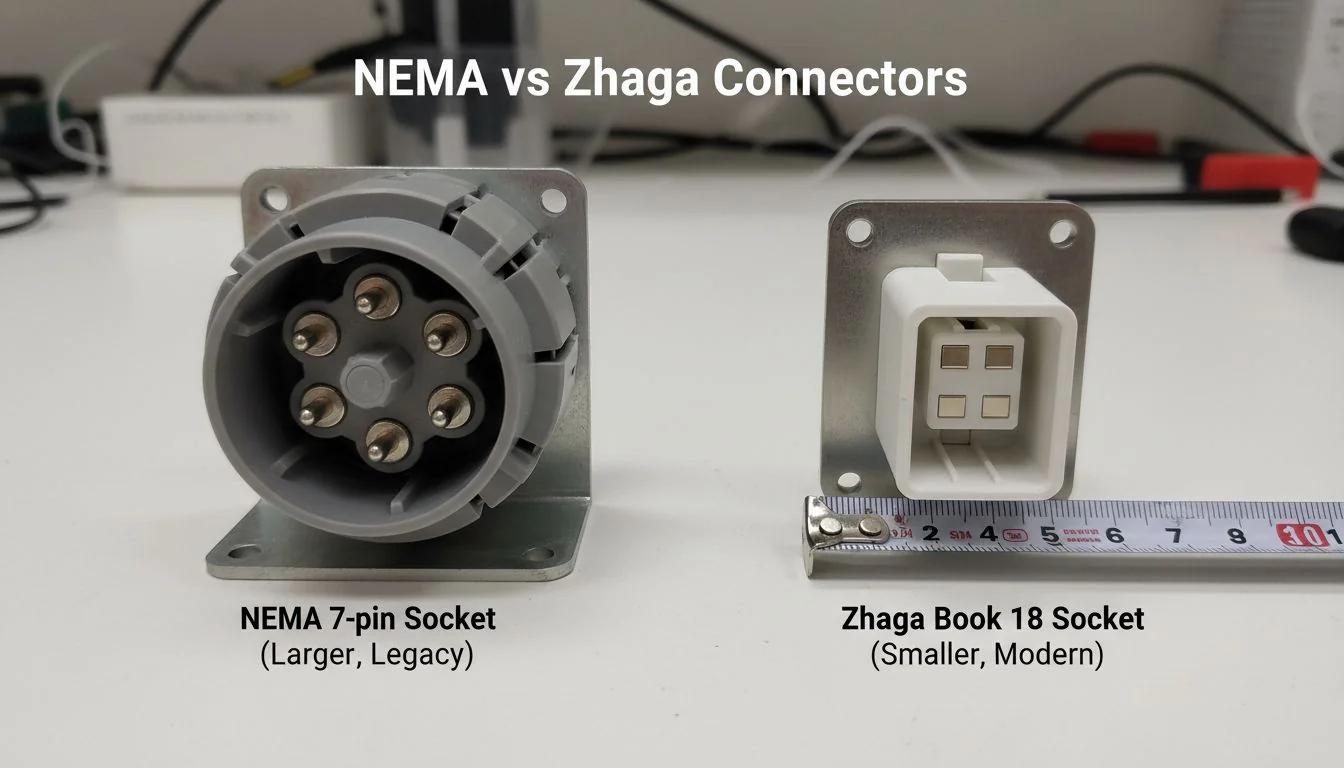
This question comes up a lot, especially from my clients in North America and Europe. They want to future-proof their lighting but are often working with existing infrastructure. The good news is that manufacturers like us saw this coming. We designed our new pole light families to be "connector-agnostic." The housing has a standard mounting point, and we can install a NEMA or Zhaga socket depending on what the client's PO specifies.
Making the Right Choice
The decision isn't about lead time; it's about your project's ecosystem and long-term goals.
| Feature | NEMA (7-Pin) | Zhaga (Book 18) | My Recommendation |
|---|---|---|---|
| Standard | Legacy North American standard. | Newer, global standard. | For new global projects, start with Zhaga. For US retrofits, NEMA is often required. |
| Power | Provides line voltage (120-480V) to the controller. | Provides low voltage (24V DC) from a D4i driver. | Zhaga is safer and simpler for powering modern sensors. |
| Data | Supports DALI or 0-10V via separate pins. | Native to D4i (which runs on the DALI-2 protocol). | Zhaga offers plug-and-play interoperability with D4i sensors and nodes. |
| Aesthetics | Larger, more visible on top of the luminaire. | Smaller, allows for sleeker, integrated designs. | Zhaga is the clear winner for modern, minimalist aesthetics. |
So, does it change the lead time? If you partner with a supplier like Besenled, whose products are designed for both, the answer is no. The lead time is the same. The real question is which standard is right for your network. For most new smart lighting deployments, I strongly recommend Zhaga with D4i. It's where the entire industry is heading.
A Zhaga Book 18 socket provides high-voltage AC power to the control node.False
The Zhaga Book 18 standard is based on a low-voltage DC connection. Power (24V DC) and DALI data are supplied by a D4i-certified driver inside the luminaire.
Switching from a NEMA to a Zhaga socket on a pre-designed luminaire requires a complete housing redesign.False
Many modern luminaire housings are designed with universal mounting points or interchangeable plates, allowing either socket to be installed on the assembly line with no delay.
What is the fastest path to private label delivery?
You need to get your branded street lights to your warehouse or job site immediately. Every week of delay costs you money and gives your competitors an edge.
The absolute fastest path is to choose a supplier's high-volume, pre-certified ODM product and only customize cosmetic elements. By changing only the paint color, adding a logo, and using custom packaging, you can have products ready to ship in 1-2 weeks.
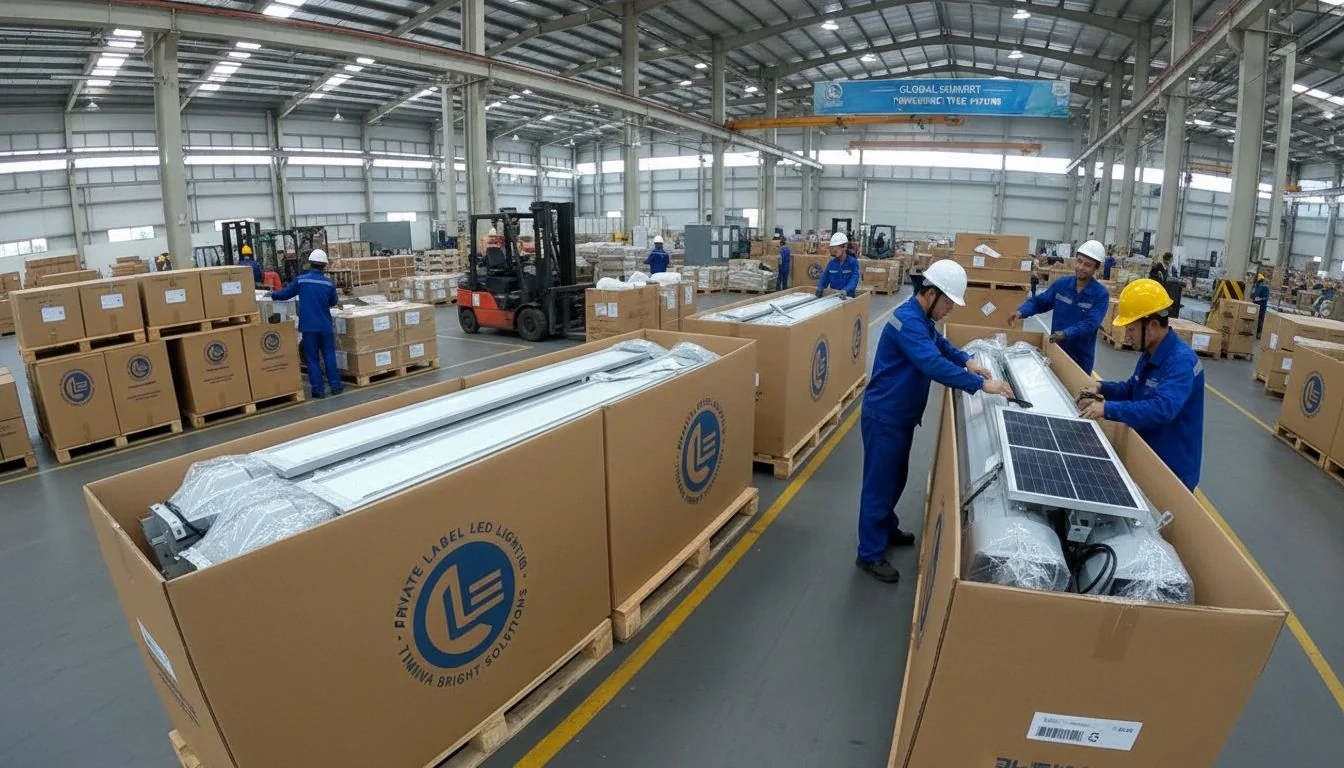
This is the strategy I recommend to 90% of my clients who need speed. It's about being disciplined and resisting the urge to "tweak" the core engineering. The product is already great—it has its DLC and UL listings. Your goal is to make it yours as quickly as possible.
The "Fast Track" ODM Checklist
Here is the exact formula we use at Besenled to deliver private label orders in under two weeks.
- Lock a Certified ODM Family: Start with a product that is already on the DLC Qualified Products List (QPL). Don't even consider anything else.
- Freeze Core Components: This is the golden rule. Do not change the LED board or the primary optics. This ensures the photometric performance is unchanged, and you can use the existing IES files and test reports.
- Customize "Soft" Specs Only: Focus on changes that are simple assembly-line swaps or cosmetic finishes.
- Driver: You can often swap the driver for a different brand or wattage, as long as it's from a pre-approved list of certified drivers that fit in the housing.
- CCT & Color: Specify the CCT (e.g., 4000K) and provide the RAL code for the paint color.
- Branding: Send us your logo file for laser etching and the artwork for the rating label and cartons.
- Accessories: Request standard add-ons like a shorting cap, photocell, or specific mounting bracket.
- Streamline Approval: Trust the existing certifications. Plan for a single quality inspection of the final production units, not multiple prototype rounds.
By following this disciplined approach, the process becomes an assembly and logistics task, not an engineering project. We can pull existing components from inventory and focus on assembly, painting, and packing. This is how we turn a PO into a shipment in 10 days.
A private label order for a DLC-listed street light can be ready to ship in under two weeks.True
If customizations are limited to cosmetics like paint, labeling, and packaging, a manufacturer can use existing components and certifications to assemble and ship the order very quickly.
Changing the driver on an ODM street light always adds at least 4 weeks to the lead time.False
If the alternate driver is a pre-qualified, stocked component that fits the existing housing and is certified, it can often be swapped on the assembly line with no impact on lead time.
Answering Your Top OEM/ODM Questions
You have more questions about the details. These are the questions I get asked every week by buyers, contractors, and developers. Let's get you some clear answers.
The world of OEM/ODM is full of confusing terms and promises. Getting clear, direct answers to the most common questions is critical before you commit to a project and a partner.
Here are the top questions I receive and the straightforward answers I provide.
What is the minimum order quantity (MOQ) for ODM vs. OEM?
For an ODM project, where we are customizing an existing product, the MOQ is very flexible. It can be as low as 50-100 units. Because the tooling and engineering are already paid for, we can easily fit smaller runs into our production schedule.
For a true OEM project, the MOQ is much higher, typically starting at 500 or 1,000 units. This is purely economics. The initial investment in new molds (tooling) can be tens of thousands of dollars. We need the volume of a larger order to amortize that cost and make the project viable for both of us.
Can I add DALI-2/D4i quickly?
Yes, in most cases, this is a fast and easy change. If you select an ODM luminaire from our portfolio, adding DALI-2 or D4i functionality is as simple as swapping the standard 0-10V driver for a DALI-2/D4i certified driver. We stock these drivers from top brands. As long as the driver fits in the housing, it's a simple component change on the assembly line with zero impact on lead time.
How do freight schedules affect "fast" shipping?
This is a crucial point. "Fast production" is not the same as "fast delivery." Our factory can get an ODM order ready in 1-2 weeks. However, that's when logistics take over.
- Ocean Freight: This is the most common method. A ship might only sail once a week to your destination port. If your order is ready on a Tuesday, but the ship sails on Monday, you have to wait a full week. Transit time on the water is then another 2-5 weeks.
- Air Freight: This is much faster, with delivery in about 5-10 days. However, it is also 5-10 times more expensive and is usually only practical for small, urgent orders or samples.
We help our clients manage this by planning production to align with shipping schedules, but it's important to factor in 3-6 weeks of total transit time for most sea shipments.
The MOQ for a full OEM project is usually the same as for a standard ODM product.False
OEM projects require significant upfront investment in unique tooling, necessitating a much higher MOQ (often 500-1,000+ units) to be financially viable, whereas ODM MOQs can be as low as 50-100 units.
Adding DALI controls to a street light requires a complete redesign of the fixture.False
For most modern luminaires, it simply involves swapping the standard driver for a DALI-certified driver, which is a simple change on the assembly line.
Conclusion
Smart ODM customization is the key to launching your branded street lights quickly and reliably. Understand the rules, focus on cosmetic changes4, and partner with a transparent manufacturer.
References
-
Explore how custom street lights can enhance urban aesthetics and functionality. ↩
-
Learn about the advantages of using pre-certified ODM products for faster project completion. ↩
-
Learn why changes to primary optics require re-certification and how it impacts your project. ↩
-
Find out which cosmetic modifications are permissible under certification guidelines. ↩