What does your street-light budget really buy?
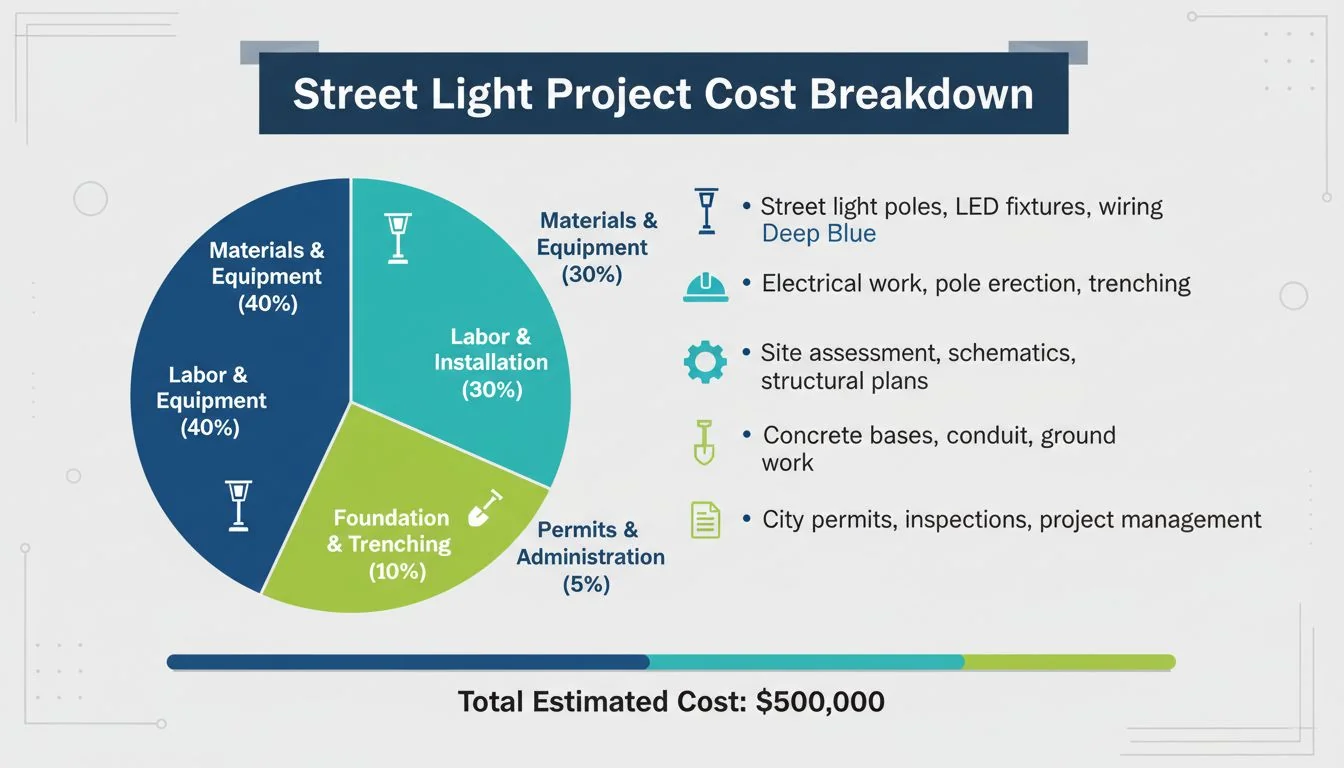
Your street light budget1 seems straightforward, but hidden costs can quickly derail your project. I'll show you where the money really goes, so you can plan accurately and maximize your return.
The total cost to install one street light is typically $2,000 to $5,000. The light fixture itself is often less than 15% of that total. Most of your budget is spent on the pole, foundation, trenching, cabling, labor, and permits.
Over my 13 years in the LED lighting business, I've seen countless project managers get sticker shock. They get a great price on a high-quality LED fixture2, like the ones we make at Besenled, and think they've locked in their costs. But the fixture is just the tip of the iceberg. The real expenses are often buried, literally, in the ground or tied up in paperwork. Understanding this full cost map is the first step to a successful, on-budget project. Let's break down where every dollar goes, so you can avoid surprises and make smarter decisions from day one.
The LED fixture is always the most expensive part of a street light installation.False
The pole, foundation, trenching, and labor costs frequently exceed the cost of the LED fixture itself, often making up over 70% of the total project budget.
Total street light installation costs can range from $2,000 to $5,000 per pole.True
This range accounts for all components: the fixture, pole, foundation, wiring, labor, and permits. The final cost depends heavily on local labor rates and site conditions.
Fixture vs. Pole: where does your capital actually go?
You think the light fixture is the main cost of your project. This mistake leads to under-budgeting for the pole and foundation, which are far more expensive and can halt your progress.
A standard 20-30 foot steel or aluminum pole can cost $500 to $2,000, while its concrete foundation adds another $300-$600. In contrast, a high-performance LED luminaire might only be $150 to $400. The support structure is where the real capital goes.
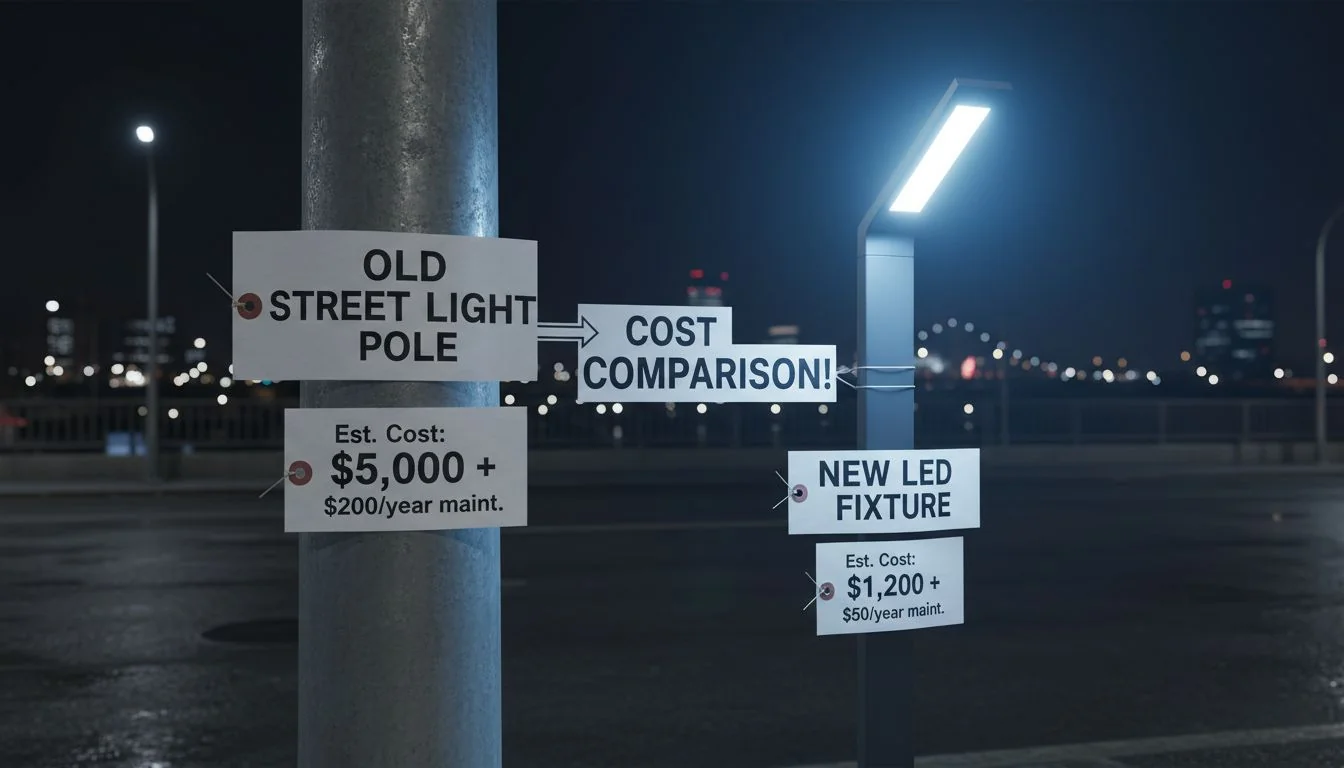
I always advise my clients to think about the project from the ground up. The luminaire is important, but the pole is the backbone. Let's look at the costs.
Breaking Down Hardware Costs
The price of the hardware depends on your project's specific needs. A simple parking lot has different requirements than a highway in a hurricane-prone region.
- The Luminaire (Fixture): This is our specialty at Besenled. A high-quality, 100W to 150W LED pole light with a 5-year warranty and certifications like UL or DLC might cost between $150 and $400. The price changes based on features like smart controls3 (DALI, Wi-Fi) or special optics.
- The Pole and Foundation: This is where budgets get tricky. The pole's cost is determined by its height, material (steel is common, aluminum is lighter but more expensive), and wind-load rating. The foundation needs to be engineered for the local soil conditions and pole size.
Here is a typical cost comparison:
| Component | Typical Cost Range | Key Factors |
|---|---|---|
| LED Luminaire | $150 - $400 | Lumens, Smart Controls, Certifications |
| Steel Pole (25 ft) | $800 - $2,000 | Height, Gauge, Wind Load Rating |
| Concrete Foundation | $300 - $600 | Soil Type, Rebar, Labor |
| Total Hardware | $1,250 - $3,000 | Excludes Labor & Electrical |
I remember a developer in North America who budgeted $600 per light point. He was shocked when the real cost came in closer to $3,500. He had only budgeted for the fixture and forgot about the heavy-duty poles required for his windy city.
Aluminum poles are always cheaper than steel poles.False
Aluminum is a lighter material and more resistant to corrosion, but it is generally more expensive than galvanized steel for poles of a similar size and strength rating.
A pole's foundation can cost as much as the LED fixture.True
The cost for excavation, concrete, rebar, and labor for a proper foundation can easily run from $300 to $600, which is often more than the price of the luminaire itself.
You've budgeted for the lights and poles. But the cost to run power to them can be a shocking surprise, potentially doubling your project's cost and timeline if you're not prepared.
Yes, trenching and cabling are huge cost multipliers. Trenching can cost from $30 per foot in soft soil to over $100 per foot to cut and repair asphalt. This can add thousands of dollars per pole, often exceeding the hardware cost.
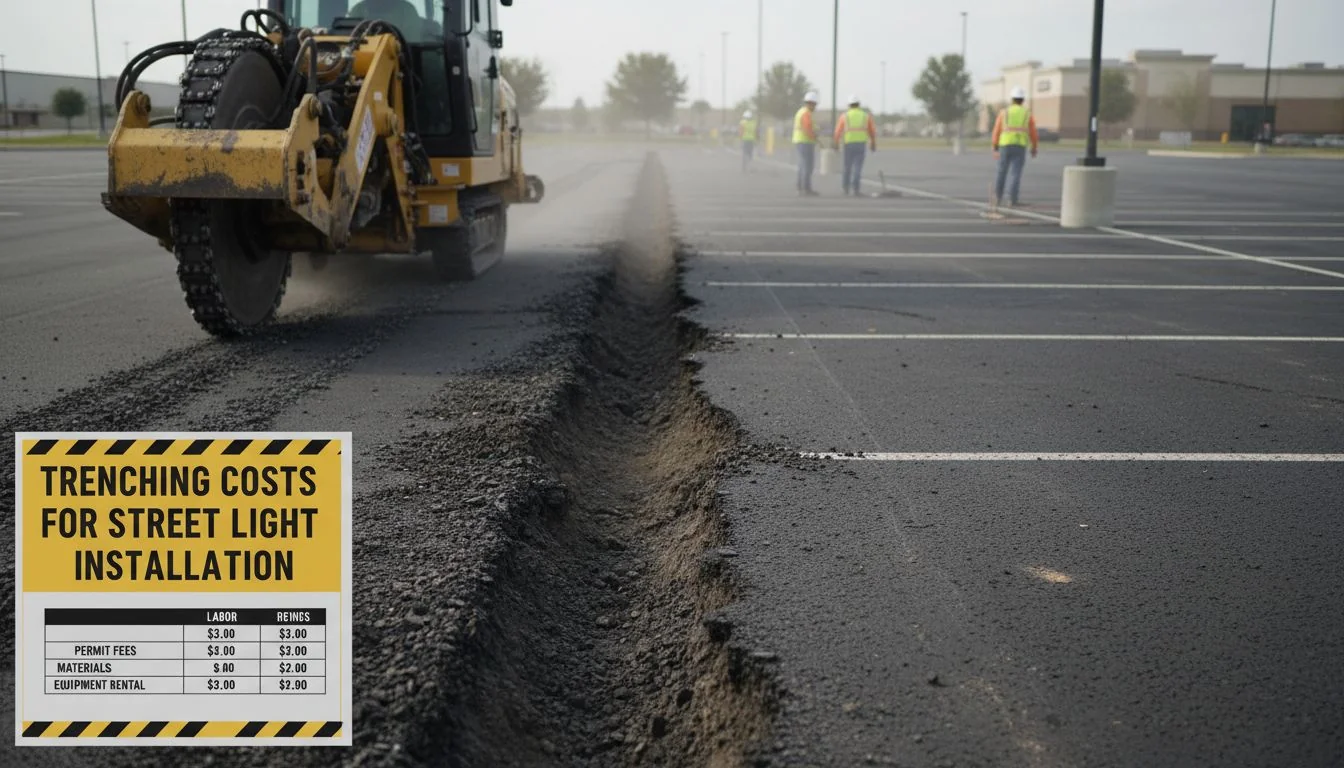
The costs "below ground" are what I see derail budgets most often. I always tell my clients that the path of the wire is as important as the placement of the pole. If you have to cut through existing pavement, your costs will skyrocket.
Understanding Below-Ground Costs
Let's break down what goes into getting power to the pole.
- Trenching: Digging a trench is the most variable cost. Digging in a grass median is cheap. But if you have to cut through a 6-inch concrete sidewalk or an asphalt parking lot, you pay for the saw-cutting, the removal of debris, and the restoration. That's where costs can jump from $30 to over $100 per foot.
- Cabling & Conduit: The price of copper wire changes daily. You also need to pay for the protective PVC or metal conduit that houses the wire. The longer the run, the more it costs.
- The Alternative: Go Solar: This is why our solar street lights are becoming so popular for new developments in regions like South America and the Middle East. A solar light with an integrated panel and battery costs more upfront ($150-$400 per unit), but it has zero trenching, cabling, or grid connection costs. The savings on civil works can be massive.
I worked with a contractor in South Asia on a large industrial park. By carefully planning the routes to stay in soft-scape areas, they saved over 20% on their total installation budget. It's a simple planning step that pays huge dividends.
Trenching through asphalt costs the same as digging in dirt.False
Trenching through asphalt or concrete is significantly more expensive due to the need for specialized cutting equipment, debris removal, and surface restoration, often costing 3-5 times more per foot than trenching in soil.
Pre-designing cable routes to avoid paved surfaces can save over 10% on total project costs.True
Strategic planning to place trenches in soft-scape areas like grass verges eliminates the high cost of cutting and restoring pavement, representing a major savings opportunity.
Commissioning and permits: are these the fees your budget underweights?
The hardware is installed and the trenches are filled. But you can't turn the lights on because of paperwork delays and unexpected fees, adding weeks or months to your project timeline.
Absolutely. Budgets often miss the "soft costs" of permits, inspections, and utility coordination, which can add 10-20% to the project cost. Delays in these stages also increase project management overhead, stretching timelines and budgets even further.
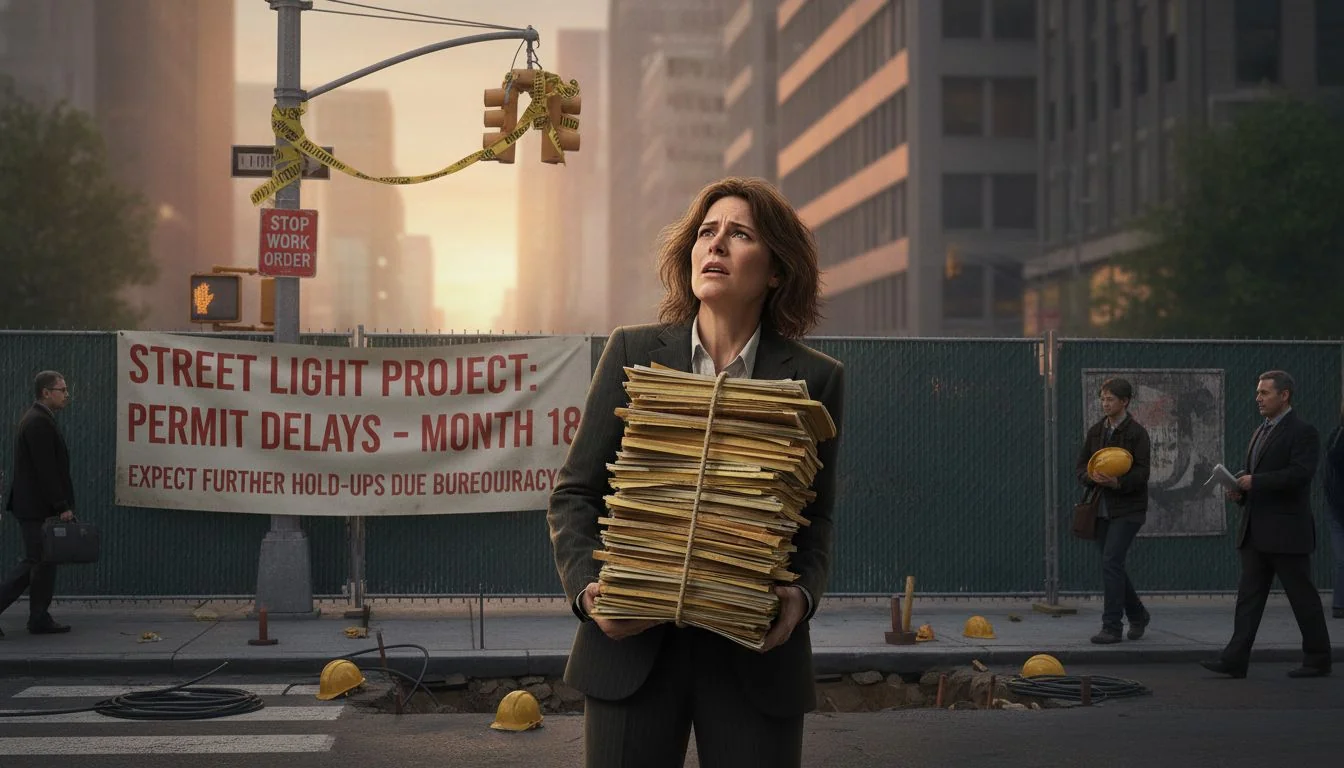
After 13 years, I've learned that a project isn't finished until the utility company gives the final sign-off. These administrative hurdles are a major source of risk and hidden costs. For my B2B buyers, especially large developers, time is money. A delay of one month can have serious financial consequences.
Navigating Bureaucracy and Fees
Here are the common administrative costs you must budget for:
- Permits: You'll likely need multiple permits. A right-of-way permit to work near a public road, an electrical permit for the wiring, and sometimes a general construction permit. Each has an application fee and a review period.
- Inspections: The city electrical inspector will need to visit the site, maybe more than once. The utility company will also conduct its own inspection before connecting the power. Each visit takes time to schedule.
- Utility Coordination: This is a big one. You have to pay the utility company a fee to connect your new lights to their grid. This process can be slow, and you are on their schedule.
A smart contractor I worked with on a large commercial project in the UAE taught me a valuable lesson. He submitted all permit applications for an entire phase of the project at once. He then staged the work so he could call in the inspector for 10 poles at a time, not one by one. This bundling strategy compressed his schedule by a month and saved thousands in project management overhead.
You can install street lights without any permits.False
Nearly all jurisdictions require electrical and right-of-way permits for installing grid-tied street lighting to ensure safety and compliance with local codes.
Bundling permits and staging inspections by project segment can reduce timelines and cost variance.True
This project management strategy streamlines the approval process, minimizes redundant site visits from inspectors, and leads to more predictable schedules and lower overhead costs.
Operations: what about energy and maintenance over the life cycle?
The lights are on and the project seems complete. But ongoing energy bills and frequent maintenance are secretly eating away at your return on investment, making the project less profitable than you planned.
Over a 10-year life cycle, energy and maintenance can easily exceed the initial installation cost. Switching to high-efficiency LEDs (140 lm/W) and using smart controls can cut these operational costs by over 70% compared to old HID lamps.
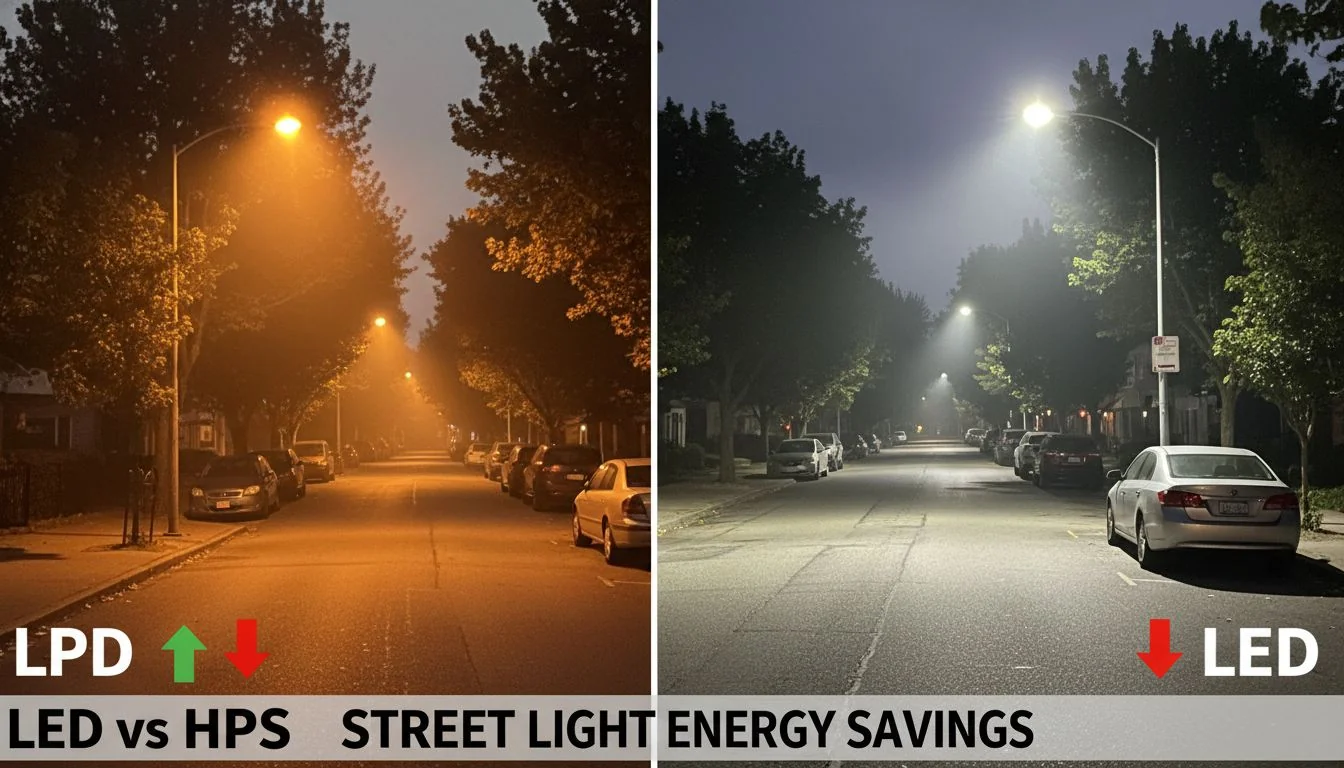
The initial installation is just the beginning of the story. The total cost of ownership4 (TCO) is what truly matters for my clients, who are focused on long-term value. A cheap fixture that consumes a lot of energy and needs constant repairs is not a good investment. This is where the quality of the LED and the intelligence of the system really shine.
Calculating Your True ROI
Let's look at the long-term numbers.
- energy savings5: A typical 250W High-Pressure Sodium (HPS) street light can be replaced with one of our 100W Besenled LED fixtures. That's an immediate 60% energy reduction. If that light runs 12 hours a night, you're saving over 650 kWh per year, per light. At $0.15/kWh, that's nearly $100 in savings annually for each pole.
- Smart Dimming: I always push my clients to go one step further. For a commercial developer in Thailand, we added smart controls to their parking lot lights. The system uses sensors to dim the lights to 30% brightness after 11 PM when the lot is empty, and instantly returns to 100% when motion is detected. This simple feature added another 20% to their energy savings.
- Maintenance Reduction: An old HPS bulb lasts 3-4 years. An LED fixture lasts over 10 years. Think about the cost of sending a bucket truck and two electricians to replace a bulb every few years. That can be $300-$500 per visit. With LEDs, that cost is virtually eliminated for a decade.
LED street lights offer only minor energy savings compared to traditional lights.False
LED street lights are 50-70% more energy-efficient than legacy High-Pressure Sodium (HPS) or Metal Halide (MH) lamps, leading to significant and immediate reductions in electricity costs.
Pairing LED fixtures with smart dimming controls can provide an additional 20% in energy savings.True
Smart controls that dim lights based on traffic patterns or time of night can further reduce energy consumption by 20-30% on top of the initial savings from converting to LED.
FAQ: Your Street Light Cost Questions Answered
What is the average cost to install one street light?
The all-in cost to install a single grid-tied street light typically ranges from $2,000 to $5,000. This includes the fixture, pole, foundation, wiring, trenching, labor, and permits. Solar street lights can sometimes be cheaper as they avoid trenching and grid connection fees.
How much does trenching and cabling add?
Trenching and cabling are major "below-ground" costs. Expect to add $1,000 to $3,000+ per pole, depending on the distance from the power source and the surface. Trenching in soil is cheaper ($30/ft), while cutting and restoring asphalt or concrete can exceed $100/ft.
What do poles cost?
The pole itself, without installation, typically costs between $500 and $2,000. The price depends on the height (usually 20-30 ft), material (steel or aluminum), and the required wind-load rating for your specific location. The concrete foundation will add another $300-$600.
How much does it cost to run an LED street light monthly?
A standard 100-watt LED street light running for 12 hours a night uses about 36 kWh of electricity per month. At an average commercial rate of $0.15/kWh, the monthly cost to run one light is approximately $5.40. This is a 60-70% savings over an old 250W HPS lamp.
What maintenance should I budget?
For modern LED street lights, the maintenance budget is minimal. The fixtures are designed to last over 50,000 hours (10+ years) without intervention. You should budget for occasional visual inspections, but you can eliminate the recurring cost of bulb and ballast replacements that was common with old lighting technology.
Conclusion
A street light budget is mostly about below-ground work and paperwork, not just the fixture. Smart planning and an experienced partner are essential for keeping your project on time and on budget.
References
-
Understanding the components of a street light budget can help you plan effectively and avoid unexpected costs. ↩
-
LED fixtures offer energy efficiency and longevity, making them a smart investment for street lighting projects. ↩
-
Smart controls enhance efficiency and can lead to additional energy savings; discover how they work. ↩
-
Understanding the total cost of ownership helps in evaluating the long-term value of your investment. ↩
-
Exploring energy-saving options can lead to significant cost reductions over the life of your street lighting. ↩