Sourcing street lights in India is tough. You face project delays and budget overruns from unreliable suppliers. This guide gives you the clarity you need to choose the right partner.
The top street light manufacturers in India include major players like Philips (Signify), Havells, Bajaj Electricals, and Wipro Lighting. They are known for their extensive distribution networks, proven track records in municipal projects, and compliance with local standards like BIS, making them reliable choices for large-scale tenders.
Finding the right supplier is more than just picking a name from a list. The Indian market is unique, driven by government initiatives and specific technical demands. As someone who has supplied lighting for complex projects globally for over 13 years, I've learned that understanding the local landscape is the first step to success. This guide will walk you through everything from market trends to a vendor vetting checklist1, helping you make an informed decision that ensures your project's long-term success.
India's 'Smart Cities Mission' aims to install over 10 million smart LED street lights.True
The Indian government's Smart Cities Mission and Street Lighting National Programme (SLNP) are major drivers for the adoption of energy-efficient LED and smart street lighting across the country.
All street lights in India must be solar-powered.False
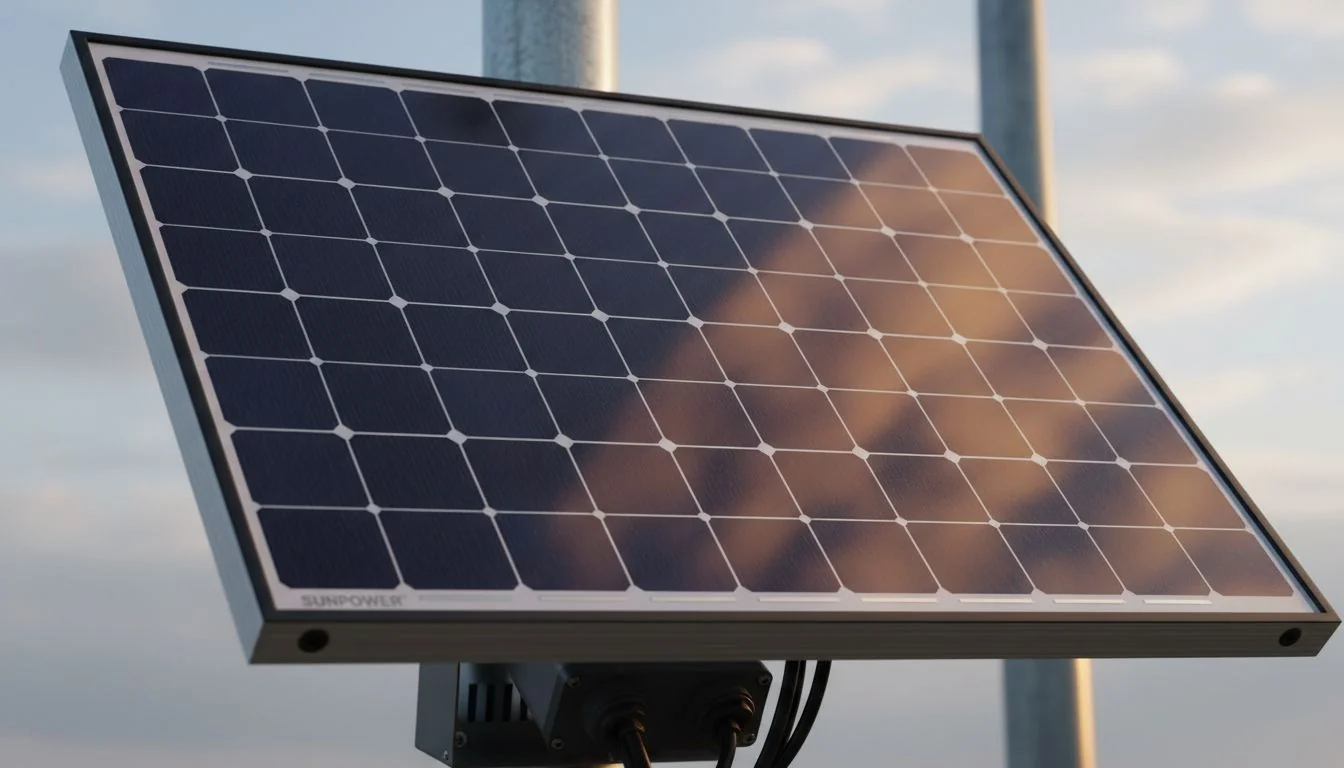
While solar is a growing segment, the majority of installations are still grid-powered AC LED street lights. The choice depends on location, infrastructure availability, and project budget.
What Does India’s Street Light Market Look Like?
Struggling to understand the rapid changes in India's lighting market? You're not alone. New government programs and tech shifts make it hard to keep up, risking outdated project specs.
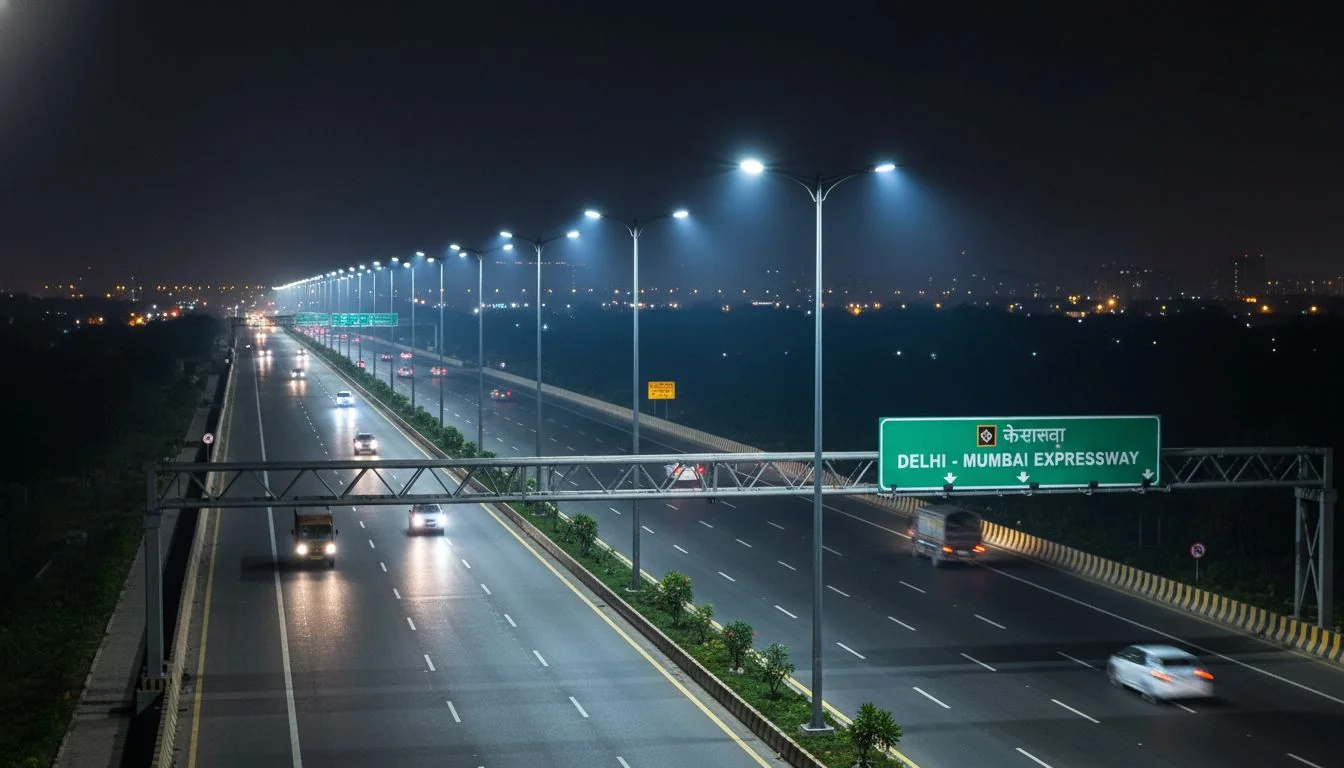
India's street light market is booming, driven by the government's Smart Cities Mission2 and a push for energy efficiency. This has created huge demand for both LED and solar street lights, with a focus on products that are BIS-certified, highly efficient (over 120 lm/W), and increasingly, smart-ready.
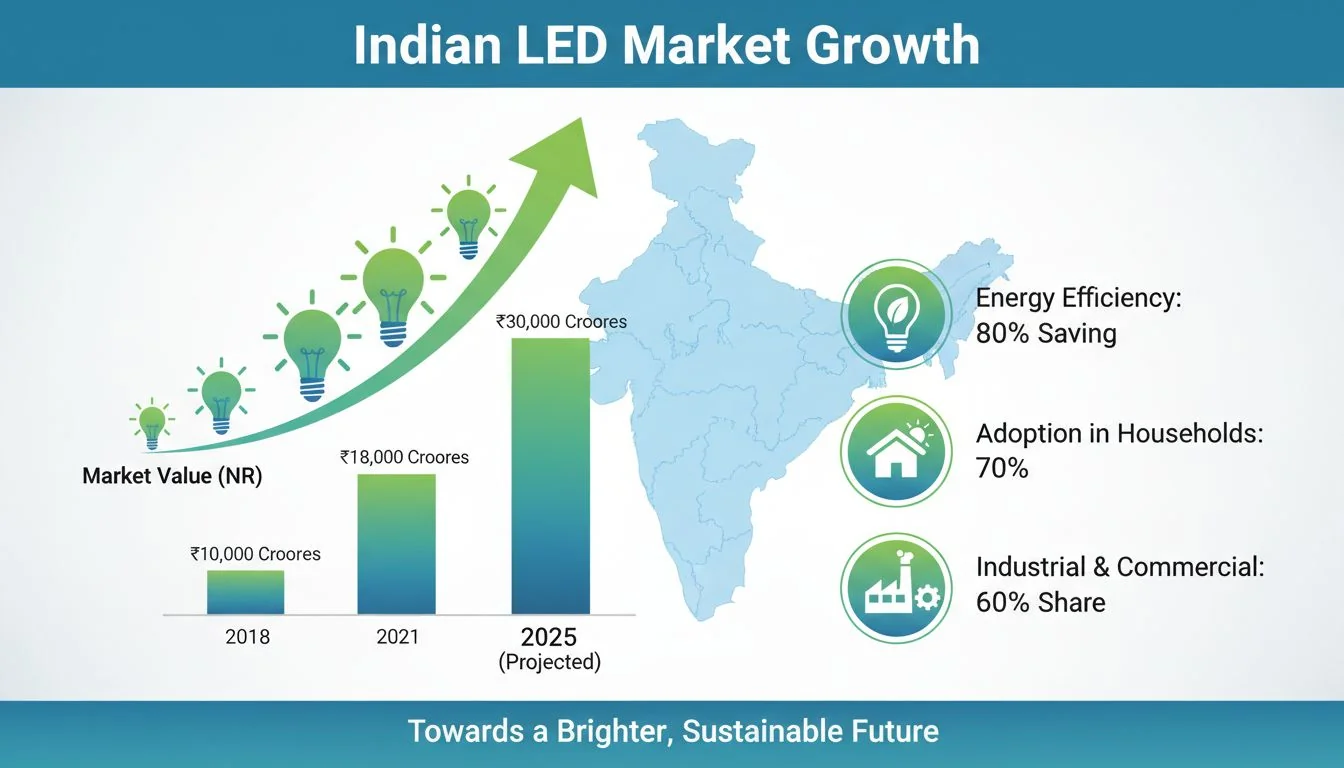
As a manufacturer, I see the South Asian market, especially India, growing at an incredible rate. The market data shows an expected CAGR of 11.3% for outdoor lighting, reaching around $4 billion by 2025. This isn't just random growth; it's fueled by specific needs.
Key Market Drivers
- Energy Savings: The primary driver is the shift from old HID lamps to LEDs. With energy savings of 50-80%, the return on investment is very attractive for municipalities and large commercial projects. This is why tenders often specify a minimum lumen-per-watt (lm/W) rating.
- government initiatives3: Programs like the Street Lighting National Programme (SLNP) have replaced millions of conventional street lights with LEDs. This creates a standardized market where compliance and quality are key.
- Smart City Integration: More than just light, cities want data. smart street lights4 with IoT controls (like DALI or Wi-Fi-based systems) allow for remote monitoring, dimming schedules, and fault detection. This is a trend we at Besenled are heavily invested in.
This all means that as a buyer, you are in a market that values quality, efficiency, and intelligence over just low cost.
The Indian government provides a 90% subsidy for all solar street light projects.False
Subsidies exist through bodies like the MNRE, but they are not universal and vary by state, project type, and technology. Buyers must check the latest applicable schemes.
LED street lights have a lifespan of over 50,000 hours.True
Quality LED fixtures, supported by robust drivers and thermal management, typically offer a lifespan (L70) of 50,000 to 100,000 hours, significantly reducing maintenance cycles compared to traditional lamps.
Who Are the Top 20 Manufacturers and Suppliers in India?
Finding a trustworthy supplier from a sea of options feels overwhelming. Choosing the wrong one leads to poor quality, missed deadlines, and failed tenders. How do you identify the best?
Here is a curated list of the top 20 manufacturers in India, known for their market presence, product quality, and project experience. These companies range from large multinational corporations to strong domestic players who have earned their place through consistent performance.
I've competed and sometimes collaborated with many of these companies on international bids. This list is based on my industry knowledge and their reputation in the Indian market. It includes both LED and solar specialists to cover all your potential needs.
Top 20 Indian Street Light Manufacturers
| Company Name | Main Products | Why They Win Market Share |
|---|---|---|
| 1. Signify (Philips Lighting) | LED & Smart Street Lights | Global brand recognition, extensive R&D, strong government ties. |
| 2. Havells India Ltd. | LED street lights5, Poles | Massive distribution network, strong brand trust among consumers. |
| 3. Surya Roshni Ltd. | LED & solar street lights6 | One of India's largest lighting companies, competitive pricing. |
| 4. Bajaj Electricals Ltd. | High Masts, LED Street Lights | Decades of experience in large-scale infrastructure projects. |
| 5. Wipro Lighting | Smart LED Street Lights | Focus on IoT and connected lighting solutions for smart cities. |
| 6. Crompton Greaves | LED Street Lights | Strong engineering background and a trusted household name. |
| 7. Syska LED | LED & Solar Street Lights | Aggressive marketing and a wide range of affordable products. |
| 8. Orient Electric | LED Street Lights | Part of the CK Birla Group, known for quality and reliability. |
| 9. Eveready Industries | LED Street Lights | A legacy brand transitioning strongly into the LED market. |
| 10. Jaquar Lighting | Architectural & LED Street Lights | Known for design aesthetics combined with performance. |
| 11. K-Lite Industries | Architectural & Roadway Lighting | Specialist in outdoor and architectural illumination. |
| 12. Polycab India Ltd. | LED Street Lights | Leverages its strong cable and electricals business network. |
| 13. Goldwyn LED | LED & Solar Solutions | Strong focus on government tenders and energy service companies (ESCOs). |
| 14. Instapower Ltd. | LED Lighting Solutions | A pioneer in LED lighting in India with many patents. |
| 15. MIC Electronics Ltd. | LED Displays & Lighting | Strong in both LED video displays and general lighting. |
| 16. NTL Lemnis | LED Street Lights | A joint venture with a focus on innovation and energy efficiency7. |
| 17. Servotech Power Systems | Solar Street Lights, EV Chargers | Strong player in the solar and renewable energy space. |
| 18. Schréder India | High-Performance Street Lights | Global expert in complex urban and roadway lighting solutions. |
| 19. Oreva Group (Ajanta) | LED Lighting | Diversified group with a focus on mass-market LED products. |
| 20. Kwality Photonics Pvt. Ltd. | LED Components & Lights | One of the original LED pioneers in India, strong on the component side. |
All top manufacturers in India produce their own LED chips.False
Many leading manufacturers, including global brands, source high-quality LED chips from specialized producers like Cree, Nichia, or Lumileds and then assemble them into their own fixtures.
Bajaj Electricals has illuminated more kilometers of Indian roads than any other company.True
Bajaj Electricals has a long history of executing large-scale government infrastructure projects, including extensive highway and rural road lighting, giving them a massive footprint in India.
What Compliance and Certifications Should Buyers Demand?
Your tender was just rejected for non-compliance. Now the project is delayed, and you're facing penalties. How could you have avoided this bureaucratic nightmare?
You must demand a specific set of documents to ensure your tender is accepted and your products are safe and reliable. Key certifications include BIS for safety, MNRE for solar, and LM-79/80 test reports for performance. Without these, you risk immediate disqualification.

In my 13+ years of exporting to different regions, I've learned one thing: paperwork is king. For India, it's even more critical. A missing document is not a small issue; it's a deal-breaker. When we at Besenled prepare a shipment for India, we have a dedicated checklist just for compliance.
The Non-Negotiable Document Checklist
- BIS Registration: The Bureau of Indian Standards (BIS) certification is mandatory for specific electronics, including self-ballasted LED lamps and drivers. Always ask for the BIS registration number and verify it on the BIS portal.
- LM-79 and LM-80 Test Reports:
- LM-79: This report gives you the actual performance data of the finished lamp: total lumens, lm/W, CCT, CRI, and power factor.
- LM-80: This report measures the lumen depreciation of the LED chip over time. It's your proof of the lamp's claimed lifespan.
- IES Files: This is a digital file that shows how the light is distributed from the fixture. Your lighting designer needs this to run simulations (like in DIALux) and prove the lighting design meets road safety standards.
- IP Rating Certificate: For outdoor lights, an IP65 or IP66 rating is essential. This must be certified by an accredited lab, not just claimed by the manufacturer.
- MNRE Certification (for Solar): If you are buying solar street lights, ensure the components are certified by the Ministry of New and Renewable Energy (MNRE).
Demanding these documents upfront separates the professional suppliers from the rest.
IES files are optional for government tenders.False
IES files are almost always mandatory for government and large-scale private tenders. They are required to simulate lighting layouts and prove that the proposed solution meets the specified illumination levels (lux) and uniformity.
BIS certification is the same as CE certification.False
BIS (Bureau of Indian Standards) is India's national standard, mandatory for certain products sold in India. CE (Conformité Européenne) is a declaration for products sold in the European Economic Area. They are not interchangeable.
How Do You Create a Tender-Ready Technical Spec Template?
Your technical specifications are vague. Now you're getting quotes for wildly different products, making a true apple-to-apple comparison impossible. How do you standardize your request?
Use a detailed technical specification template. This ensures every vendor bids on the exact same requirements, from wattage and optics to driver protection and housing material. This eliminates ambiguity and helps you compare quotes effectively.
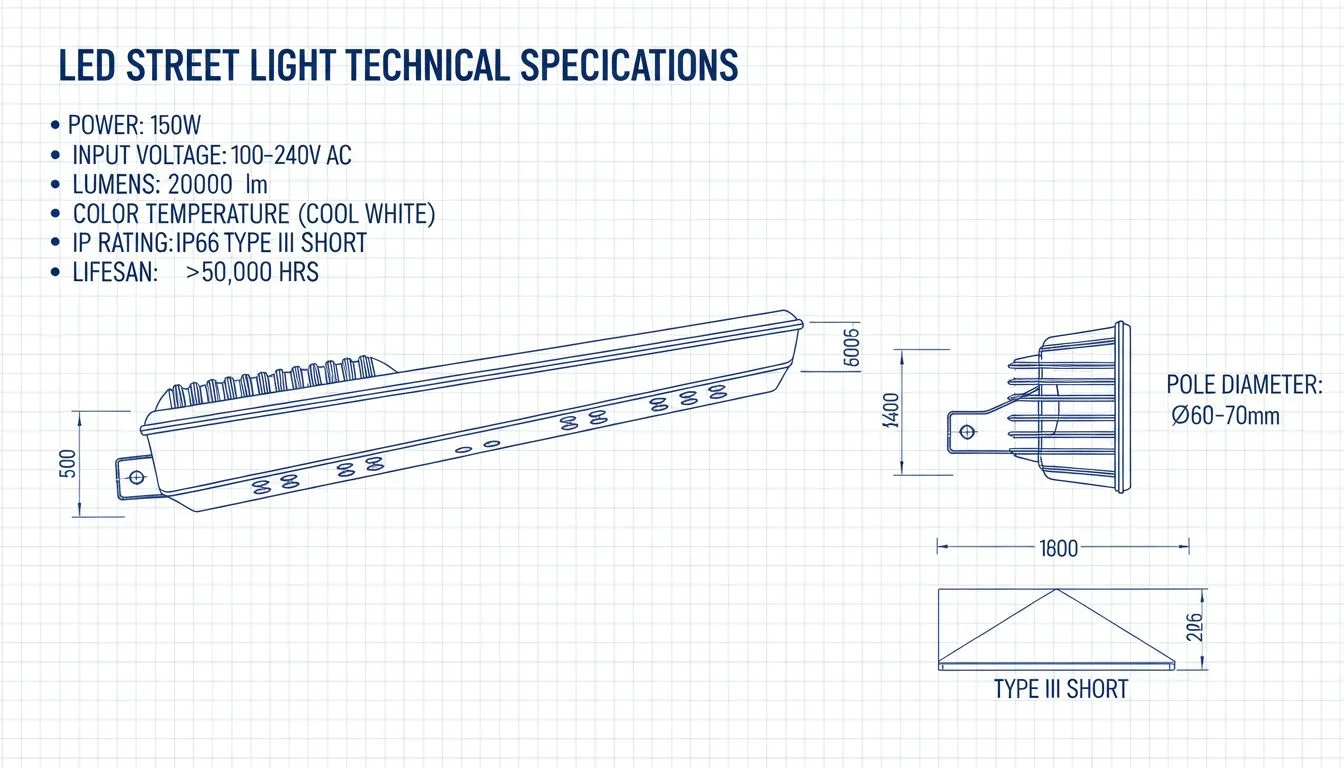
I've seen too many buyers lose money because their initial request was not specific enough. A supplier might offer a low price by using a cheaper driver or a lower-grade aluminum housing that won't last. A detailed spec sheet protects you from this. Below is a template we use as a starting point for our clients' projects.
Tender Specification Template
| Parameter | Specification | Notes for Buyer |
|---|---|---|
| Power (Watts) | e.g., 30W / 60W / 100W | Specify the required power consumption. |
| Luminous Efficacy | >140 lm/W | Higher is better for energy savings. |
| Luminous Flux (Lumens) | e.g., 4200 lm / 8400 lm | The total light output. Must be verified by LM-79. |
| CCT | 4000K / 5700K | Neutral White or Cool White are common for roads. |
| CRI | >70 Ra | Minimum for road safety; >80 is better for color accuracy. |
| Optics / Beam Angle | Type II / Type III / Type IV | Critical for road width and pole spacing. Must match design. |
| Input Voltage | 90-305 VAC, 50Hz | Wide range handles voltage fluctuations common in India. |
| Power Factor (PF) | >0.95 | A measure of electrical efficiency. |
| Total Harmonic Distortion (THD) | <15% | Lower THD prevents issues with the electrical grid. |
| Surge Protection | >10 kV | Essential for protection against lightning and power surges. |
| IP Rating | IP66 | Dust-tight and protected against powerful water jets. |
| Housing Material | Die-cast Aluminum | Good for heat dissipation and corrosion resistance. |
| Certifications | BIS, LM-79, LM-80, IES | Non-negotiable. |
| Warranty | 5 Years | Standard for professional-grade fixtures. |
This template forces suppliers to be transparent and allows you to make a decision based on true performance, not just price.
A Type II optic is best for all roads.False
Optics must match the road geometry. Type II is for narrow roads, Type III for wider roads, and Type IV for perimeter lighting. Using the wrong optic leads to poor uniformity and wasted light.
A 5-year warranty is standard for all LED street lights.False
While professional and municipal-grade fixtures typically offer a 5-year warranty, many cheaper, consumer-grade products may only offer 1-2 years. The warranty length is a strong indicator of quality.
What's on a Good Vendor Vetting Checklist?
You found a supplier with a great price and a nice website. But after paying the deposit, they disappeared, or the products that arrived were terrible. How do you spot a bad supplier before it's too late?
A thorough vendor vetting checklist is your best defense. It goes beyond the price and forces you to check the company's legitimacy, production capability, quality control processes, and past performance. This simple process can save you millions in the long run.
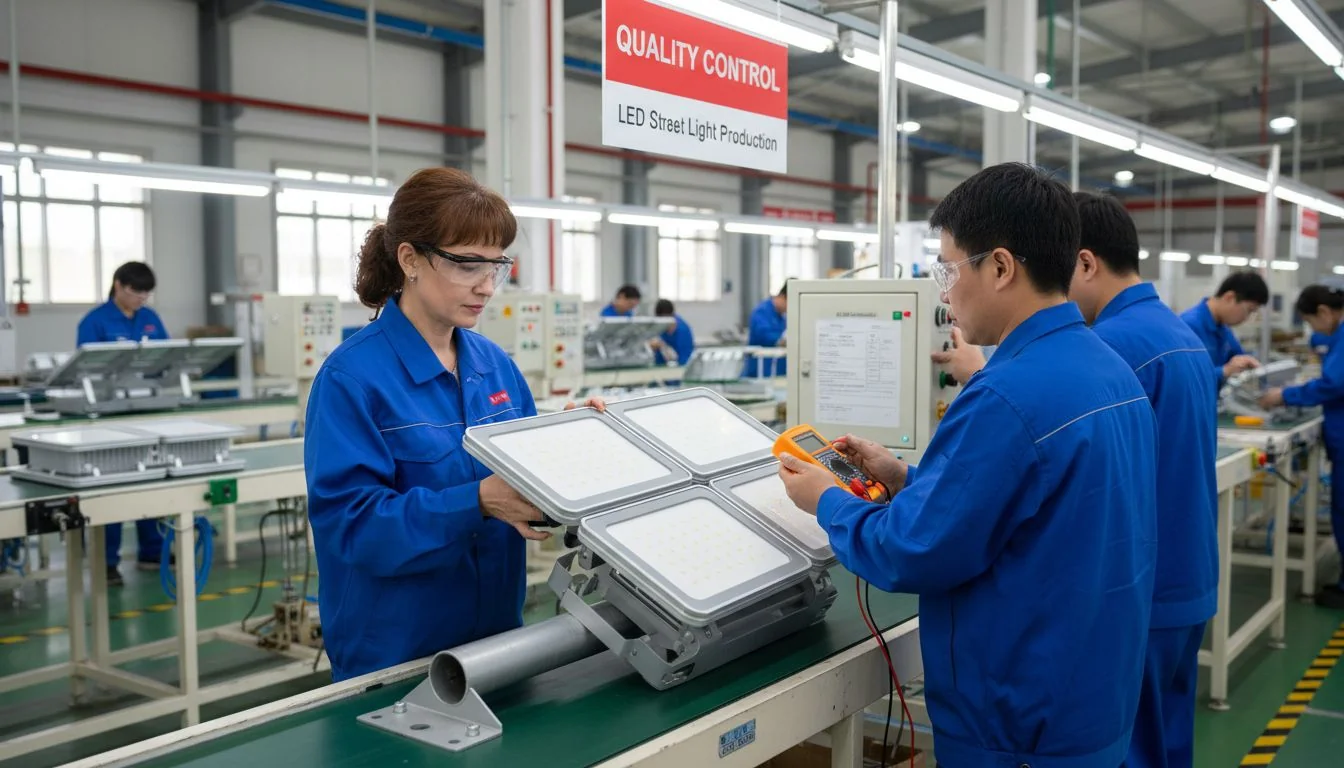
I always tell my clients, "Trust, but verify." A good supplier will welcome your questions and be transparent. A supplier with something to hide will make excuses. At Besenled, we offer virtual factory tours and provide all our certifications upfront to build that trust.
Your 7-Point Vendor Vetting Checklist
-
Verify Company Registration & Certifications:
- Ask for their company registration certificate.
- Ask for BIS, ISO 9001 (quality management), and other claimed certifications.
- Action: Independently verify the BIS number online.
-
Request Project References:
- Ask for a list of 3-5 similar projects completed in the last two years.
- Action: Contact at least one of the references to ask about their experience with the supplier.
-
Evaluate Technical Capability:
- Ask for all technical documents: IES files, LM-79/80 reports, and driver spec sheets.
- Action: Have your technical team review the documents for completeness and compliance with your tender.
-
Assess Production & QC:
- Ask for photos or a video of their production line and quality control process.
- Action: Look for signs of an organized, professional setup (e.g., aging test racks, integrating spheres).
-
Order a Sample:
- Always order a paid sample before placing a bulk order.
- Action: Test the sample for performance, build quality, and ease of installation. Check if it matches the provided spec sheet.
-
Clarify Warranty and After-Sales Support:
- Ask for their detailed warranty policy in writing.
- Action: Understand the process for claiming a replacement. Who pays for shipping? What is the turnaround time?
-
Check Financial Stability:
- For very large orders, consider a third-party credit report.
- Action: Ensure the company is financially stable enough to fulfill your order and honor a multi-year warranty.
A factory with an ISO 9001 certificate guarantees high-quality products.False
ISO 9001 certifies that a company has a documented quality management *system*. It does not certify the quality of the final product itself. A company can have the system but still produce low-quality goods if not implemented properly.
You should never pay 100% upfront for a large order.True
Standard B2B payment terms are typically 30-50% upfront and the remaining balance against a bill of lading or before shipment. Paying 100% upfront removes your leverage and exposes you to significant financial risk.
How Do You Balance Cost, Lead Time, and Risk?
You need 1,000 street lights in 4 weeks, but the cheapest supplier needs 10 weeks. A faster supplier costs 30% more. How do you make the right trade-off without compromising your project?
Balancing cost, lead time, and risk requires defining your project's top priority. For a tight deadline, a higher cost for faster, reliable delivery is a smart investment. For budget-critical projects, a longer lead time with a vetted, cost-effective supplier might be better.
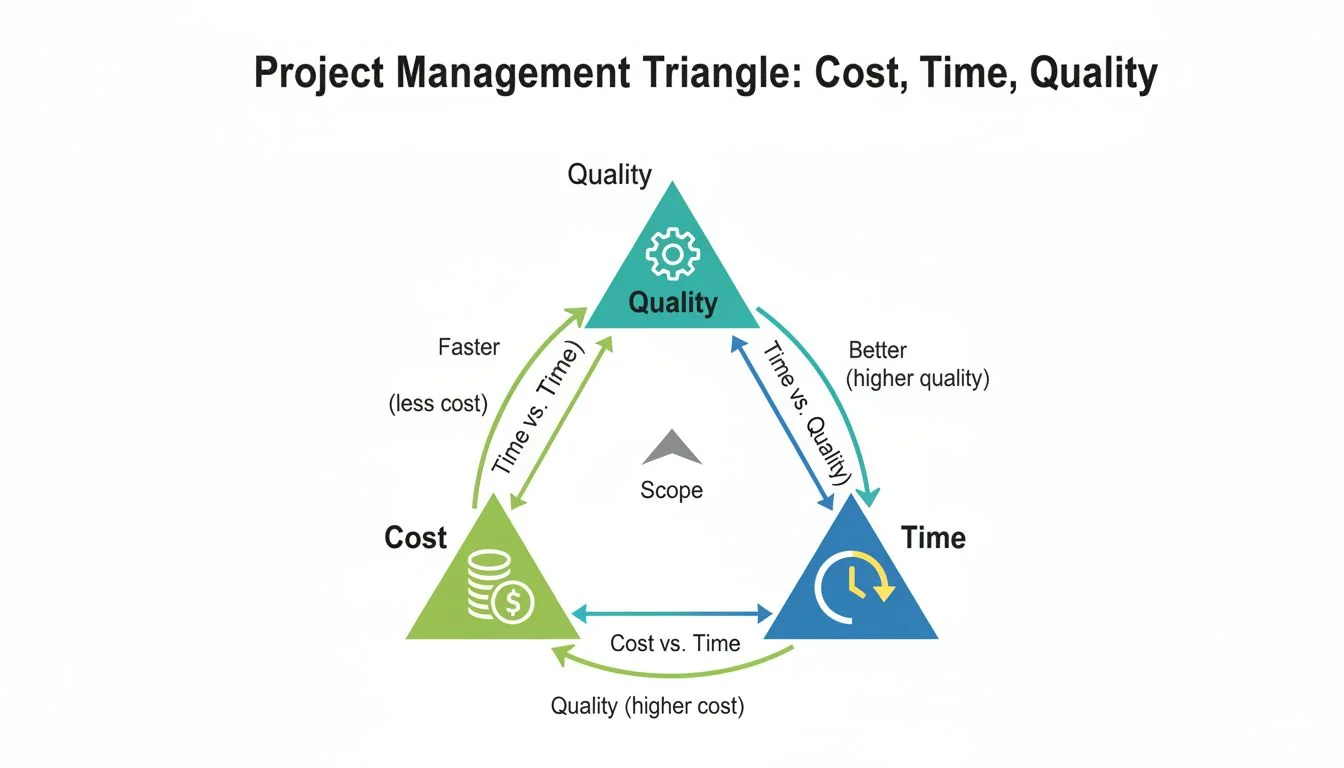
This is a classic project management challenge. In my experience, the cheapest option often carries the highest risk of delays and quality issues, which ends up costing more in the end. It's about finding the "best value," not the "lowest price."
Making the Right Trade-Off
Let's break down the choices, comparing a typical local Indian supplier with a streamlined international supplier like my company, Besenled.
| Factor | Typical Local Supplier | Streamlined International Supplier (e.g., Besenled) | Trade-Off Consideration |
|---|---|---|---|
| Cost | Often lower initial price. | May seem slightly higher due to shipping, but can be competitive on a Total Cost of Ownership (TCO) basis. | Is the initial saving worth the potential risk of lower quality or delays? |
| Lead Time | 4-8 weeks for large orders, can be longer for custom specs. | 1-2 weeks for international delivery. We achieve this with advanced production lines and optimized logistics. | How much does a project delay cost you per week? Often, paying more for speed is cheaper than paying penalties. |
| Risk | Quality can be inconsistent. Risk of supply chain disruption. | Higher quality control (e.g., CE, UL, DLC standards). Risk of customs delays, but a good partner manages this. | A vetted international supplier with a global track record often presents lower quality risk. |
| Customization | Can be slow and limited. | Fast and flexible. We can turn around custom designs in 3-5 days. | If you need specific branding or features, a supplier with strong R&D is a better choice. |
The best choice depends on your project. If you have a 6-month timeline and a tight budget, a well-vetted local supplier is a great option. If you need 5,000 units for a commercial development that must open in 3 months, a fast, reliable international partner like Besenled becomes the logical choice.
Air freight is always faster than sea freight.True
Air freight is significantly faster (days vs. weeks) but also much more expensive. It's typically used for urgent orders or high-value components, not bulk shipments of street lights.
Total Cost of Ownership (TCO) is just the purchase price plus installation.False
TCO includes the purchase price, installation, energy consumption over the product's life, and maintenance/replacement costs. A cheaper light that uses more energy or fails early will have a higher TCO.
What Are the Most Frequently Asked Questions?
You still have specific, nagging questions. You've heard conflicting advice about optics, solar costs, and CCTV flicker. Where can you get clear, practical answers from an expert?
Here are direct answers to the most common questions I get from buyers in India. These are based on my 13+ years of hands-on experience in the LED lighting industry.
These are the details that determine if a project runs smoothly or becomes a headache. Let's clear them up one by one.
Your Questions, Answered
-
Which brands have proven municipal installations in India?
Major players like Signify (Philips), Bajaj Electricals, Havells, and Wipro have extensive track records with municipal corporations and government projects across India. Their long-standing presence and ability to handle large tenders make them go-to choices for public infrastructure. -
What lm/W and optics are best for highways vs. local roads?
For highways, you need high efficiency and long reach. Aim for >140 lm/W with Type II or Type III optics, depending on pole placement and road width. For local/residential roads, 120-130 lm/W is often sufficient, and Type I or Type II optics work well for narrower lanes. -
How do I compare AC LED vs. solar AIO total cost over 5 years?
Calculate the Total Cost of Ownership (TCO).- AC LED TCO = (Fixture Cost + Installation Cost) + (5 years of Electricity Cost).
- Solar AIO TCO = (Fixture Cost + Installation Cost).
Solar has a higher upfront cost but zero electricity cost. AC LED is cheaper upfront but has ongoing energy costs. Solar is often cheaper over 5-7 years, especially in areas with no existing grid infrastructure.
-
What documents are mandatory to avoid tender rejection?
The absolute must-haves are: 1) BIS registration certificate for the driver/lamp, 2) LM-79 test report from an accredited lab, 3) LM-80 report for the LED chips, and 4) IES files for the lighting design simulation. Missing any of these is a common reason for automatic rejection. -
How do I ensure CCTV doesn’t flicker under new street lights?
Flicker is usually caused by a poor-quality driver. To avoid it, specify a driver with low Total Harmonic Distortion (THD < 10%) and a high Power Factor (>0.95). Also, ensure the light source is "flicker-free," a feature good manufacturers will specify. I once had a client whose security cameras were useless at night; a driver swap fixed it instantly. -
What lead times can Indian manufacturers meet for 500–5,000 units?
For standard models, top Indian manufacturers can typically deliver an order of this size in 4 to 8 weeks. Custom specifications or supply chain issues can extend this to 10+ weeks. This is an area where global suppliers like us at Besenled often have an advantage, with our 1-2 week delivery promise. -
How to structure SLAs for replacements and on-site support?
Your Service Level Agreement (SLA) should clearly define:- Replacement Time: e.g., "Defective units will be replaced within 15 business days of notification."
- On-site Support: Specify response times for critical failures, e.g., "A technician will be on-site within 72 hours for outages affecting more than 5 consecutive lights."
- Costs: Clarify who bears the cost of de-installation, shipping, and re-installation for warranty claims.
Conclusion
Choosing the right street light manufacturer in India comes down to balancing local expertise with global quality standards. Vetting suppliers thoroughly and specifying your needs clearly is key to project success.
References
-
A comprehensive checklist can help you select reliable suppliers and avoid costly mistakes. ↩
-
Explore how the Smart Cities Mission is transforming urban lighting and promoting energy efficiency in India. ↩
-
Explore how government programs are driving advancements in street lighting technology. ↩
-
Learn about the technology behind smart street lights and their benefits for urban management. ↩
-
Discover the advantages of LED street lights, including energy efficiency and longevity. ↩
-
Understanding the benefits of solar street lights can guide sustainable lighting decisions. ↩
-
Explore the importance of energy efficiency in reducing costs and environmental impact. ↩