Top 10 Street Light Manufacturer in US?
Choosing a street light supplier feels overwhelming, right? You worry about compliance, rebates1, and if the lights will even last. A wrong choice means lost money and endless problems.
The best US street light manufacturers for municipal projects include Acuity Brands, Cree Lighting, and Cooper Lighting. However, the "best" choice depends less on brand and more on documentation: DLC listing2 for rebates, proven municipal references, solid warranty, and readiness for smart controls.
I've been in the LED lighting business for over 13 years. I've worked with contractors and developers all over the world, including North America. I've learned that project success doesn't come from picking the most famous brand. It comes from paying attention to the details. The real winners are the procurement managers3 who focus on paperwork, performance data, and finding a partner who understands their project's specific needs. Let's walk through how you can be one of them.
The US has over 35 million street lights.True
Estimates from various sources, including the Department of Energy, place the number of street lights in the United States between 30 and 40 million.
All LED street lights are compatible with smart control systems.False
Only street lights equipped with specific drivers and receptacles, like NEMA or Zhaga sockets, are 'controls-ready' for plug-and-play smart control nodes.
What Does the US Street Light Market Look Like Today?
The market is changing fast, with a huge push towards LED and smart controls4. Are you keeping up? Falling behind on these trends can make your project seem old before it's even installed.
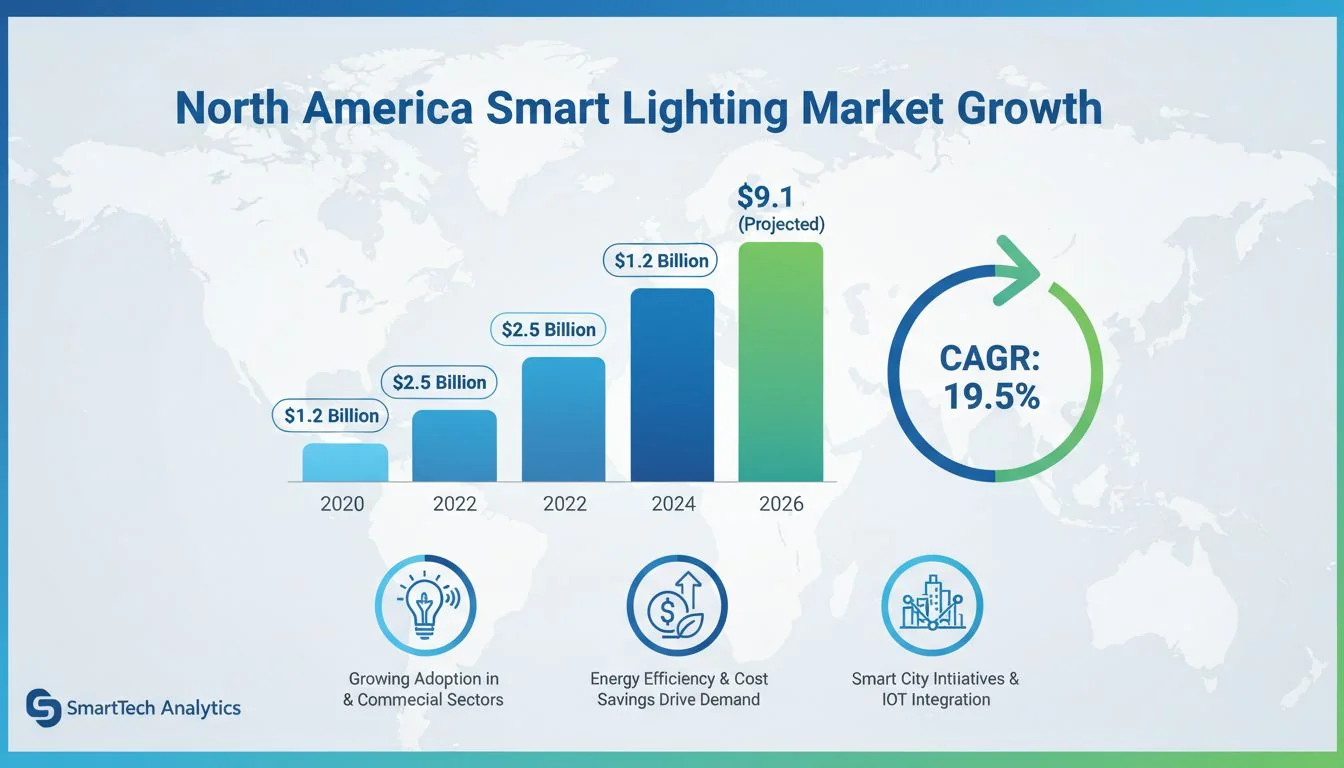
The US street light market is rapidly converting to energy-efficient LEDs5. This shift is driven by smart city goals and the need for massive energy savings. For contractors and developers, this means a huge opportunity, but only if you understand the new technology and its requirements.
I see this trend with my clients in North America every day. They aren't just asking for "lights" anymore. They are asking for "lighting systems." The conversation has moved beyond simple illumination.
From HID to Smart LED
For decades, orange-glowing High-Intensity Discharge (HID) lamps lit up our streets. They were inefficient and needed frequent replacement. Today, LED is the clear winner. LEDs use 50-80% less energy and can last over 100,000 hours. This shift is the single biggest driver in the market.
The Push for Smart Cities
The next step is adding intelligence. Smart controls, often using IoT technology, allow cities to dim lights, monitor energy use in real-time, and get alerts when a light fails. This adds another 10-20% in energy savings and drastically cuts maintenance costs. This is what governments mean when they talk about building "smart cities."
| Feature | Traditional HID Lights | Modern LED Lights |
|---|---|---|
| Energy Savings | Baseline | 50-80% Savings |
| Lifespan | 15,000-24,000 hours | 50,000-100,000+ hours |
| Maintenance | Frequent bulb changes | Minimal; proactive alerts |
| Controls | On/Off | Dimming, scheduling, monitoring |
LED street lights can reduce a city's energy consumption by up to 80%.True
The US Department of Energy confirms that LED lighting can achieve energy savings of 50% or more, with advanced controls pushing that figure closer to 80% in some applications.
The US outdoor lighting market is expected to reach $28.43 billion by 2030.True
Market research from firms like Polaris Market Research projects a strong CAGR of 9.4% for the outdoor lighting market, driven by LED conversions and smart city projects.
How Do You Choose a Manufacturer That Actually Delivers?
You have a list of potential suppliers, but how do you really check them? Choosing based on a slick sales pitch can lead to project delays and budget overruns. I'll show you the checklist I use.
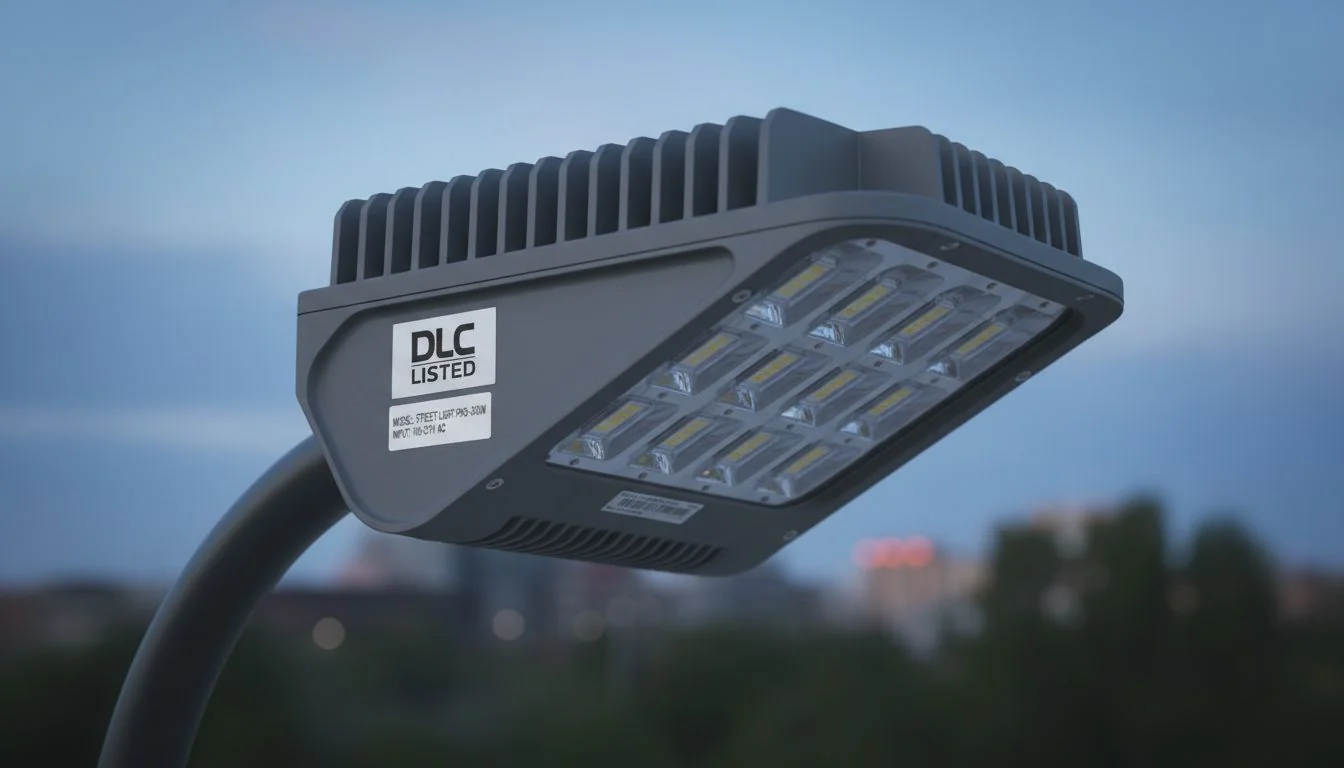
Focus on the paperwork and technical specs. The best partners prove their value with valid DLC Premium listings for rebates, strong municipal references6, a clear warranty, and fixtures that are ready for smart controls. Surge, IK, and IP ratings are just as important.

I remember a project manager for a large commercial development in Florida. He was choosing between two suppliers. One was a big, famous brand. The other was a smaller company. The big brand's sales team was smooth, but their paperwork was a mess. The photometric files didn't match the product, and their DLC listing was for a different model. The smaller company had every document perfectly organized. He chose them, the project went smoothly, and he secured a huge rebate. That's what I call documentation discipline.
The Manufacturer Shortlist That Survives Rebates
Here are some manufacturers who consistently get the details right for US municipal and commercial projects. They understand the importance of documentation.
| Company | Brief Intro | Main Products | Website Link | Key Advantages | Why They Win the Market |
|---|---|---|---|---|---|
| Acuity Brands (Holophane/AEL) | A giant in the industry with a utility-grade portfolio and a huge install base in US cities. | Roadway & area luminaires, utility/municipal fixtures, cobraheads, decorative poles | https://holophane.acuitybrands.com | Scale, proven reliability, broad distributor/spec network, strong warranty programs | Large installed base and brand trust shorten approvals and procurement cycles, reducing perceived risk for cities and utilities |
| Besen led | Industrial manufacturer with 10+ years of experience, shipping globally with US-market certifications. | Industrial & outdoor LED luminaires; OEM/custom builds | https://besenled.com | Cost-effective customization, fast lead times, global logistics, compliance with major certifications | Competitive pricing plus customization and compliance makes it easy for distributors and projects to adopt at scale |
| Cree Lighting | US-based innovator known for high-performance roadway solutions with many proven deployments. | Roadway & area luminaires, high-efficacy optics, control-ready fixtures | https://www.creelighting.com | Optics and efficacy leadership, quality engineering, controls compatibility | Performance track record and measurable energy savings drive spec preference in municipal bids |
| Cooper Lighting Solutions (Signify) | Offers a comprehensive professional portfolio with deep integration into controls. | Full outdoor portfolio; controls ecosystems and sensors | https://www.cooperlighting.com | End-to-end ecosystem (luminaires + controls), interoperability, enterprise support | One-vendor solution simplifies design, commissioning, and long-term asset management for cities and campuses |
| Hubbell Lighting | Known for extremely durable outdoor fixtures built for harsh conditions. | Rugged outdoor/area/roadway fixtures; hazardous-location options | https://www.hubbell.com | Durability, ingress protection, corrosion resistance, long service life | Lower total cost of ownership in challenging environments wins lifecycle-focused buyers |
| LEOTEK | Extensive street/roadway footprint in North America with strong focus on surge protection and optics. | Street & roadway luminaires; municipal standards | https://leotek.com | Emphasis on surge protection and optical performance (reference) | Wide municipal adoption, reliability features aligned to utility specs, and consistent photometric results |
| LSI Industries | US manufacturer focused on non-residential outdoor lighting for roadway and area applications. | Roadway/area luminaires; site lighting | https://lsicorp.com | Domestic manufacturing, quick turns, value engineering | Made-in-USA options and responsive lead times help win time-sensitive commercial projects |
| Amerlux | Specializes in built-to-order outdoor luminaires and poles, with strong photometric layout support. | Custom outdoor luminaires, poles, project services | https://www.amerlux.com | Customization, design/layout support, premium finishes | Tailored solutions and design collaboration improve outcomes and win spec-driven projects |
| ANP Lighting | Decorative look without sacrificing performance optics—ideal for downtown streetscapes. | Decorative post-tops, site/area luminaires, poles | https://www.anplighting.com | Aesthetics + performance, historically styled housings with modern optics | Satisfies urban-design requirements while meeting lighting criteria, easing stakeholder approval |
| Clear-Vu Lighting | Focused on high-security and transit environments with a strong “Made in America” emphasis. | Vandal-resistant and transit-grade fixtures | https://clearvulighting.com | Security ratings, robust construction, domestic content | Meets stringent security/Buy America needs, reducing compliance friction for transit and government |
| Cyclone Lighting | Great choice for decorative outdoor lighting with designs that are easy to maintain. | Decorative post-tops and area luminaires | https://cyclonelighting.com | Serviceability, modular components, distinctive design language | Maintenance-friendly designs lower lifecycle cost, appealing to municipalities and campuses |
Acuity Brands is the largest lighting manufacturer in North America.True
Based on revenue and market share, Acuity Brands is consistently ranked as the largest lighting and building management solutions company in North America.
All the listed manufacturers are based in the USA.False
While most are US-based, Cooper Lighting is part of Signify (Netherlands), and Besenled is an industrial manufacturer based in China that ships to the US with proper certification.
What Are the Real Numbers on Savings, Rebates, and Smart Controls?
Everyone promises big savings, but the numbers can feel vague. Are you struggling to build a solid business case for your project? Let's break down the actual financial impact you can expect.
Cities typically save 50-80% on energy costs just by converting to LED street lights. Adding smart controls can tack on another 10-20% savings through dimming and scheduling. Rebates, tied to DLC listings, can often cover a huge part of the upfront project cost.
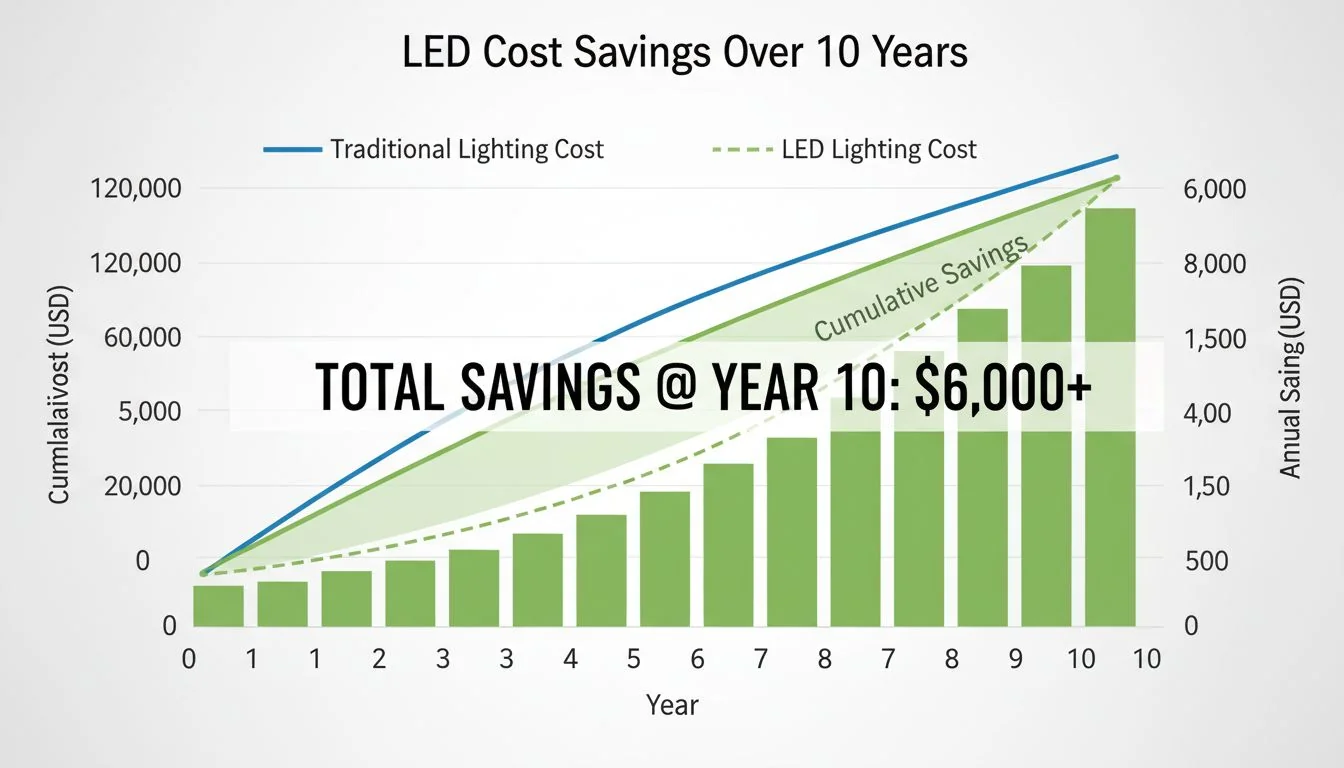
When I talk to procurement directors, this is what they need to show their stakeholders. It’s not just about better light; it’s about a powerful return on investment (ROI). The energy and maintenance savings pay for the project over time. Rebates just make that payback period even shorter. For a large-scale developer or a city manager, these numbers are everything. They turn a capital expense into a smart financial investment. Let's look at a simple example for a single light over one year.
Hypothetical Annual Cost Per Light
| Cost Factor | Old HID Light | New LED Light | Smart LED Light |
|---|---|---|---|
| Energy Cost | $150 | $45 (-70%) | $32 (-78%) |
| Maintenance | $30 (1 replacement) | $5 (reduced labor) | $2 (proactive) |
| Total Annual Cost | $180 | $50 | $34 |
This table shows how the savings stack up. The initial investment in smart LEDs quickly pays for itself through massive operational savings.
Smart controls can add 30-40% in additional energy savings.False
While significant, the additional savings from smart controls are more realistically in the 10-20% range on top of the initial 50-80% savings from the LED conversion itself.
Utility rebates can cover up to 50% of an LED lighting project's cost.True
In many regions with aggressive energy efficiency programs, rebates from utilities for DLC Premium listed products can indeed cover a substantial portion, sometimes up to half, of the material cost.
Is Your Project Ready for Rebates and Compliance?
Navigating the world of certifications like DLC, UL, and NEMA is a headache. One missed detail can put your project's funding at risk. Here is a simple checklist to keep you on track.
For any US project, you must ensure your fixtures are UL Listed7 for safety and DLC Listed (aim for Premium) to get the best rebates. Also, look for NEMA or Zhaga sockets to make your fixtures ready for future smart controls.
This is where many projects get stuck. A contractor might find a cheap light online, but it lacks a UL or DLC listing. That means it won't pass inspection and won't qualify for any rebates. The initial savings are wiped out instantly. You have to check these things before you buy.
Your 4-Point Compliance Checklist
- UL Listing: This is non-negotiable. It means the product has been tested for safety against fire and electrical shock by Underwriters Laboratories. Without it, you can't pass electrical inspections in the US.
- DLC Listing: This is your key to money. The DesignLights Consortium (DLC) certifies the performance and efficiency of commercial lighting. Utilities use the DLC Qualified Products List (QPL) to determine which products are eligible for rebates. Always aim for DLC Premium, as it offers the highest rebate amounts.
- NEMA/Zhaga Sockets: These are standardized plugs on top of the street light. They allow you to easily add or upgrade smart control nodes in the future without replacing the entire fixture. It's about future-proofing your investment.
- IP/IK/Surge Ratings: These numbers tell you how tough the light is. IP rating measures protection against dust and water. IK rating measures impact resistance. Surge protection is critical for protecting the electronics from power spikes. Match these ratings to your local environment. A project in coastal Miami needs higher ratings than one in dry Phoenix.
And what about solar? While many solar street lights are excellent for off-grid applications, they typically do not qualify for grid-tied utility rebates like DLC because they don't reduce load on the power grid. However, they may be eligible for separate green energy grants.
DLC and UL certifications are the same thing.False
UL is a safety certification, ensuring a product won't cause a fire or electrical hazard. DLC is a performance and efficiency certification used to qualify products for energy rebates.
Zhaga sockets are the only standard for smart street light controls.False
While Zhaga is a popular and growing global standard, the 7-pin NEMA socket has been the dominant standard in North America for many years and is still widely used.
What's the Smartest Way to Procure and Install Your Lights?
You've picked the perfect lights, but the procurement process itself is a maze. Should you buy direct, hire an EPC, or partner with an ESCO? The wrong choice can eat away at your savings.
You have three main options: buy direct, use an EPC contractor, or partner with an ESCO. For large municipal projects, ESCOs are often the best choice. They handle financing, installation, and even guarantee the savings, which removes most of the risk and complexity.
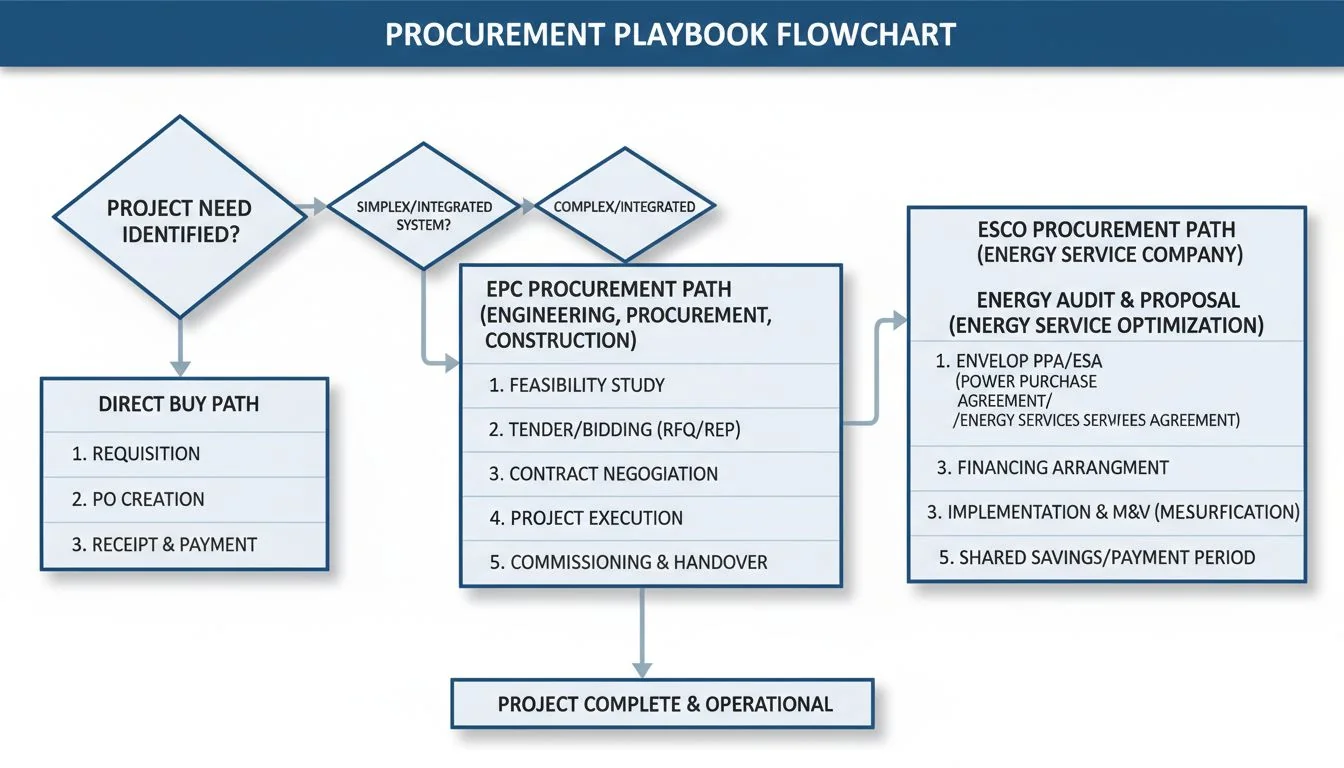
This is the final piece of the puzzle. As my insight at the beginning stated, a good partner can neutralize complexity. An ESCO (Energy Service Company) is that kind of partner. They don't just sell you lights. They sell you a guaranteed outcome—usually a certain percentage of energy savings. They manage the entire process, from auditing and design to installation and securing rebates. For a busy city manager, this is the most reliable path.
Buy, EPC, or ESCO?
| Model | Best For | Pros | Cons |
|---|---|---|---|
| Direct Buy | Small projects, in-house experts | Full control, lowest material cost | You manage all risk, logistics, rebates |
| EPC | New construction projects | Turnkey solution, one point of contact | Less flexible, focused on build only |
| ESCO | Large retrofits, municipalities | Guaranteed savings, handles financing | Shared savings, longer contract terms |
Choosing the right procurement model is just as important as choosing the right light. It aligns the financial and logistical structure of your project with your organization's capabilities and goals.
ESCOs finance projects with their own money.True
A common ESCO model involves them financing the entire project. They are then paid back over time from the energy savings their project generates for the client.
Direct Buy is always the cheapest option.False
While the upfront material cost may be lower, the total project cost can be higher if you make mistakes with installation, logistics, or fail to capture available rebates.
Conclusion
Choosing the right street light isn't about picking a famous brand. It's about disciplined documentation, future-proof technology, and a smart procurement strategy. Focus on these, and your project will succeed.
References
-
Rebates can significantly reduce upfront costs, making LED street lighting projects more financially viable. ↩
-
Understanding DLC listings is crucial for maximizing rebates and ensuring compliance in street lighting projects. ↩
-
Procurement managers are key to ensuring project success through careful supplier selection and documentation. ↩
-
Exploring smart controls reveals how they improve energy efficiency and maintenance, making them essential for modern street lighting. ↩
-
Energy-efficient LEDs significantly reduce energy costs and maintenance, making them a smart choice for municipalities. ↩
-
Municipal references provide insights into a manufacturer's reliability and performance in real-world applications. ↩
-
UL Listing ensures safety and compliance, making it a non-negotiable requirement for street lighting products. ↩