How to choose Street Lighting Controls: DALI vs 0–10V for Roadways?
Choosing the wrong control system for your city's street lights can lock you into high energy bills and obsolete technology. You need a solution that saves money and is ready for the future.
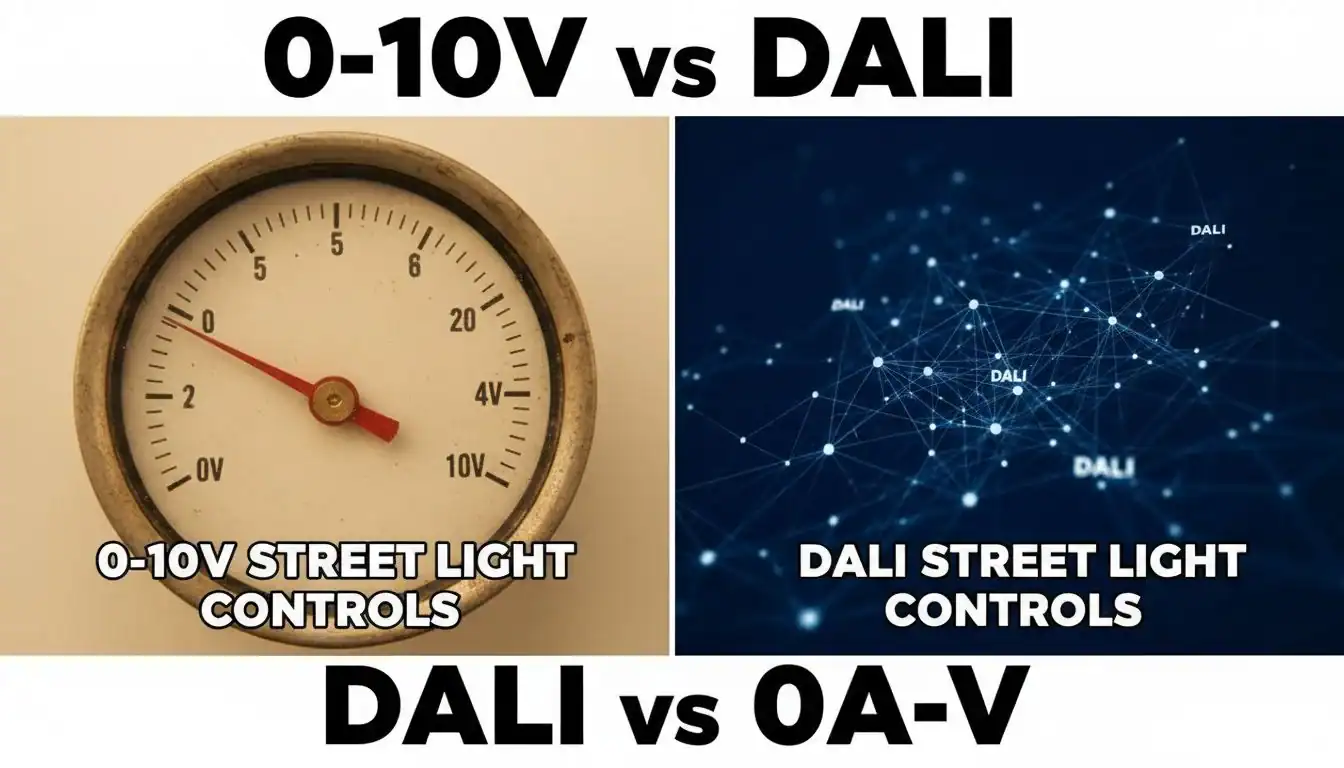
The best choice depends on your project's goals. For simple, budget-conscious dimming of entire street sections, 0-10V is a viable analog option. For future-proof smart city applications requiring individual light control, energy monitoring, and fault detection, the digital DALI1 protocol is the superior investment.
[image placeholder]
Over my 13 years in the LED lighting industry, I've seen countless municipalities and developers struggle with this decision. It’s not just a technical choice; it's a strategic one that will define your operational costs and smart city capabilities for the next 20 years. You're weighing upfront cost against long-term value, and simplicity against intelligence. But making the right call doesn't have to be complicated. Let's break down the key factors so you can choose with confidence and avoid costly mistakes down the road.
DALI allows individual street lights to report their energy consumption and operational status back to a central system.True
DALI is a two-way communication protocol, meaning data can be sent from the luminaire (e.g., fault codes, energy use) back to the controller.
0-10V and DALI systems use the exact same wiring, making them easily interchangeable.False
0-10V requires a dedicated, polarity-sensitive low-voltage pair for each control group. DALI uses a polarity-insensitive 2-wire bus that can be run with the mains power cable, simplifying wiring.
What’s the difference between DALI and 0–10V in street lighting?
You're looking at two spec sheets, and the technical jargon is confusing. This uncertainty can lead to choosing a system that either underperforms or is overkill for your needs, wasting valuable budget.
The fundamental difference is communication. DALI is a two-way digital protocol that allows for intelligent, individual control and health monitoring of each street light. 0-10V2 is a one-way analog system that provides simple group dimming. Think of it as a smart conversation versus a simple command.
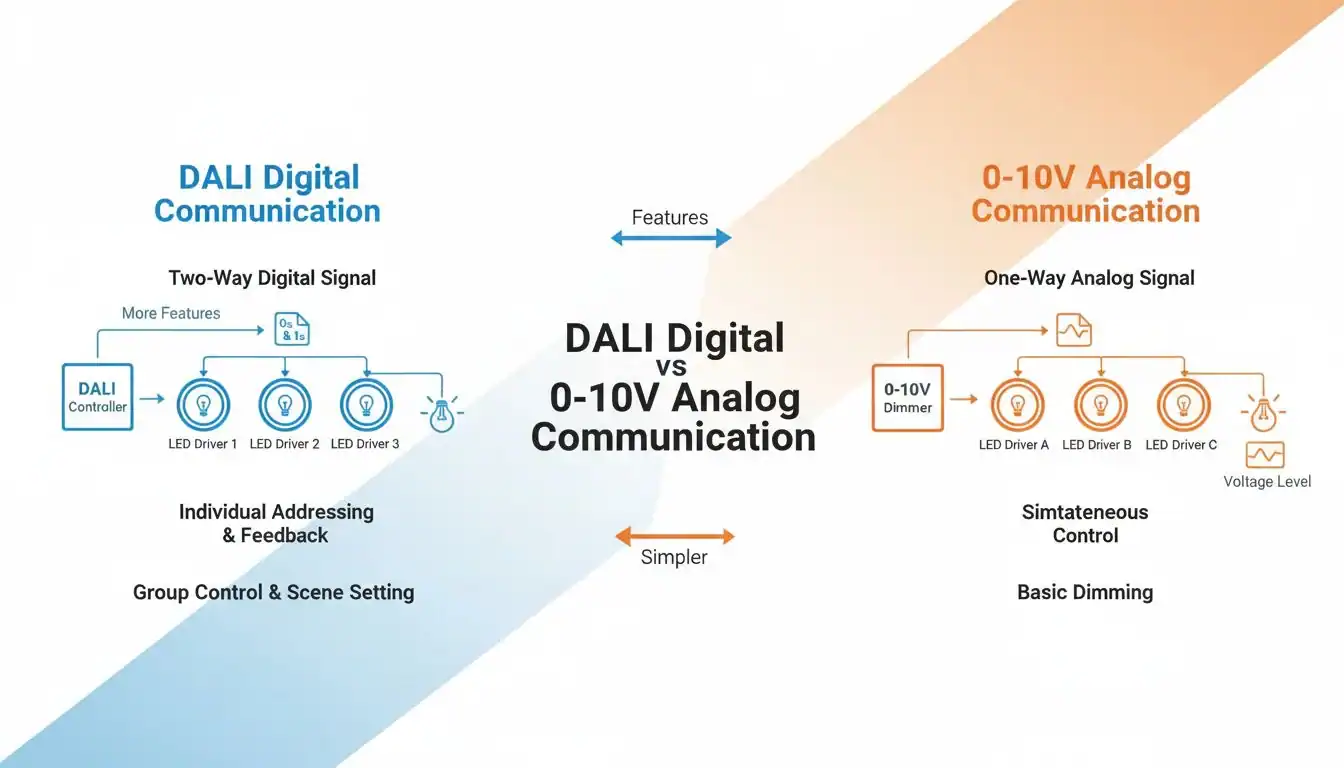
When we work with clients at Besenled, we often compare it to a team of employees. With 0-10V, you can tell an entire room of people to "work at 50%," but you don't know if they heard you, if they are actually working, or if someone has gone home sick. With DALI, you can speak to each person individually, give them specific tasks, and they can report back to you on their progress and if they need help. This two-way digital communication is what makes DALI so powerful for modern infrastructure.
Key Technical Distinctions
| Feature | DALI (Digital Addressable Lighting Interface) | 0–10V (Analog) |
|---|---|---|
| Communication | Digital, Two-Way | Analog, One-Way |
| Control | Individual luminaire addressability (up to 64 per loop) | Group control only (all lights on a circuit act as one) |
| Feedback | Yes (lamp/driver failure, energy use, runtime) | No (sends command, receives no status back) |
| Dimming Curve | Standardized logarithmic curve (matches human eye) | Non-standardized, can vary by manufacturer |
| Wiring | 2-wire bus, polarity-insensitive, can run with mains | 2-wire low-voltage, polarity-sensitive, separate from mains |
| Flexibility | Groups configured via software, easy to change | Groups fixed by physical wiring, hard to change |
A single DALI network can individually address and control up to 64 luminaires.True
This is a core specification of the DALI protocol (IEC 62386). Each luminaire or driver is assigned a unique short address from 0 to 63.
0-10V dimming provides more precise light control than DALI.False
DALI offers 254 discrete brightness steps on a logarithmic scale that matches human perception, offering smoother and more consistent dimming than the variable analog signal of 0-10V.
When should municipalities choose DALI over 0–10V for roadways?
You're under pressure to cut costs, but you're also tasked with building a resilient, "smart" city. Choosing a cheaper, simpler system now could lead to massive expenses and operational headaches in the future.
Municipalities should choose DALI when the project goals include long-term operational savings, proactive maintenance, and future-readiness for smart city applications3. If you need asset management, energy reporting, or integration with other systems, DALI is the only logical choice over the much simpler 0-10V.
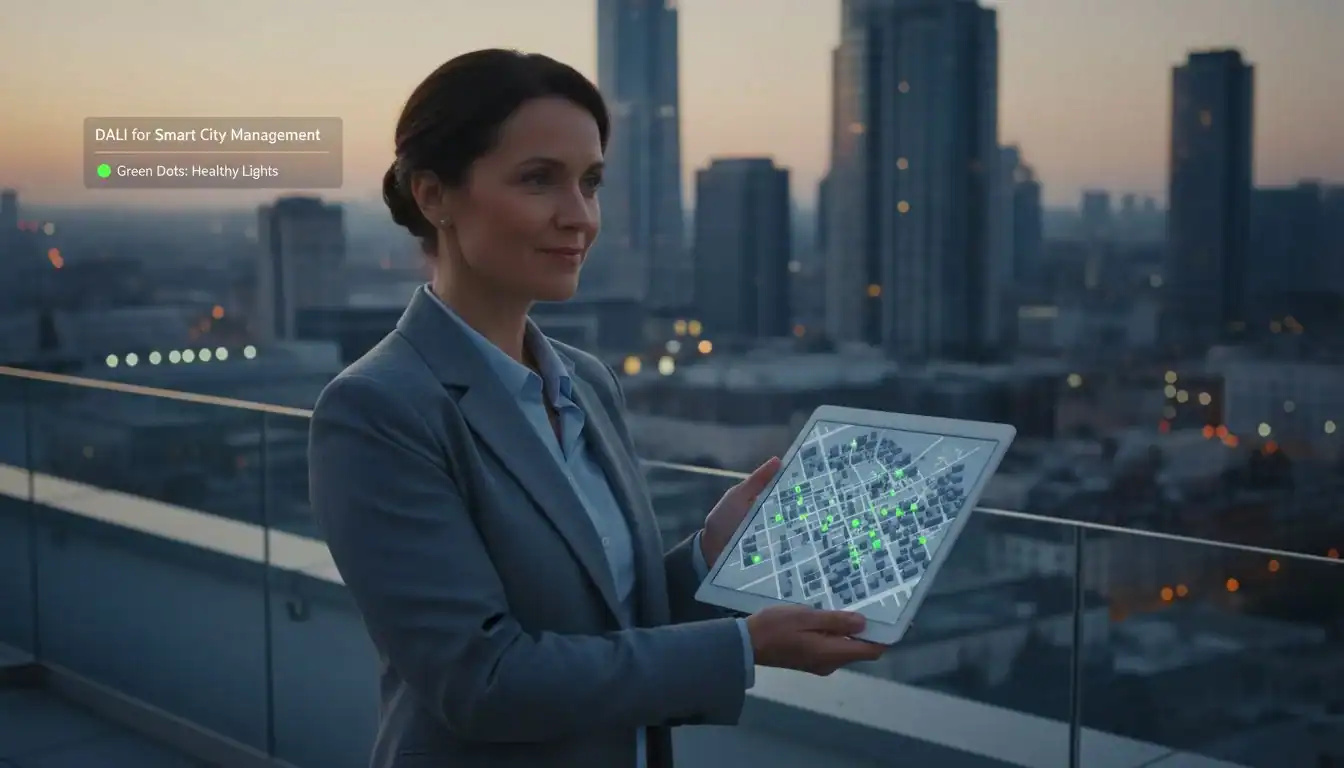
I remember a conversation with a public works director from a mid-sized city. They were facing rising electricity tariffs and citizen complaints about outages. Their old system required night crews to drive around looking for broken lights. By switching to a DALI-based system, they transformed their maintenance model. Now, they get an automatic alert on a dashboard pinpointing the exact fixture that has failed, along with the nature of the fault. This is the power of DALI. It changes maintenance from a reactive, costly exercise to a proactive, efficient one. The city of Los Angeles reported a 64.5% energy reduction after its LED and smart control upgrade, saving $10.6 million annually. That level of granular data and savings is only possible with a digital protocol like DALI.
Decision Triggers for Choosing DALI
- You Need Proactive Maintenance: DALI drivers can report lamp failures, driver failures, and operating hours. This eliminates the need for manual inspections and allows you to dispatch maintenance crews with the right parts to the right location, drastically cutting operational costs.
- You Want Granular Energy Management: DALI allows you to dim or turn off individual lights, not just entire circuits. You can create custom dimming schedules for low-traffic areas or brighten lights in response to sensor data, maximizing energy savings beyond what simple group dimming can achieve.
- You Are Building a Smart City: If you plan to integrate lighting with traffic sensors, public safety systems, or environmental monitors, you need DALI. Its two-way data capability is the backbone for an interconnected urban environment. 0-10V simply cannot support this.
DALI-based street lighting can reduce maintenance 'truck rolls' by up to 50%.True
By providing real-time, specific fault data, DALI systems eliminate the need for routine patrols to find outages and enable targeted, single-trip repairs.
0-10V systems are better for managing the total cost of ownership (TCO) in large-scale city projects.False
While 0-10V has a lower initial hardware cost, DALI's significant savings in energy and maintenance over the 20+ year lifespan of a street light system result in a much lower TCO.
How do D4i and Zhaga Book 18 future‑proof smart street lights?
You've decided on a smart system, but now you're worried about being locked into one manufacturer's ecosystem. What happens in five years if that company discontinues a part or goes out of business?
D4i and Zhaga Book 184 are open standards that create a "plug-and-play" ecosystem for street lights, ensuring interoperability between components from different manufacturers. Zhaga Book 18 standardizes the physical socket, and D4i standardizes the power and data communication inside the luminaire.
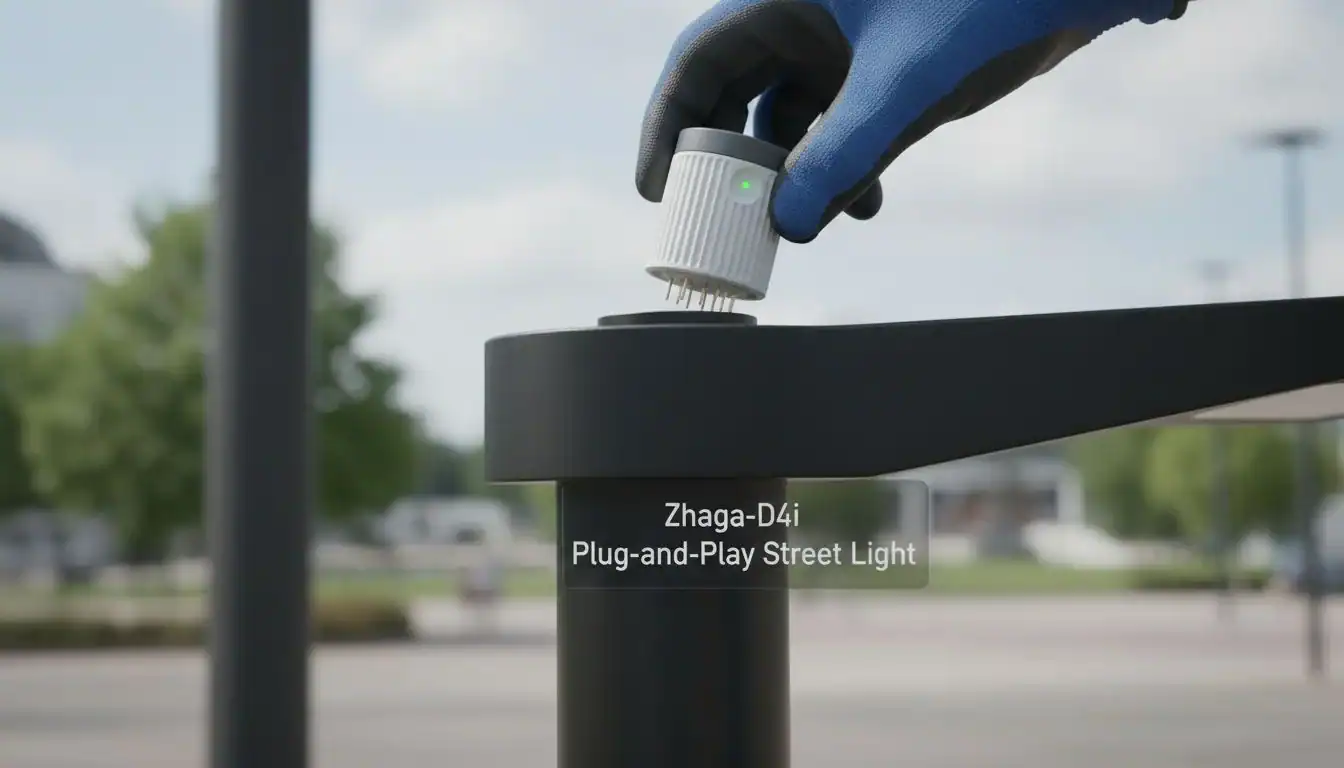
Think of it this way: before USB, every device had its own unique, proprietary charger. It was a nightmare. Zhaga-D4i5 is the "USB port" for street lights. At Besenled, we are huge advocates for these standards because they give our clients, like developers and city planners, freedom and security. You can buy our Zhaga-D4i certified pole lights today and, in five years, plug in a new 5G communication node or an advanced environmental sensor from a completely different company, and it will just work. This de-risks your investment and ensures your infrastructure can evolve without requiring a complete overhaul. It's the ultimate form of future-proofing.
Breaking Down the Standards
- Zhaga Book 18: The Universal Socket: This standard defines the size, shape, and electrical interface of a socket on the outside of the luminaire. It creates a standardized docking point for devices like communication nodes (for wireless control) or sensors. This means no more custom brackets or proprietary connectors.
- D4i: The Smart Brain Inside: D4i is a special certification program from the DALI Alliance. It standardizes how the LED driver inside the luminaire communicates with and powers the sensors and nodes connected to it. Crucially, it also standardizes data storage. A D4i driver stores vital information like luminaire model, energy consumption data, and diagnostic history directly on the fixture.
- The Combined Power: When a luminaire is "Zhaga-D4i certified," it means you have both the universal physical socket and the standardized smarts inside. This creates a truly open and competitive market, driving innovation and lowering long-term costs for the asset owner.
Zhaga-D4i certification guarantees that components from different vendors are interoperable.True
This is the primary goal of the Zhaga-D4i joint certification program, which tests and verifies that products meet the open standards for mechanical, electrical, and communication compatibility.
D4i is a proprietary standard owned by a single company.False
D4i is an open standard developed and managed by the DALI Alliance, a global consortium of lighting companies. It is an extension of the global DALI (IEC 62386) standard.
What are the wiring and commissioning considerations for each protocol?
Your project is on a tight schedule and budget. A complex installation process can lead to costly delays and labor overruns, wiping out any initial savings on hardware.
DALI simplifies installation with a polarity-insensitive two-wire bus that can be run in the same cable as the mains power. 0-10V requires separate, polarity-sensitive control wiring for each zone, adding complexity and cost. Commissioning DALI is digital, while 0-10V is physical and inflexible.
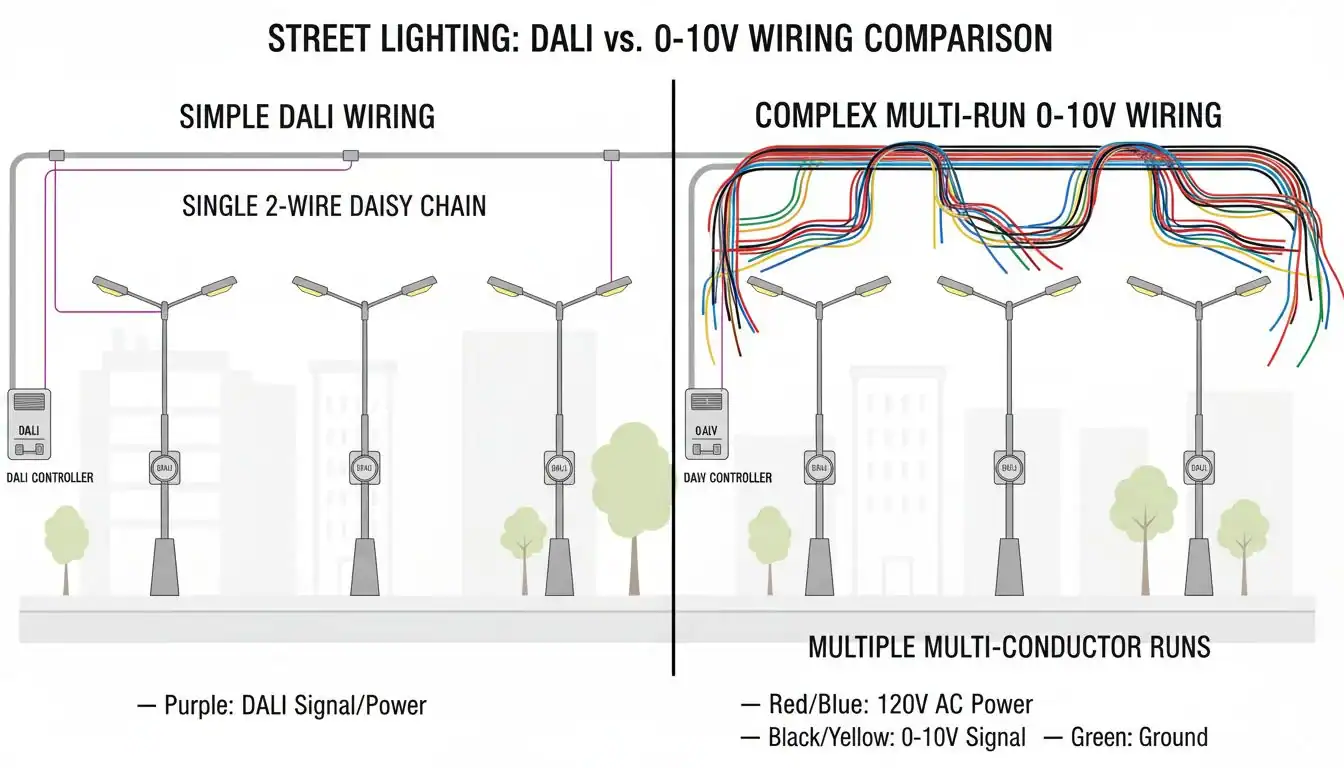
I've been on job sites where installation teams have spent days troubleshooting 0-10V wiring. A single crossed wire on a long run can take hours to find. And if the city later decides to change the dimming zones—say, to separate a new crosswalk from the main road—it requires physically pulling new wires. It's expensive and disruptive. With DALI, the wiring is incredibly simple. It's just two control wires that run along with the power. You can't hook it up backwards. And changing zones? That's a 5-minute job on a laptop. You just drag and drop luminaires into new software groups. This simplicity in installation and flexibility in commissioning saves real money and time.
Installation and Setup at a Glance
| Aspect | DALI | 0–10V |
|---|---|---|
| Control Wiring | 2-wire bus, polarity-insensitive. Can be run in a 5-core cable with power. | 2-wire pair per zone, polarity-sensitive. Must be run separately from power. |
| installation simplicity6 | High. Fewer cable runs, no polarity errors. | Low. More complex wiring, risk of polarity errors, more cables. |
| Commissioning | Digital. Luminaires are auto-detected and grouped via software. | Physical. Groups are defined by wiring. Requires manual testing. |
| Re-zoning | Easy. Done in software with a few clicks, no re-wiring needed. | Difficult. Requires physical re-wiring of control circuits. |
DALI allows for grouping and re-grouping of lights through software after installation.True
This is a fundamental advantage of DALI's digital addressable nature. Commissioning software is used to assign luminaires to groups and scenes, and these can be changed at any time.
0-10V wiring is always cheaper because it's a simpler technology.False
While the components may be cheaper, the need for multiple, separate control wire runs for each zone often leads to higher cable and labor costs than a single DALI bus, especially in large roadway projects.
FAQ
-
What’s the biggest difference between DALI and 0–10V?
The biggest difference is communication. DALI is a two-way digital protocol, allowing each light to be controlled individually and report back its status. 0–10V is a one-way analog signal that provides simple dimming to a group of lights with no feedback. -
How many devices can a DALI loop control?
A single DALI loop (or "line") can control up to 64 individually addressable devices (like LED drivers) and also connect up to 64 input devices (like sensors or switches). -
Can 0–10V support sensors and scenes?
It can support very basic sensor integration where a sensor outputs a 0-10V signal to dim a whole group. However, it cannot support complex, multi-luminaire scenes or individual sensor responses. This functionality is native to DALI. -
What standards matter for street lights?
For modern, future-proof street lights, the key standards are DALI-2 (for interoperable control), D4i (for standardized data and power inside the luminaire), and Zhaga Book 18 (for a universal, plug-and-play sensor/controller socket).
Conclusion
For simple group dimming on a tight budget, 0-10V is adequate. But for any municipality building a truly smart, efficient, and future-proof roadway, DALI is the definitive choice.
References
-
Explore how DALI enhances street lighting with individual control and energy monitoring. ↩
-
Learn about the basics of 0-10V systems and their applications in street lighting. ↩
-
Discover the role of advanced street lighting in developing smart city infrastructures. ↩
-
Explore how Zhaga Book 18 standardizes street lighting components for interoperability. ↩
-
Discover how D4i certification improves communication and efficiency in street lighting. ↩
-
Learn about the advantages of DALI's installation process compared to traditional systems. ↩