Tight budget street lighting?compare CAPEX/lease/ESCO to cut risk
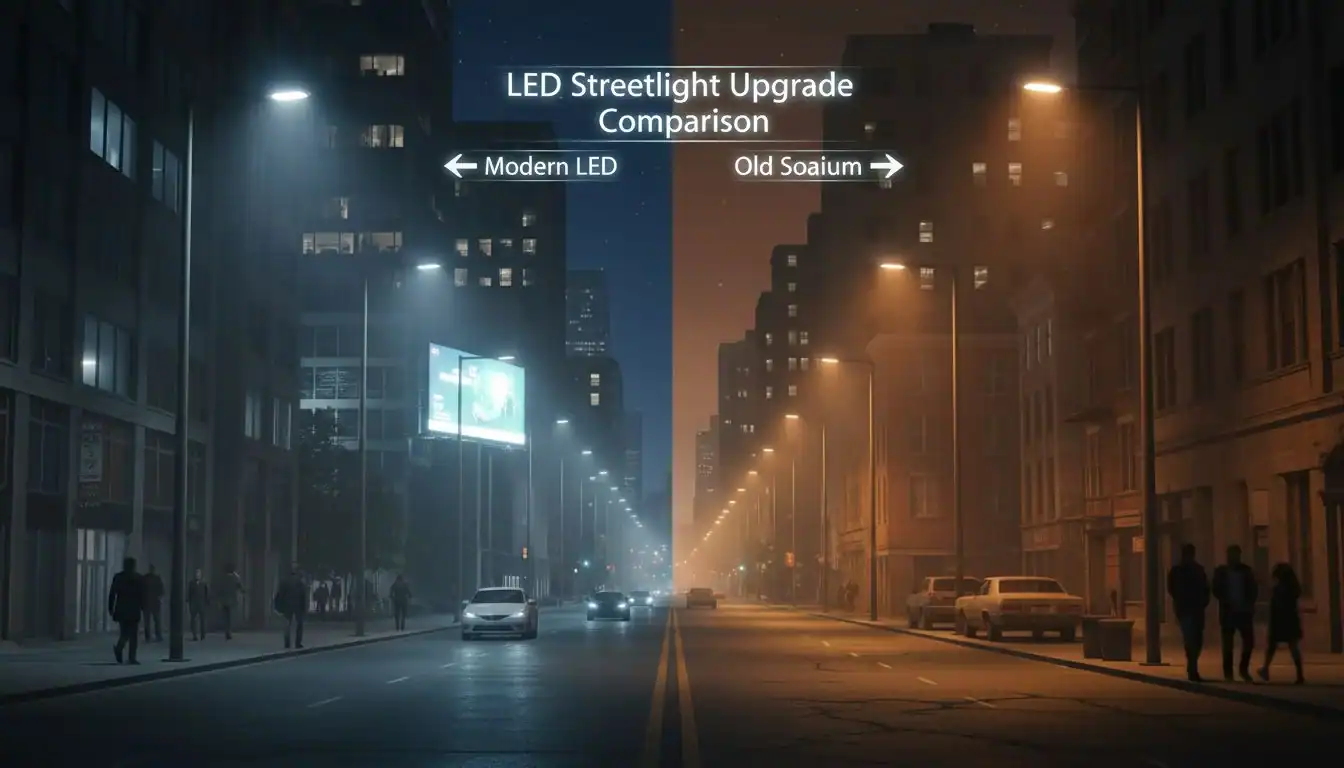
Your city's budget is tight, but your old streetlights are burning cash. Choosing the wrong financing model can lock you into high costs or poor performance for years.
The best way to cut risk is to match the financing model to your city's specific needs. CAPEX1 offers the highest lifetime savings if you have cash. Leases provide predictable payments. ESCOs transfer performance risk and guarantee savings, often with no upfront cost.
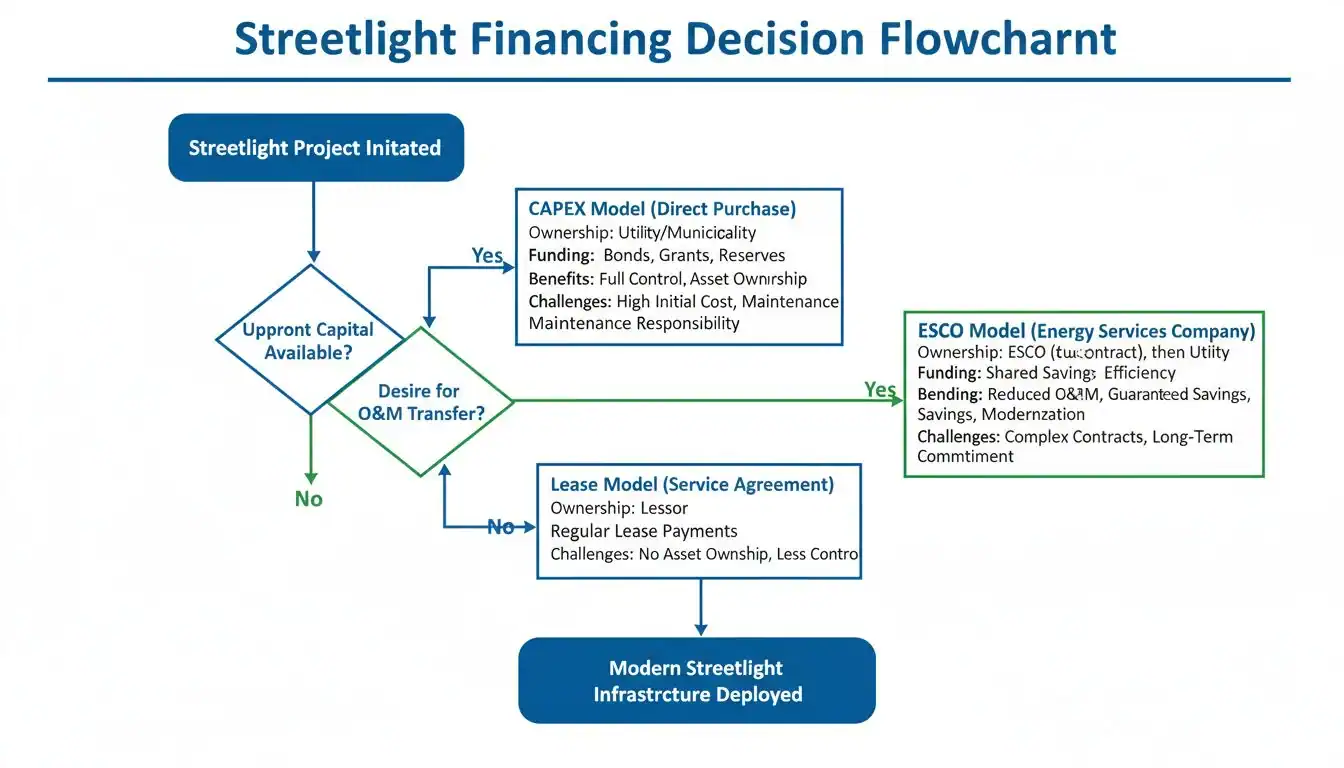
Choosing a financing model isn't just about the initial price tag. It's a strategic decision about ownership, risk, and your city's long-term goals. A cheap option today could become a costly headache tomorrow. But if you understand the core differences between these models, you can confidently select the path that secures the best outcome for your community. Let's break down these options so you can make the right choice.
All street lighting financing models carry the same amount of risk for a city.False
The models are fundamentally different in how they allocate risk. CAPEX places all risk on the city, while an ESCO model is specifically designed to transfer performance and financial risk to a third-party provider.
A hybrid 'Lighting-as-a-Service' (LaaS) model can combine elements of leasing and ESCOs.True
LaaS models often bundle hardware, software, installation, and ongoing maintenance into a single subscription-like payment, offering cash flow benefits while ensuring performance.
Bold basics: CAPEX vs Lease vs ESCO/EPC PPP—who pays, who owns, who carries risk?
Are you confused by the alphabet soup of financing? CAPEX, ESCO2, PPP... it's a lot to take in. Picking the wrong one means you could end up paying for underperforming lights or facing unexpected maintenance bills. Let's clarify who pays, who owns, and who holds the risk in each model.
CAPEX means you pay upfront, own the assets, and carry all risk and reward. A lease means you make regular payments while the lessor owns the lights. An ESCO/PPP model means a third party pays, owns (for a time), and guarantees performance, carrying the project risk.

Understanding these three core models is the first step in any successful lighting upgrade. Each one fits a different financial situation and risk appetite. I've seen clients succeed with all three, but only when the model was correctly matched to their capabilities. For example, a large municipality in South America with available capital chose a CAPEX approach for their new LED pole lights. They took on the implementation risk, but now they keep 100% of the massive Energy savings3, which funds other public works.
Breaking Down the Models
The best choice depends entirely on your city's resources and priorities. Do you have cash on hand? Are you trying to avoid debt? Is transferring performance risk your main goal? The table below gives a clear comparison.
| Feature | CAPEX (Capital Expenditure) | Lease | ESCO / EPC / PPP |
|---|---|---|---|
| Who Pays Upfront? | You (The City) | No one (Financed) | The ESCO (Energy Service Co.) |
| Who Owns the Lights? | You (The City) | The Lessor | The ESCO (until contract ends) |
| Who Carries Risk? | You (The City) | Shared / The Lessor | The ESCO |
| Who Gets Savings? | You (100%) | You (after lease payment) | Shared between you and the ESCO |
| Best For... | Cities with available capital that want maximum long-term returns. | Cities with no upfront cash that want predictable costs and to manage their own assets. | Cities with no cash that want to transfer all performance risk and get guaranteed results. |
An ESCO model means the city has no involvement in the project.False
The city is heavily involved in setting baselines, defining performance criteria, and verifying savings, even though the ESCO manages implementation and risk.
CAPEX always results in the lowest total cost of ownership over 20 years.True
While requiring upfront capital, avoiding financing costs and retaining 100% of energy and maintenance savings makes CAPEX the most financially efficient model long-term.
Guaranteed savings in practice: M&V, baselines, and performance clauses that protect you?
An ESCO promises "guaranteed savings," but how can you be sure you'll actually get them? Without the right contract clauses, these guarantees can be meaningless, leaving you with the same old energy bills and a poorly executed project. Strong Measurement & Verification (M&V) protocols and clear Performance clauses4 are your best protection.
To ensure guaranteed savings, your contract must include a clear energy baseline, a robust Measurement and Verification (M&V) plan, and specific performance clauses. These elements legally require the ESCO to deliver the promised energy reductions or compensate you for any shortfall.

The devil is truly in the details. A promise is not a plan. I worked with a client in the Middle East who was considering a large-scale Public-Private Partnership (PPP) for a city-wide lighting upgrade. They were nervous about the performance claims. We helped them write a contract with two critical clauses. First, a clear M&V plan based on the IPMVP standard. Second, a penalty clause stating that if the new LED streetlights5 didn't reduce energy use by at least 70%, the ESCO would pay the city the cash value of the difference. This transferred the risk and gave them the confidence to proceed.
The Role of Measurement & Verification (M&V)
M&V is the process of proving the savings. It starts with a baseline, which is a detailed measurement of your energy consumption before the project begins. This is your "before" picture. After our high-efficiency LED pole lights are installed, the M&V plan dictates how the "after" picture is measured. This isn't a guess; it often follows the International Performance Measurement and Verification Protocol (IPMVP), a global standard. It can involve metering a sample of circuits or verifying the exact wattage of every new fixture.
Crafting Ironclad Performance Clauses
Your contract should go beyond just energy. What about the quality of light and reliability? Good performance clauses include:
- Uptime Guarantee: A clause requiring that 99.5% of all lights are operational at any given time.
- Lumen Maintenance: A guarantee that the lights will maintain a certain percentage (e.g., 90%) of their initial brightness after a set number of years.
- Response Time: A requirement for the ESCO to fix outages within a specific timeframe, like 48 hours.
The International Performance Measurement and Verification Protocol (IPMVP) is a globally recognized standard for M&V.True
IPMVP provides a framework of best practices for verifying results of energy efficiency projects, ensuring transparency and accuracy for both the client and the ESCO.
A simple 'guaranteed savings' statement in a contract is enough to protect a city.False
Protection comes from detailed contract language, including specific M&V protocols, clearly defined baselines, and financial penalties for non-performance.
Payback in a tight budget: use LED energy and maintenance savings to fund upgrades?
You want to upgrade to modern, efficient LED lighting, but there's simply no money in the capital budget. Meanwhile, your old, inefficient streetlights are burning through cash in energy and constant maintenance calls every single month. You can use those future savings to pay for the upgrade today.
Yes, you can absolutely fund a complete LED upgrade using the project's own savings. The huge reduction in energy (50-80%) and maintenance costs creates a positive cash flow. This new cash flow can be used to make lease payments or pay an ESCO, making the project self-funding.
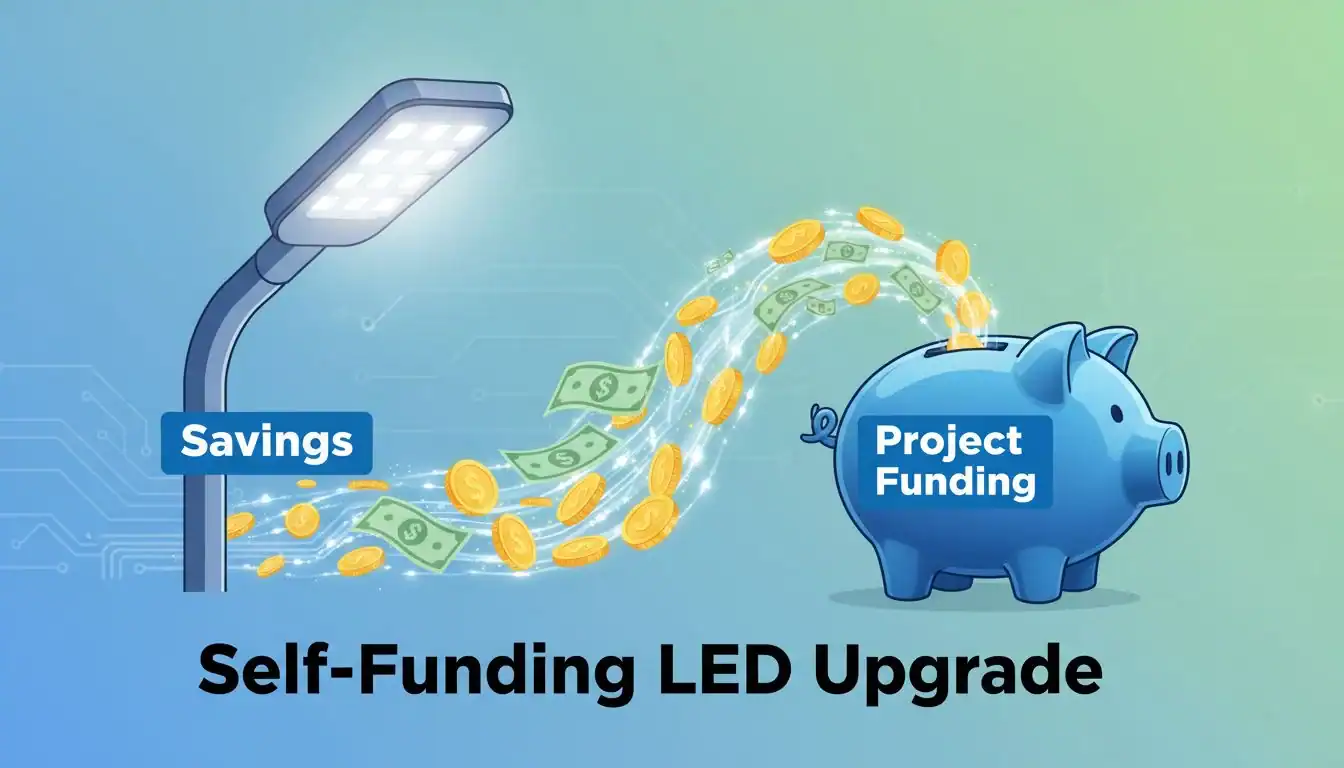
This is one of the most powerful concepts in modern infrastructure projects. The waste from your old system is a hidden asset. I remember a project for a large industrial park in Southeast Asia. Their monthly electricity bill for their old metal halide parking lot lights was enormous. By switching to our smart LED pole lights, their energy savings alone were more than the monthly finance payment for the entire new system. The upgrade was cash-flow positive from the very first month, and they didn't have to spend a dollar of their own capital.
Calculating Your Savings Potential
Let's look at a simple example. A traditional 250-watt high-pressure sodium (HPS) streetlight can be replaced by one of our 100-watt LED pole lights, providing better, cleaner light.
- Energy Savings: That's a 60% reduction in energy per fixture. Across a city of 5,000 lights, this translates into millions of kilowatt-hours and hundreds of thousands of dollars saved annually.
- Maintenance Savings: An old HPS bulb lasts about 24,000 hours, or 5-6 years. Our LED fixtures are rated for 100,000 hours, meaning they can last over 20 years. This nearly eliminates the cost of replacement bulbs, labor, and truck rolls.
From Savings to Funding
This combined stream of savings is predictable and substantial. In a lease or ESCO model, this is the money you use to pay for the project. The monthly payment to the finance company or ESCO is structured to be less than the monthly savings you are achieving. The result is a budget-neutral or even budget-positive project. You get brand new, reliable infrastructure, better public safety, and a healthier budget, all funded by eliminating waste.
LED streetlights can reduce energy consumption by 50-80% compared to traditional HID lamps.True
Modern LEDs have high luminous efficacy (120-140 lm/W or more), allowing them to produce the same amount of light with significantly less power than older technologies like High-Pressure Sodium or Metal Halide.
Maintenance savings from LEDs are insignificant compared to energy savings.False
With lifespans 5-10 times longer than traditional lamps, LEDs drastically reduce the costs associated with replacement parts, labor, and equipment (like bucket trucks), often accounting for a significant portion of the total project ROI.
Procurement playbook: rebates, municipal leases, and PPP templates you can reuse?
Starting the procurement process for a major lighting project can feel overwhelming and complex. You risk missing out on free money from Utility rebates6 or getting stuck with a bad contract because you didn't know where to start. The good news is there are standard tools and resources you can use to simplify procurement and reduce risk.
To streamline procurement, you should actively seek utility rebates, which can reduce upfront costs. Use municipal lease structures, which are designed for public entities and offer low interest rates. For larger projects, leverage existing Public-Private Partnership (PPP) templates to ensure a fair contract.
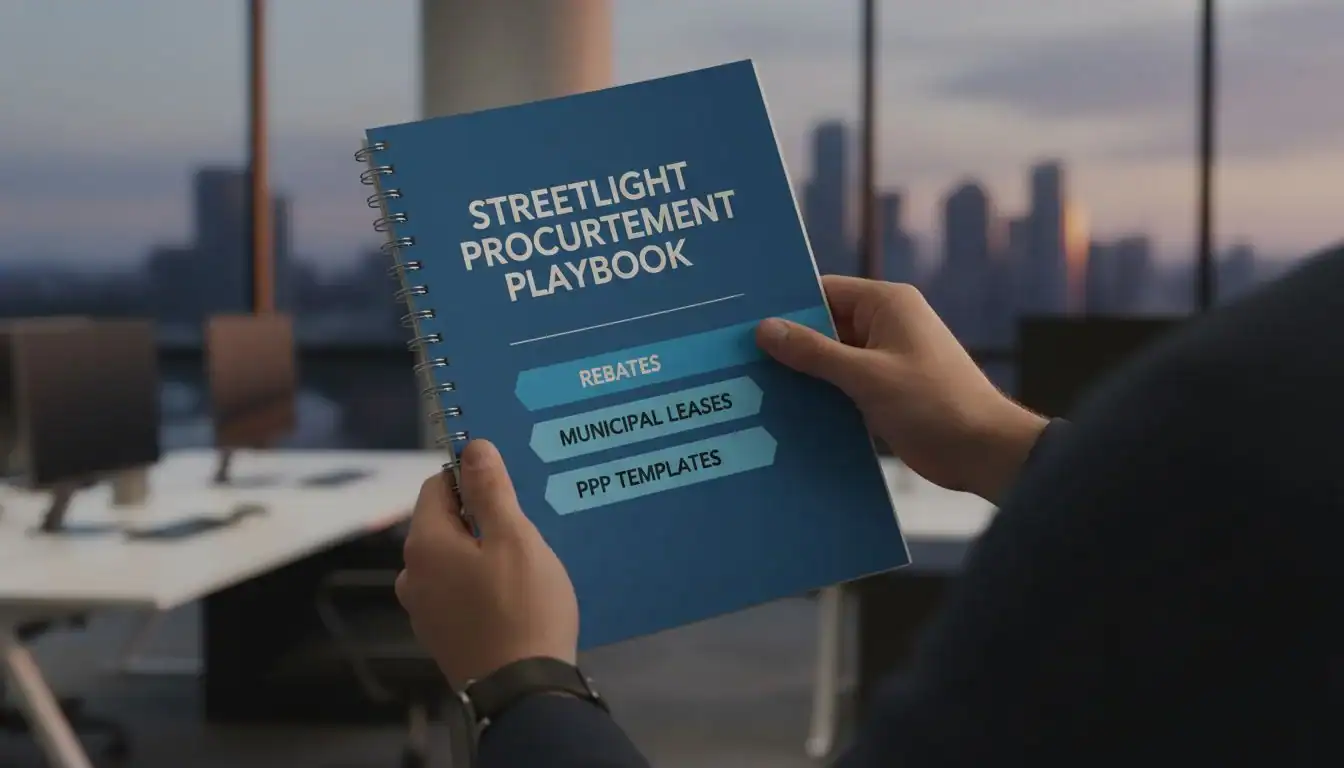
You don't have to reinvent the wheel. These tools exist to make your job easier. A few years ago, we helped a contractor in North America who was bidding on a project for a large school district. They were planning to use our LED panels and troffers. We helped them identify and apply for a local utility rebate. The rebate covered 20% of the total hardware cost. This made their bid far more competitive, won them the project, and freed up school funds for other educational needs. It was a win for everyone.
Unlocking Rebates and Incentives
Nearly every region has utility companies or government agencies that offer rebates for energy-efficient upgrades. These can be a fixed amount per fixture or based on the total kilowatt-hours saved. A common misconception is that you can't get rebates if you use an ESCO or lease. In most cases, you can. The rebate is simply applied to the total project cost, which lowers the amount that needs to be financed. This means your lease payments will be lower, or your share of the savings in an ESCO contract will be higher.
Leveraging Standardized Contracts
- Municipal leases7: These are not your typical car lease. They are a specialized financial tool for the public sector. They often have tax-exempt, low interest rates and include a "non-appropriation clause," which allows a city to terminate the lease if funds are not allocated in a future budget. This makes them a very low-risk option for city finance departments.
- PPP Templates: For complex ESCO or PPP projects, you don't need to start from scratch with a blank legal document. Organizations like the World Bank, the US Department of Energy, and various national infrastructure agencies provide model contracts and templates. These documents have already been vetted and are designed to be fair to both the public and private partners, saving you significant time and legal fees.
Utility rebates are only available for CAPEX projects.False
Many rebate programs can be applied to leased or ESCO-financed projects. The rebate typically reduces the total project cost, which in turn lowers the lease payment or the ESCO's required savings share.
Municipal leases are a common and well-established financing tool for public sector projects in many countries.True
These leases are specifically designed for government entities, often featuring tax-exempt interest rates and non-appropriation clauses that make them a low-risk and affordable option for municipalities.
FAQ
What’s the best financing model for cash‑strapped cities?
For cities with tight budgets and little to no upfront capital, the best models are an ESCO/EPC contract or a municipal lease. An ESCO is ideal if your primary goal is to transfer performance risk and get a turnkey solution with guaranteed savings. A municipal lease is a simpler, excellent choice if you are confident in the LED technology and prefer to manage the assets and maintenance yourself while still avoiding a large capital outlay.
How fast is the payback with LEDs?
The simple payback period for a CAPEX project is typically between 2 and 5 years. This is driven by massive energy savings (often 50-80%) and a near-elimination of routine maintenance costs. The payback can be even faster when you include smart controls. For instance, our pole lights with integrated DALI controls can add another 15-25% in energy savings through dimming and scheduling, accelerating your return on investment.
Do I still qualify for rebates under ESCO/EPC?
Yes, in most cases. Utility rebates are designed to encourage energy efficiency, regardless of the financing model. The rebate is typically applied to the total project cost, which is beneficial for you. It reduces the principal amount being financed, which can lead to a shorter contract term, lower payments, or a larger share of the energy savings for the city. Always confirm the specifics with your local utility provider.
Who carries performance risk in a PPP?
In a Public-Private Partnership (PPP) or ESCO model, the private partner (the ESCO) carries the performance risk. This is one of the primary benefits of the model. The ESCO contractually guarantees a certain level of energy savings and operational performance. If the project fails to meet these targets, the ESCO is financially responsible for making up the difference. This protects the city's budget.
Will smart controls materially reduce costs?
Absolutely. Smart controls are a powerful force multiplier for savings. While upgrading to LEDs provides the first big leap in efficiency, smart controls like motion sensors, astronomical clocks, and centralized dimming schedules can add another 15-25% in energy savings. They also dramatically reduce operational costs by enabling real-time monitoring. You can diagnose a failed fixture from a desktop instead of waiting for a citizen to call and then sending a truck to investigate.
Conclusion
Choosing the right financing—CAPEX, lease, or ESCO—is crucial. Match the model to your budget, risk tolerance, and long-term goals to ensure a successful, self-funding street lighting upgrade.
References
-
Understanding CAPEX can help cities maximize long-term savings and make informed financial decisions. ↩
-
Exploring ESCO models reveals how cities can transfer performance risk and achieve guaranteed savings. ↩
-
Calculating energy savings can help justify investments in new lighting technologies and improve budgets. ↩
-
Understanding performance clauses can safeguard cities against underperformance and ensure accountability. ↩
-
Discovering the energy efficiency of LED streetlights can lead to significant cost savings for municipalities. ↩
-
Exploring utility rebates can uncover funding opportunities that lower project costs and enhance feasibility. ↩
-
Municipal leases offer low-risk financing options tailored for public entities, making them a smart choice. ↩