Why Are Street Lights So Important for Modern Cities?
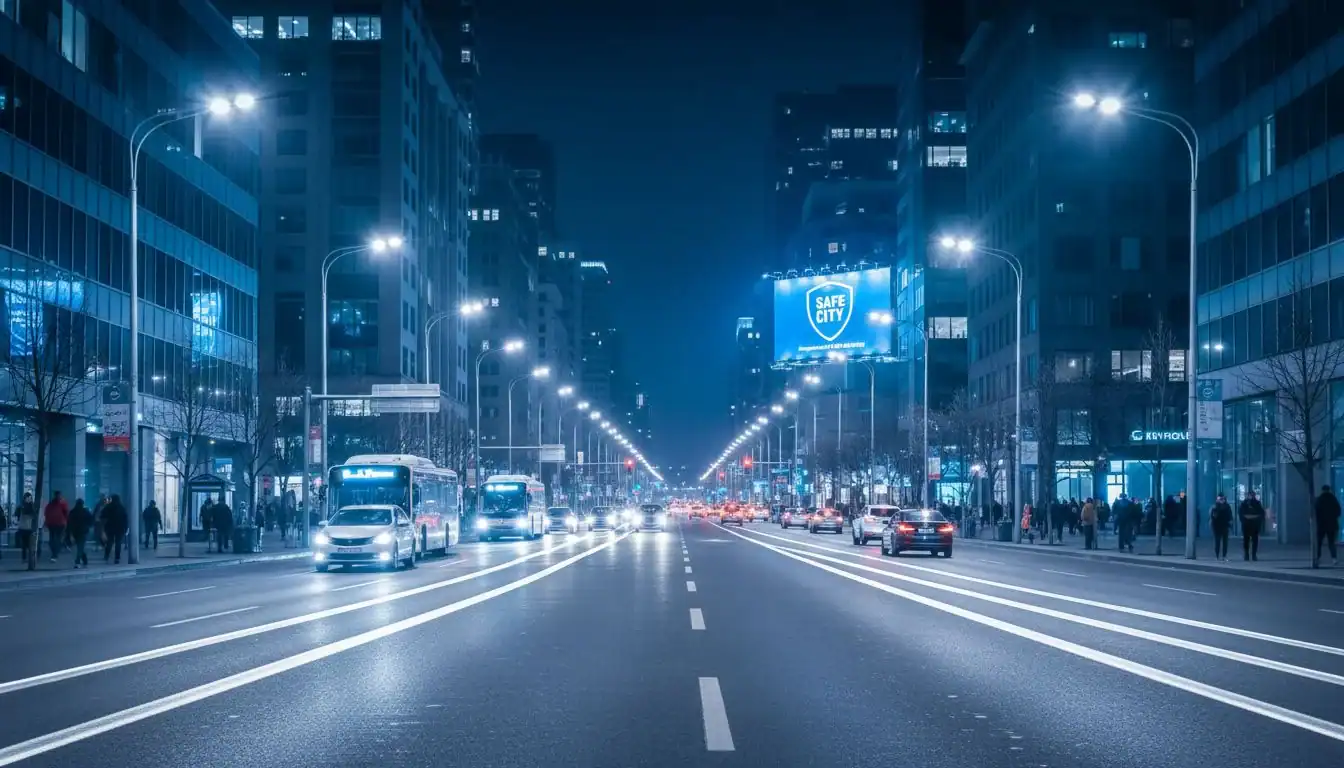
Dark streets create risk and uncertainty. This fear impacts everything from public safety1 to economic activity. But what if the solution was already hanging right above our heads?
Proper street lighting is a proven tool for enhancing urban safety and livability. It measurably reduces nighttime traffic accidents2, deters criminal activity, and creates a more secure environment for pedestrians and drivers, directly improving a city's quality of life.
Installing street lights can reduce nighttime pedestrian injury crashes at intersections by over 50%.False
The reduction is significant but studies show it's up to 42%, not over 50%.
LED street lights are 40–60% more energy-efficient than traditional lighting technologies like high-pressure sodium lamps.True
This efficiency is a primary driver for city-wide LED adoption, leading to major energy and cost savings.
Over my 13 years in the LED industry, I've seen firsthand how a simple lighting upgrade can transform a community. It's not just about brightness; it's about strategic, data-driven safety. But many city planners and developers I speak with are surprised by just how quantifiable these benefits are. They often ask me for the hard numbers to justify their investment. Let's break down the data and see why smart street lighting is one of the best investments a city can make.
How Does Calibrated Street Lighting Cut Nighttime Crashes?
Worried about nighttime road safety? Poor visibility leads to tragic, preventable accidents. The data shows that targeted lighting upgrades3 are a powerful, cost-effective solution to protect drivers and pedestrians.
Well-designed street lighting is one of the most effective measures for reducing traffic accidents after dark. Studies show it can cut nighttime injury crashes at intersections by up to 38% and on highways by about 28%, making streets significantly safer for everyone.
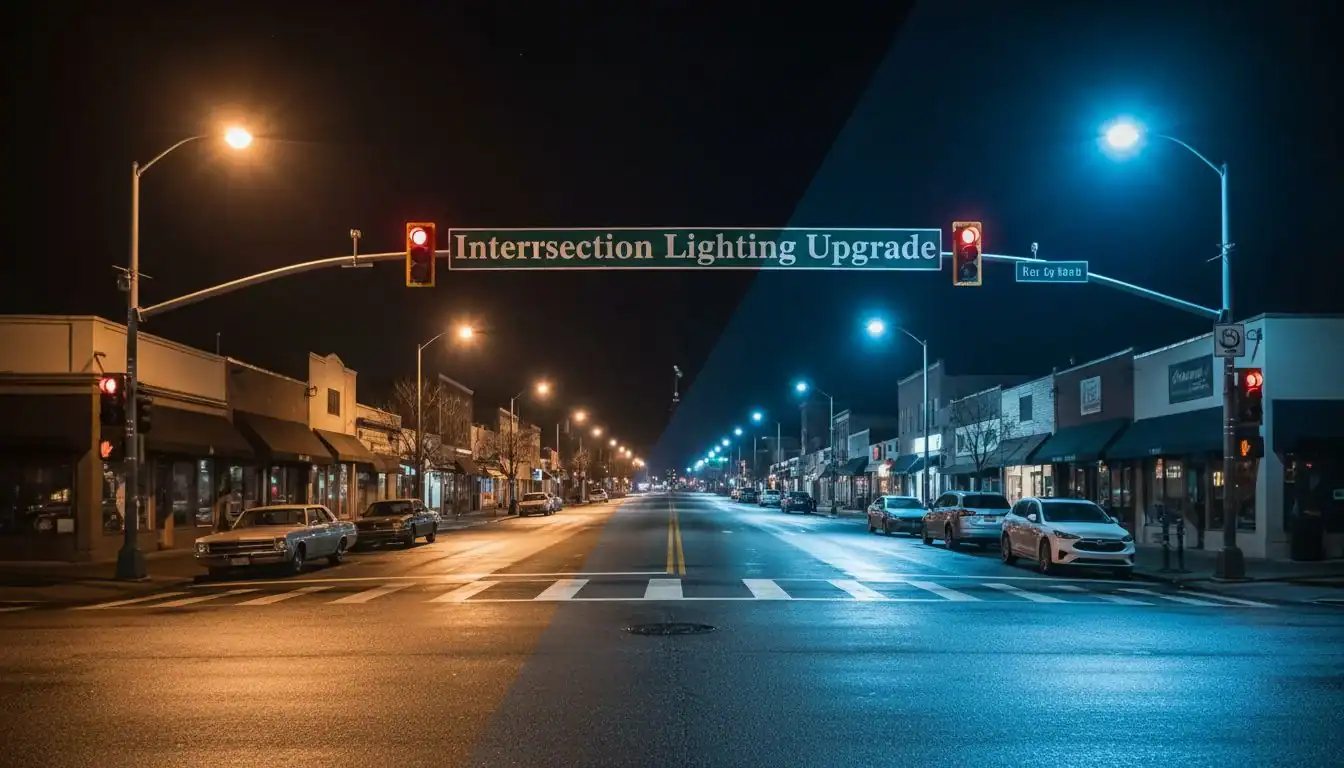
When I work with municipal clients, their primary concern is often proving the return on investment4 for safety. The evidence is overwhelming. It's not about just making things bright; it's about applying light with precision where it matters most. The difference between an unlit intersection and a properly illuminated one is, quite literally, night and day.
The Data-Driven Case for Lighting
A meta-analysis by the Cochrane Review, which combines results from multiple studies, provides a clear picture. Adding road lighting where it was previously absent or poor consistently reduces crashes. The key is understanding the "dose-response" relationship: how much light is needed for a specific safety outcome. A landmark study in New Zealand found that for every 0.5 cd/m² increase in average road luminance, night crashes dropped by 19%. This proves that calibrated, not just brighter, lighting is the goal.
| Location Type | Potential Nighttime Crash Reduction | Key Insight |
|---|---|---|
| Intersections | 33% – 38% | High-conflict zones benefit most from improved visibility. |
| Pedestrian Crossings | Up to 42% (injury crashes) | Protects the most vulnerable road users. |
| Rural/Urban Highways | ~28% (injury crashes) | Reduces single-vehicle and multi-vehicle incidents. |
Any increase in street light brightness directly leads to a proportional decrease in accidents.False
The relationship is not linear. Calibrated luminance targets are more effective than simply increasing brightness, which can cause glare.
Adding lighting to previously unlit rural roads can reduce fatal crashes by more than 30%.True
Cochrane Review data shows rate ratios for fatal crashes as low as 0.66, indicating a reduction of 34% or more in some contexts.
What Public Safety Outcomes Did LED Upgrades Achieve?
City leaders constantly struggle with nighttime crime rates. Residents feel unsafe, and it hurts the community. But what if a technology upgrade could directly reduce crime and violence?
Strategic LED lighting upgrades have been linked to significant drops in crime. In Philadelphia, a citywide LED conversion was associated with a 15% decline in outdoor nighttime street crime. In New York City, a targeted experiment saw a 36% reduction in index crimes.
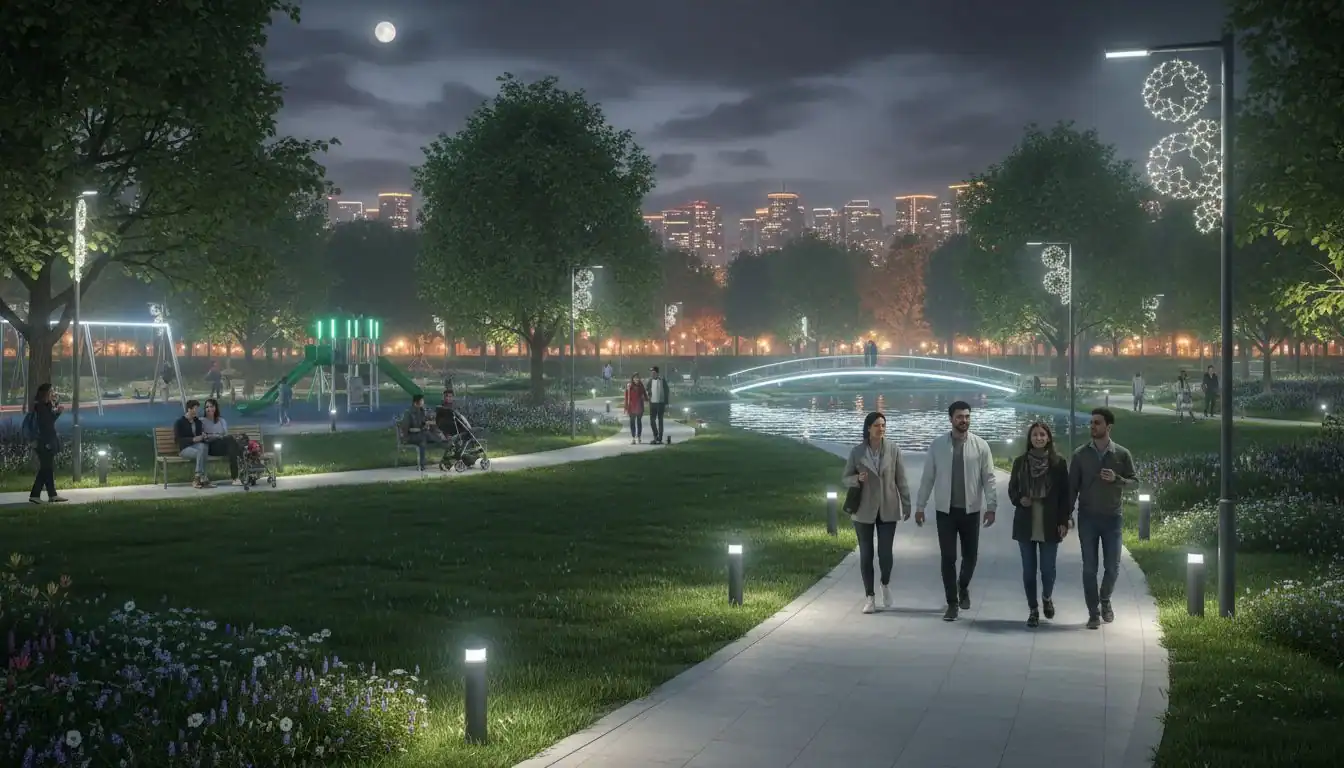
These aren't just isolated incidents. I've seen similar results in projects we've supported from South America to Southeast Asia. When a developer like our typical client, Somchai in Thailand, plans a new commercial center, public safety is paramount. He knows that well-lit parking lots and walkways don't just feel safer—they are safer. This attracts more visitors and tenants. The key is that lighting acts as a force multiplier for security efforts.
How Lighting Deters Crime
Improved lighting helps in two main ways. First, it increases the risk for potential offenders by making them more visible to police, security, and the public. This is known as "natural surveillance." Second, it makes public spaces feel safer, encouraging more people to use them. This increased foot traffic further deters criminal activity.
- Targeted Intervention: The NYC study used temporary, high-power light towers in specific public housing developments. This shows that even short-term, focused lighting can have a dramatic impact, especially when paired with other place-based strategies.
- Citywide Impact: The Philadelphia study is crucial because it measured the effect of a permanent, citywide upgrade. The 21% reduction in nighttime gun violence during the upgrade period is a powerful testament to the role of infrastructure in public health and safety.
Simply installing street lights guarantees a reduction in all types of crime.False
Lighting is most effective against outdoor, nighttime crimes. Its effect on indoor or daytime crime is negligible, and it works best as part of a broader safety strategy.
A randomized controlled trial in New York City found that improved lighting led to a 36% reduction in nighttime outdoor index crimes.True
This finding from a rigorous study provides strong evidence for the causal link between better lighting and reduced crime.
Why Isn't Brighter Always Safer?
There's a common misconception that the solution to darkness is just more light. This "brute force" approach often creates more problems, like dangerous glare and light pollution, without improving safety.
The safest lighting isn't the brightest; it's the most uniform and best-directed. Poorly designed fixtures create glare that can blind drivers and pedestrians, reducing visibility. The goal is to design systems that reduce glare, minimize light pollution, and put light only where it's needed.
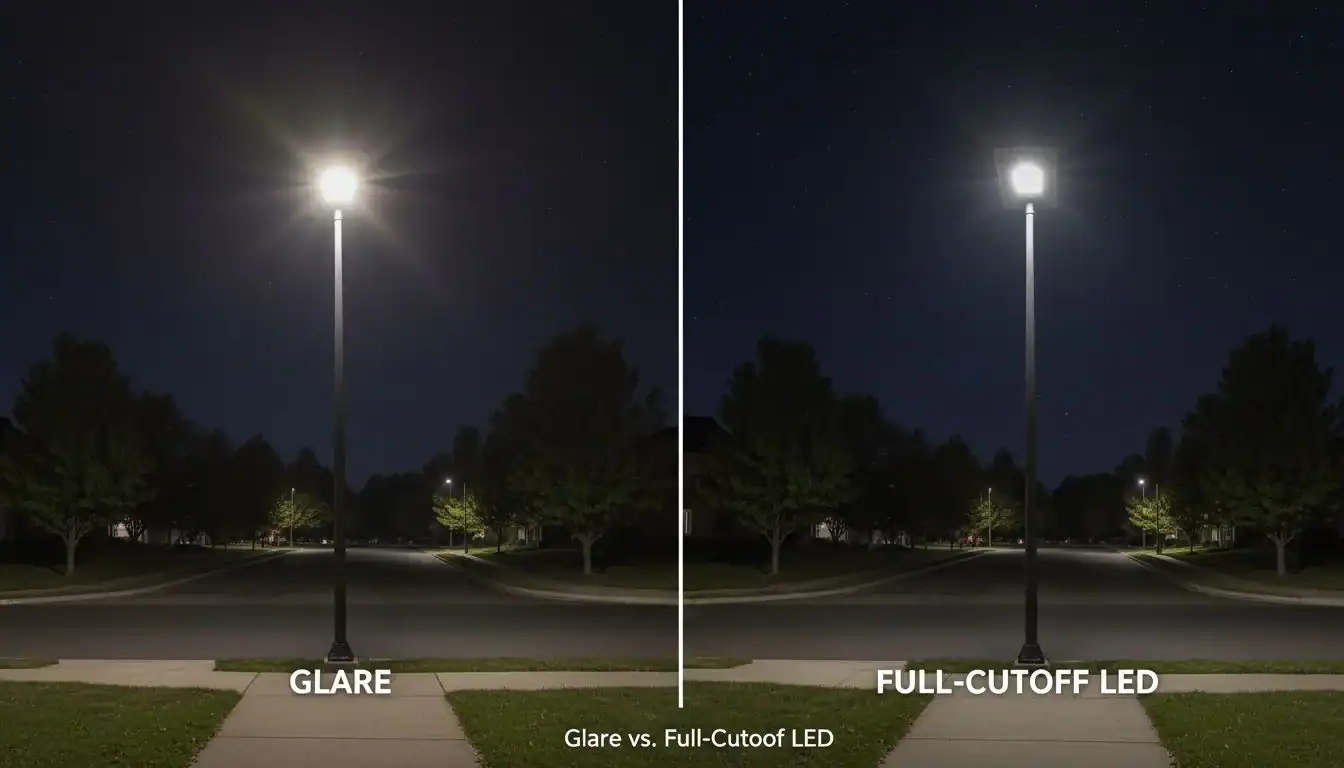
This is a conversation I have daily with contractors and developers. They want safety, but they also want to be good neighbors and adhere to modern standards. At Besenled, our R&D focuses heavily on optical design. We engineer pole lights and flood lights with specific beam angles and shielding to maximize visual comfort and performance. It's about smart design, not just raw power.
Key LED Specs for Better Visibility
When planning a lighting project, you need to look beyond just lumens. The quality of light is determined by several factors that directly impact how well we see at night.
- glare control5 (UGR): Unified Glare Rating is a measure of visual discomfort. A lower UGR is better. Well-designed optics are essential.
- Color Rendering Index (CRI): This measures how accurately a light source reveals colors. A higher CRI (80+) helps people identify objects, vehicles, and other people more clearly.
- Correlated Color Temperature (CCT): Measured in Kelvin (K), this defines the color of the light. While very cool light (5000K+) can seem bright, neutral or warm-neutral light (3000K-4000K) is often better for reducing sky glow and improving visual comfort.
| LED Specification | Why It Matters for Safety | Besenled's Approach |
|---|---|---|
| Shielding/Cutoff | Prevents light from shining upwards (sky glow) or sideways (glare). | Full-cutoff designs that direct 100% of light downward. |
| Beam Angle | Ensures light is distributed evenly on the ground, avoiding dark spots. | Customizable optics to match road width and pole spacing. |
| Smart Controls | Allows dimming during low-traffic hours to save energy and reduce light trespass. | DALI/Wi-Fi systems that integrate with city management platforms. |
A higher Color Temperature (CCT) like 6000K is always best for street lighting because it's the brightest.False
High CCT light can increase sky glow and be harsh on the eyes. Many cities now prefer 3000K or 4000K for a balance of visibility and environmental impact.
Properly shielded 'full-cutoff' fixtures can significantly reduce light pollution and glare.True
Full-cutoff design ensures light is directed downwards onto the intended area, improving visibility and efficiency while protecting the night sky.
How Do LEDs Impact City Budgets and ROI?
Municipal budgets are under constant pressure. Street lighting can be a huge drain, consuming up to 20% of a smaller city's entire budget. How can you justify a major upgrade?
The answer is a powerful return on investment. Modern LED street lights6 are 40-60% more efficient than old technologies and last 3-5 times longer, drastically cutting energy and maintenance costs.
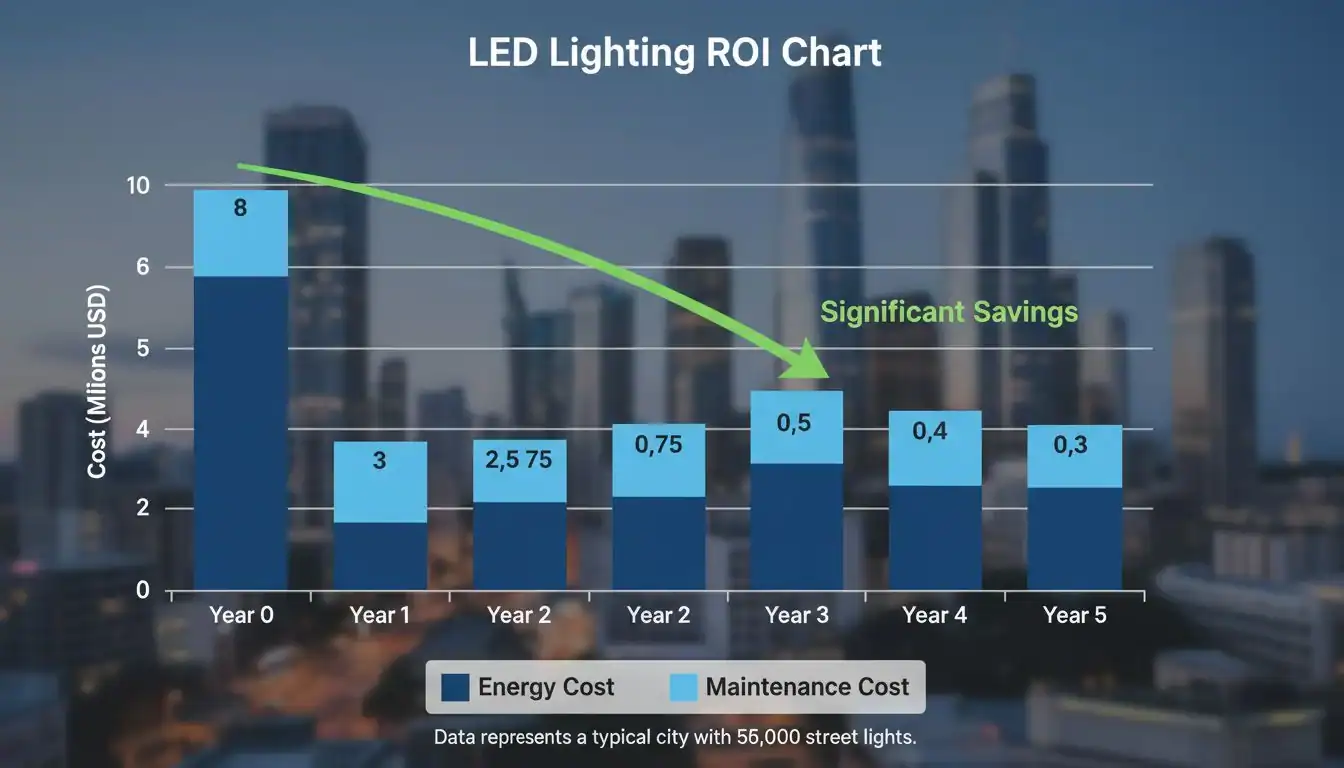
When I present a proposal to a procurement director, the conversation always comes down to the numbers. The initial capital outlay for an LED conversion can seem high, but the payback period is often surprisingly short. We provide our clients with a total cost of ownership analysis that factors in energy savings, reduced maintenance calls, and even potential government rebates. The long-term savings are so significant that the upgrade essentially pays for itself.
Calculating the Financial Benefits
Let's break down the ROI. The savings come from two main areas: energy and maintenance. Traditional high-pressure sodium (HPS) lamps need frequent replacement, requiring crews and equipment. LEDs, with a lifespan of 50,000-100,000 hours, can last for over a decade.
Here's a simplified ROI model for a hypothetical 1,000-light project:
| Cost/Saving Category | Traditional HPS (Annual) | Modern LED (Annual) | Annual Savings |
|---|---|---|---|
| Energy Cost | $87,600 | $35,040 | $52,560 |
| Maintenance Cost | $25,000 | $5,000 | $20,000 |
| Total Annual Savings | - | - | $72,560 |
With these savings, a project with an initial cost of $300,000 would have a payback period of just over 4 years, while delivering superior safety and quality of life for decades.
LED street lights can consume up to 20% of a large city's budget.False
Street lighting can consume 5-10% of a large city's budget and up to 20% in smaller cities. The statement is an overgeneralization for large cities.
LEDs are 40-60% more efficient than traditional street lighting technologies like HPS or metal halide.True
This dramatic increase in energy efficiency is the primary driver of cost savings for cities undertaking lighting conversion projects.
FAQ: Your Street Light Questions Answered
Do street lights really reduce car accidents?
Yes, absolutely. Data consistently shows that proper road lighting can reduce nighttime crashes at intersections by 33–38% and injury crashes on highways by about 28%. The most significant benefits are seen when lighting is added to previously dark or poorly lit areas.
Can street lights actually reduce crime?
Yes. Studies in major cities like Philadelphia and New York have linked LED lighting upgrades to significant reductions in nighttime crime. For example, one randomized experiment found a 36% drop in outdoor index crimes, suggesting improved visibility deters criminal activity.
Is “more light” always safer?
No. This is a critical misunderstanding. Excessively bright or poorly aimed light causes glare, which can temporarily blind drivers and pedestrians, making conditions more dangerous. The goal is uniform, well-directed light, not just maximum brightness.
What LED specs improve visibility?
Look for a high Color Rendering Index (CRI > 70, preferably > 80) to see colors accurately. Also, consider a neutral Correlated Color Temperature (CCT) around 3000K-4000K and fixtures with excellent glare control (low UGR) and full-cutoff optics to direct light where it's needed.
How much energy can LEDs save for a city?
LEDs are a game-changer for municipal budgets. They are typically 40–60% more energy-efficient than the legacy technologies they replace. For a city, this translates into millions of dollars in annual savings and a massive reduction in carbon footprint.
How should cities prioritize where to add or upgrade lighting?
A data-driven approach is best. Cities should prioritize high-risk locations first. This includes intersections with high rates of nighttime accidents, high-crime areas, major pedestrian crossings, and arterial roads that were previously unlit or poorly lit.
Conclusion
Investing in smart LED street lighting is a powerful, multi-benefit strategy. It directly improves public safety, reduces crime, and delivers a strong financial return, making our cities better places to live.
References
-
Discover the connection between street lighting and enhanced public safety. ↩
-
Learn about the impact of street lighting on reducing traffic accidents at night. ↩
-
Find out how strategic lighting upgrades can transform urban environments. ↩
-
Explore the financial benefits and ROI of investing in LED street lighting. ↩
-
Discover how glare control in street lighting enhances visibility and safety. ↩
-
Explore how LED street lights enhance safety and reduce energy costs in cities. ↩